Quick answer
Introduce the montessori-number-knockdown-acf120c9907e4335afd53115-1541596">Montessori Number Knockdown with the dice and board only, no rules and no score. Roll, count the dots aloud, and let your child knock down the matching number. Keep the first sessions to five minutes, and stop while it is still fun. If your toddler frustrated with counting toy behavior continues after two or three calm tries, the toy is likely too advanced right now, so put it away and try again in a few weeks.
You bought a counting toy, and your toddler threw the dice across the room. That is not a failed purchase. It is usually a sign that the toy arrived before the skill did, or that too many rules showed up at once.
The Montessori Number Knockdown is a wooden game board with eight dice, and it can be a calm first number toy. The trick is introducing number knockdown in stages instead of handing over the whole game on day one.
Why number toy problems start so early
Counting toys ask for two skills at the same time: matching a quantity to a spoken number, and controlling a small hand to act on it. A three-year-old may know the word three without being able to count three objects reliably. When the game expects both at once, the gap feels like failure to your child.
That gap often looks like boredom, throwing, or refusing to play. It is not defiance. It is a mismatch between the toy's demand and your child's current ability.
- Watch for the moment your child stops looking at the board and starts looking around the room. That is your cue to end the round.
- Do not correct a wrong count mid-game. Say the correct number once and move on.
A three-stage way to introduce the game
Stage one is free play. Put out only the board and two dice. Let your child roll, stack, and knock pieces down with no counting at all. This builds comfort with the material before any demand is added.
Stage two adds one rule. Roll one die, count the dots out loud together, and knock down that many pieces. Do not use the numbered side of the board yet. Stage three adds the board numbers and a second die. If your child loses interest at any stage, stay there for a few more days rather than pushing forward.
- Keep sessions under five minutes at first.
- Narrate your own turn out loud so your child hears counting without being tested.
What to change when counting struggles continue
If your toddler is frustrated with a counting toy after several calm attempts, shrink the task. Count only one or two objects. Use the dice as a physical prompt: touch each dot as you say the number. Some children need to feel the quantity before the spoken number sticks.
Change the goal too. Instead of counting, ask your child to knock down the pieces that match a color or shape. The number work can wait. The point of a first number toy is a positive association, not accuracy.
- Place the board on a low table so your child can stand and move.
- If your child wants to roll the dice repeatedly without counting, let them. That is still useful play.
When to stop and choose another option
Stop if your child cries, avoids the toy for more than a week, or starts using the pieces as projectiles. A toy that triggers a fight is not teaching math. Put it on a high shelf and bring it back in a month.
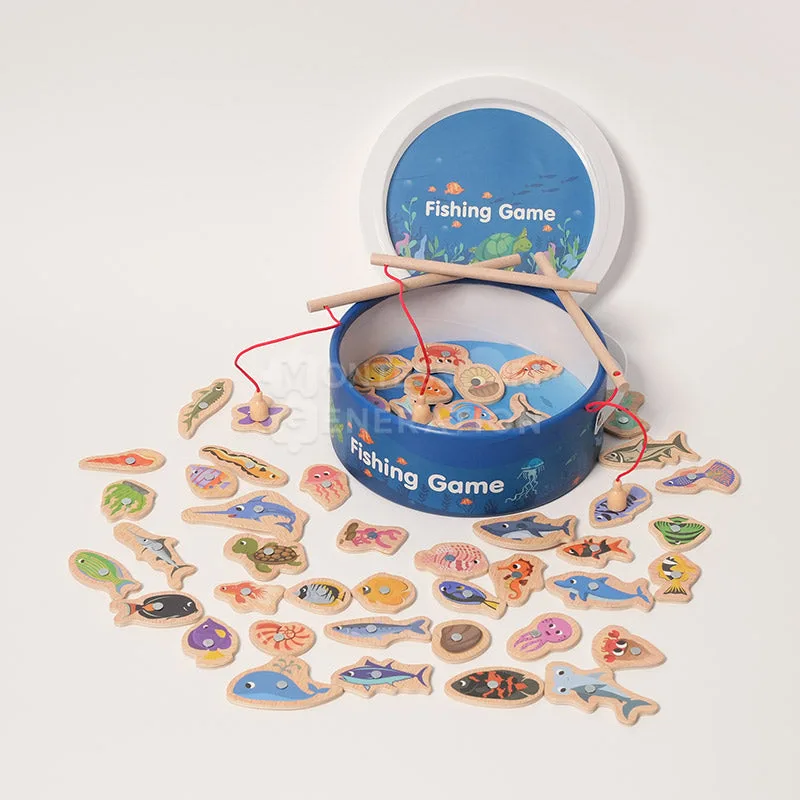
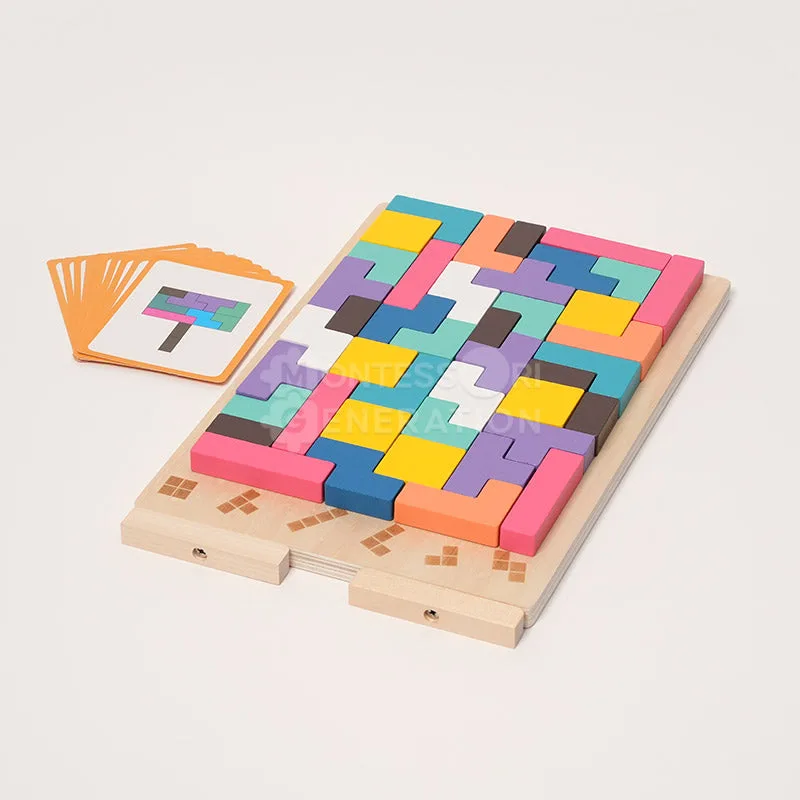
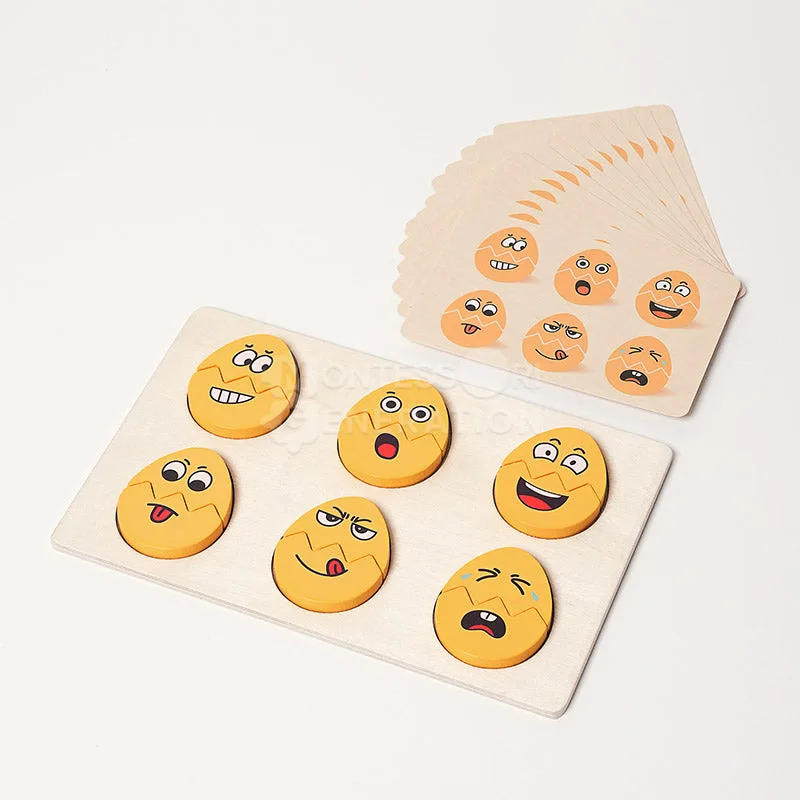
If counting is the block, a matching or sorting toy may be a better bridge. The Montessori Brain Blocks uses a wooden board, 42 wooden shapes, and 10 double-sided cards for pattern matching, which builds visual discrimination without number pressure. The Montessori Fishing Game uses 51 wooden fish and three magnetic rods, so it works on hand control and turn-taking before counting enters the picture.
- Return to the Number Knockdown when your child counts a few objects in daily life, such as two shoes or three spoons.
- A quiet toy that stays on the shelf is better than a daily argument.
Diagnosis: match the symptom to the fix
- Symptom: throws dice or walks away after one roll: Likely cause: too many rules or too many pieces at once. Corrective action: remove all but two dice and drop counting for a week. Let your child roll and knock down freely. If throwing continues after three calm sessions, pause the toy for two weeks.
- Symptom: counts but says the wrong number: Likely cause: the link between quantity and spoken number is still forming. Corrective action: touch each dot as you count together, and count only up to three. Do not correct mid-count. Accuracy usually follows repeated calm exposure, not correction.
- Symptom: refuses the board but plays with the dice: Likely cause: the board feels like a test. Corrective action: use the dice alone for stacking, rolling, and color talk. Reintroduce the board when your child asks about the numbers. Dice-only play is still valid number play.
- Symptom: cries or avoids the toy for over a week: Likely cause: the toy is beyond your child's current readiness, or it has become a power struggle. Corrective action: stop using it now and switch to a matching or magnetic toy such as the Brain Blocks or Fishing Game. Stop here. Bring the Number Knockdown back in four to six weeks.
Facts that shape how you introduce this toy
- Montessori Number Knockdown: Age 3+, contains one wooden game board and eight dice, made from premium natural wood with soft felt, 8.7 x 8.7 x 1.2 inches, 9.0 oz, wipe clean with a dry or slightly damp cloth and do not soak. The eight dice give you plenty of pieces to remove for a simpler start, and the felt surface keeps rolls quiet and contained. The small footprint fits on a low table or tray, and the wipe-clean care means a damp cloth is enough after sticky fingers.
- Montessori Brain Blocks: Age 3+, contains one wooden board, 42 wooden shapes, and 10 double-sided cards, made from high-quality eco-friendly wood with non-toxic paint, 12.3 x 7.9 x 1.1 inches, 25.2 oz, wipe with a damp cloth and avoid soaking. The cards give a clear visual goal without spoken counting, so it can build focus and matching skills while your child takes a break from number work.
- Montessori Fishing Game: Age 3+, contains 51 wooden fish, three magnetic rods, and one bucket, made from high-quality eco-friendly wood, 7.2 x 7.2 x 2.7 inches, 9.7 oz, clean with a dry or damp cloth and avoid prolonged contact with liquids. Three rods make it easy to play side by side, and the magnetic catching action gives immediate feedback without any number demand, which helps rebuild confidence before returning to counting.
Your child does not need to love every toy on the first try. Introduce the Montessori Number Knockdown slowly, keep the early sessions short, and treat frustration as information rather than failure. If counting still causes tears, set it aside and build the same skills through matching or catching play. The numbers will come when the pressure is gone.