Quick answer
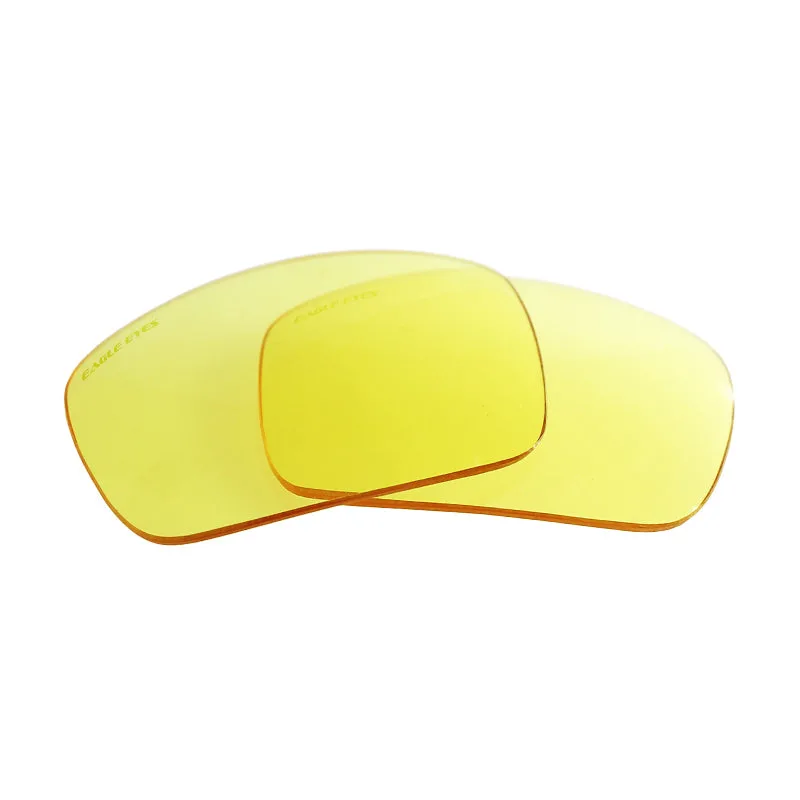
For most night driving, choose a yellow non-polarized lens with an anti-reflective coating. Yellow shifts the visible spectrum toward higher contrast, so lane markings, signs, and pedestrians separate from the dark background, while the anti-reflective coating kills the mirror-like bounce that makes oncoming headlights, LED signage, and flood lights feel blinding. Clear lenses are the better pick only when they are your everyday pair and you want one frame that works indoors, outdoors, and at night without swapping. If you already wear a prescription, get the tint built into your Rx rather than layering a fitover over your glasses.
What yellow actually does behind the wheel
A yellow tint filters part of the blue end of the spectrum. Blue light scatters more easily in the eye and in the air, which is why a bright white headlight or a cool-white LED sign looks like a smear rather than a defined object. Removing some of that blue raises relative contrast: the dark road stays dark, and lit objects stay crisp. That is the entire mechanism, and it is why yellow helps at night but does nothing for you at noon.
The color is not the whole story. A yellow lens without an anti-reflective coating still lets light bounce off the back surface of the lens and into your eye, so you get a ghost image of every oncoming headlight. The coating is what removes that internal reflection. If you are comparing two yellow pairs and one costs noticeably less, check whether the coating is listed before you assume you are getting the same result.
When clear is the smarter choice
Clear lenses transmit the most light, which sounds ideal for night until you remember that more light also means more glare. A clear lens earns its place at night only when it carries an anti-reflective coating and when you genuinely need one pair for everything: desk, street, and car. That is a convenience decision, not a vision decision. If you drive mostly at night and can keep a dedicated pair in the car, yellow will outperform clear on contrast and comfort.
There is one more case for clear: if your state or insurer restricts tinted lenses for driving, a clear lens with an anti-reflective coating keeps you compliant while still cutting headlight bounce. Check your local rules before buying a tinted pair specifically for the road.
Prescription night driving: build the tint into the lens
If you need correction, the tint should live in your prescription lens, not in a pair of fitovers stacked on top of your glasses. Stacking two lenses adds weight, shifts the optical center, and can introduce reflections between the two surfaces. A prescription night lens keeps the tint and the correction in one optical path.
The trade-off is lead time and cost. Prescription night lenses are made to your Rx, so they are not an impulse purchase, and the anti-reflective coating is not optional if glare is your main complaint. Order them as a second pair rather than replacing your everyday glasses, and keep them in the car so you are never deciding at dusk whether you remembered them.
Fit and coverage matter as much as tint
A perfect lens in a frame that lets light in around the edges will still leave you squinting. For night driving, prioritize a frame that sits close to the brow and wraps slightly at the temples, so the lens, not your hand, blocks the light coming from the side mirror and the passenger window. Semi-rimless and rimless styles look lighter but usually leak more peripheral light.
Weight and nose fit decide whether the pair actually stays on for a two-hour drive. TR-90 frames are light and flexible, which helps on long trips, but they still need a nose bridge that matches your width. Adjust the temples so they touch behind the ear without pressing, and test the fit in the car with the seat in your normal driving position, not standing at a mirror.
Decision rules: pick your night lens in four questions
- Do you need prescription correction?: Yes: choose a prescription night lens so tint and correction share one optical path. No: a non-prescription yellow pair is simpler and cheaper. Never stack a fitover on prescription glasses for long night drives if you can avoid it.
- Is your main complaint glare or dimness?: Glare from headlights and signs: yellow with an anti-reflective coating. General dimness with no glare complaint: a clear lens with an anti-reflective coating may feel brighter. Match the lens to the complaint, not to the color you like.
- Will this be your only pair?: Only pair for work, street, and car: clear transitional or clear anti-reflective. Dedicated car pair: yellow non-polarized. One pair always means a compromise; a dedicated pair always means better night performance.
- Does the frame block side light?: Sit in the driver's seat and check whether light enters above the brow or around the temple. Semi-rimless and rimless frames leak more. If you can see the side mirror's glare edge, the frame is too open for night driving.
Products that match these rules
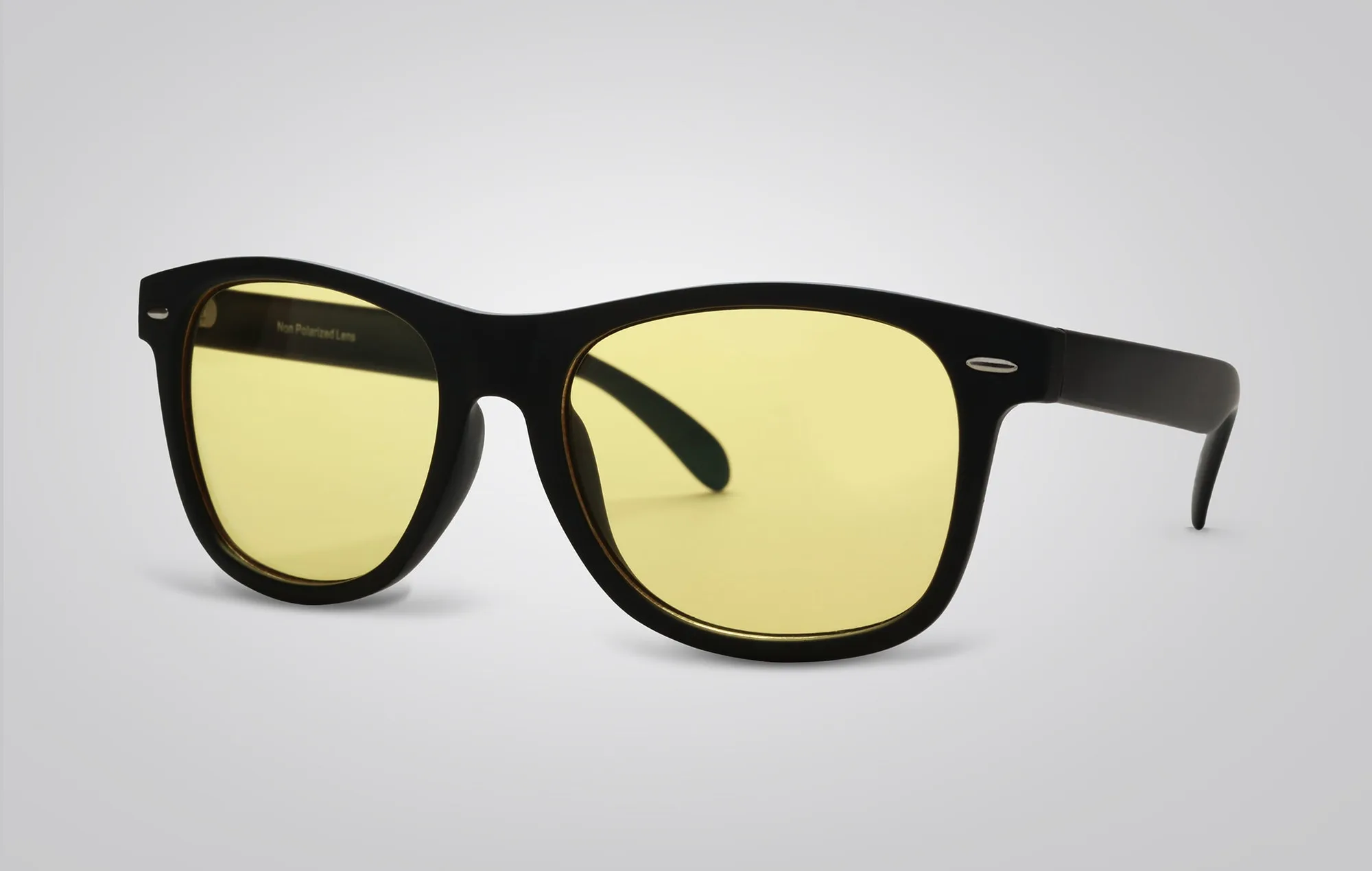
- Charlie Night: Charlie Night combines retro club-style frames with Night-Lite technology: micro-infused, non-polarized yellow lenses plus an anti-reflective coating that blocks high-intensity glare from headlights, LED signage, and flood lights. This is the yellow-lens-plus-coating combination described above, so it addresses both contrast and the internal reflection that makes headlights feel blinding.
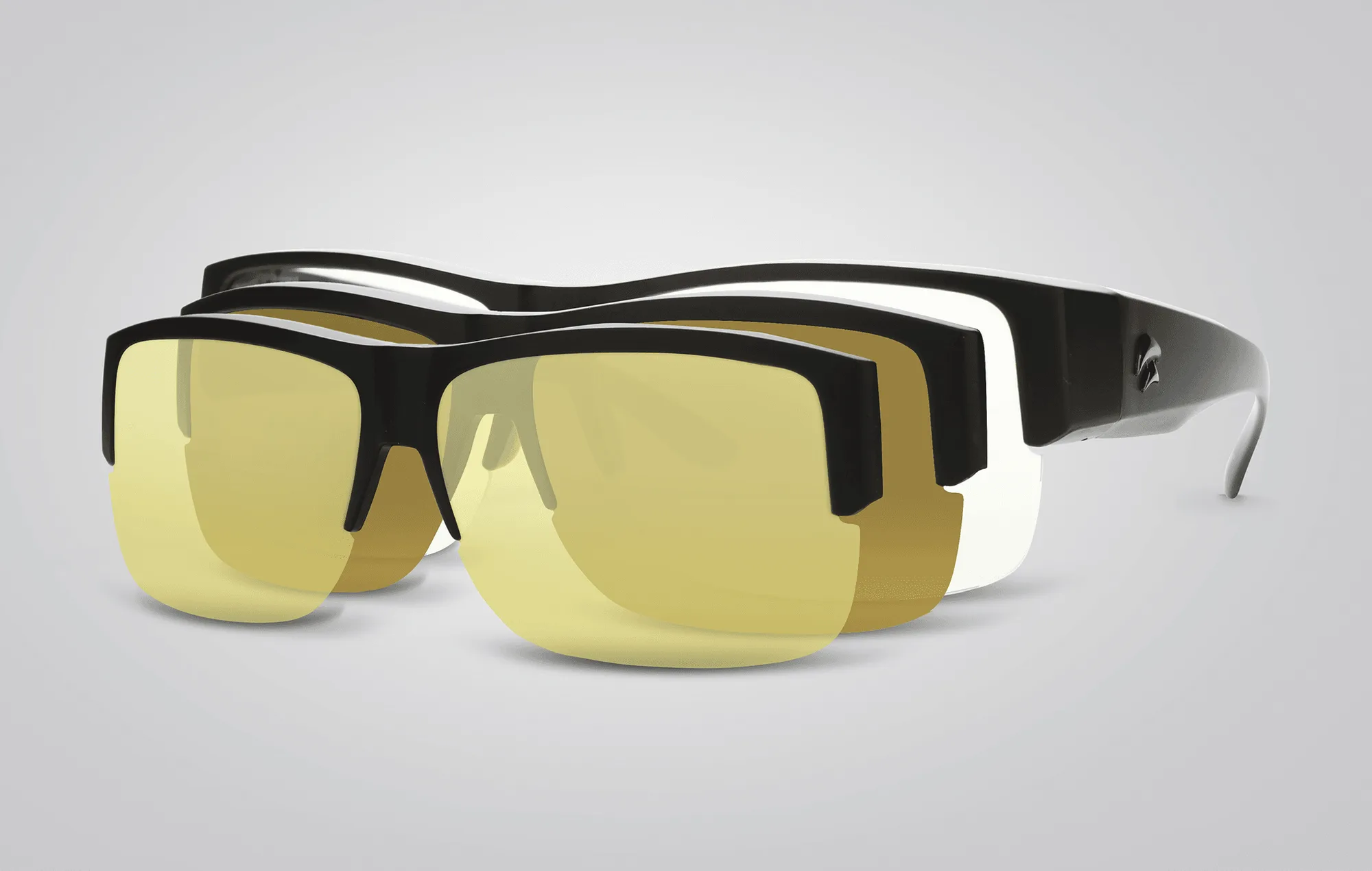
- 3in1 FitOn: 3in1 FitOn is a semi-rimless TR-90 frame with DigiTec technology; the clear micro-infused lenses block blue light, and the system is designed to work over prescription glasses across UV, blue light, low-light, and nighttime conditions. A practical pick if you wear prescription glasses and want one setup that covers daytime screen use and night driving instead of buying separate pairs.
- RX Night-Lite® Lens: RX Night-Lite Lens is offered under the LensAdvizor brand in a Standard option. The route to take if you want the night tint built into your prescription instead of layering a fitover over your everyday glasses.
Who should buy which lens
Best for
- Drivers who are bothered most by oncoming headlights and bright LED signs
- Prescription wearers who want the night tint built into their Rx
- Commuters who want one setup for screen time and night driving
Not for
- Daytime driving in bright sun, where a polarized dark lens is the better tool
- Anyone who needs one pair for every condition and refuses to carry a second pair
- Drivers in areas that restrict tinted lenses on the road