Quick answer
A sour Picopresso shot is almost always under-extracted: grind finer or add a gram of coffee. A bitter shot is over-extracted: grind coarser or drop the dose. Make one change at a time, then taste again before adjusting anything else.
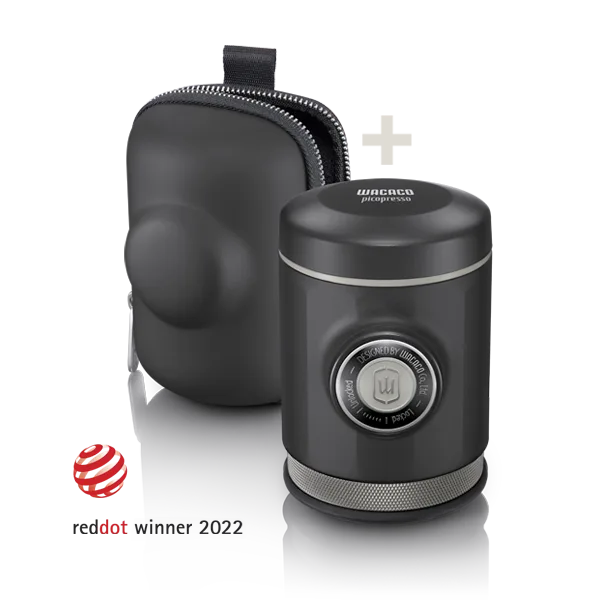
Picopresso
Taste the symptom before you touch the grinder
Sourness shows up as a sharp, lemony or vinegar-like edge that hits the sides of your tongue and lingers. Bitterness is a dry, ashy or cocoa-heavy taste that coats the back of your throat. If you taste both at once, the shot is likely channeling: water is racing through one weak spot while the rest of the puck stays under-extracted. In that case, fix the puck before you change the grind.
Grind size: the first lever to pull
If the shot is sour, move the grind one or two clicks finer. If it is bitter, move one or two clicks coarser. Pull another shot and taste. The Picopresso responds quickly to small adjustments, so avoid big jumps that skip past the sweet spot. If you are using a manual grinder, keep the same number of turns and only change the setting, so you are testing one variable.
Dose and basket: when 18 grams is not the answer
A dose that is too small leaves too much headspace and can taste thin and sour. A dose that is too large can choke the shot or taste bitter and muddy. The Picopresso 18g Basket is designed to hold the optimal amount of finely ground coffee for rich, full-bodied shots, and it is only compatible with the Picopresso. If you are already using that basket, stay near 18 grams and adjust grind first. If you are using a different basket, check that your dose actually fills it without touching the shower screen.
Channeling: the hidden cause of mixed tastes
Channeling happens when water finds a crack or a loose spot in the puck and shoots through it. The result is a shot that tastes sour and bitter at the same time, with a fast, uneven flow. To fix it, distribute the grounds evenly before tamping, tamp level with steady pressure, and make sure the basket is dry before you dose. If the flow still spurts or blondes early, grind finer by one click and try again.
When to stop adjusting and change your setup
Stop adjusting when the shot tastes balanced: sweet, with a pleasant acidity and no dry finish. If you have moved the grind several clicks in both directions and the taste never improves, the problem is likely the coffee itself, not your technique. Very dark roasts can taste bitter even at coarse settings, and very light roasts can stay sour even at fine settings. In that case, try a different roast level or a different bean before you keep grinding.
Taste diagnosis chart
- Sour, sharp, lemony: Under-extracted. Grind one or two clicks finer or add 0.5–1 g of coffee. If it stays sour after two finer settings, the roast may be too light for this setup.
- Bitter, dry, ashy: Over-extracted. Grind one or two clicks coarser or reduce the dose slightly. If it stays bitter after two coarser settings, the roast may be too dark.
- Sour and bitter together, fast flow: Channeling. Distribute evenly, tamp level, and check that the basket is dry. If the flow still spurts, grind finer by one click and repeat.
Gear that helps you control the variables
- EXAGRIND: The Wacaco Exagrind is a compact manual grinder, 14.3 cm tall, that grinds 20 grams of coffee, enough for a pour-over or a double espresso, with a silicone sleeve on the body. A consistent grind is the fastest way to fix sour or bitter shots, and 20 grams covers a full Picopresso dose with room to adjust.
- PICOPRESSO 18G BASKET: The Wacaco Picopresso 18g Stock Basket holds the optimal amount of finely ground coffee and is only compatible with the Picopresso. Using the correct basket removes dose guesswork, so you can focus on grind size when dialing in taste.
- PICOPRESSO STAND: The Picopresso Stand is made of four easily dismountable parts that assemble into a rock-solid platform. A stable base keeps the machine from shifting while you tamp and pull, which reduces the chance of an uneven puck and channeling.