Quick answer
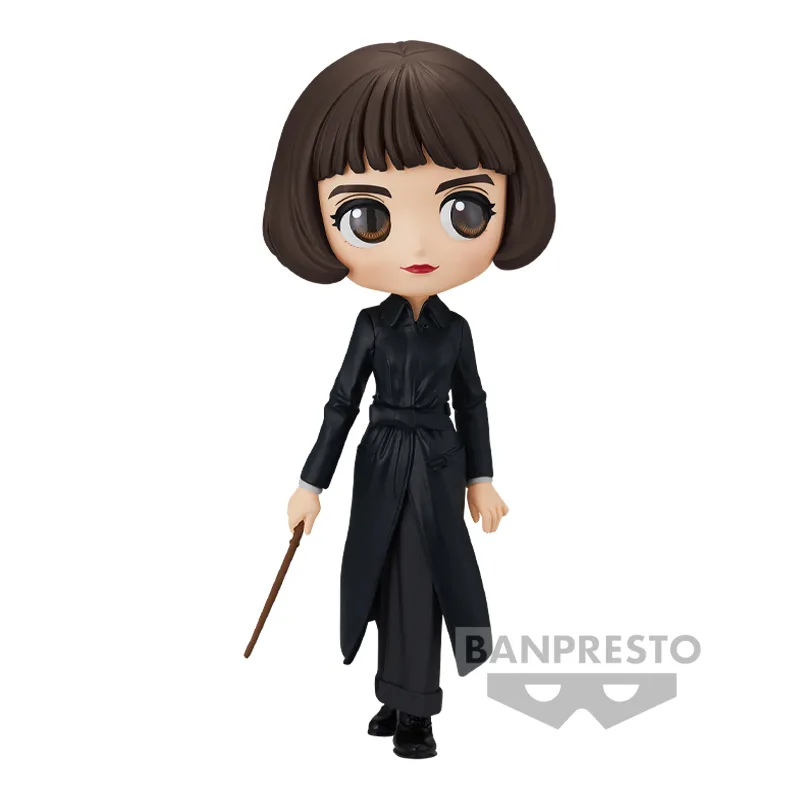
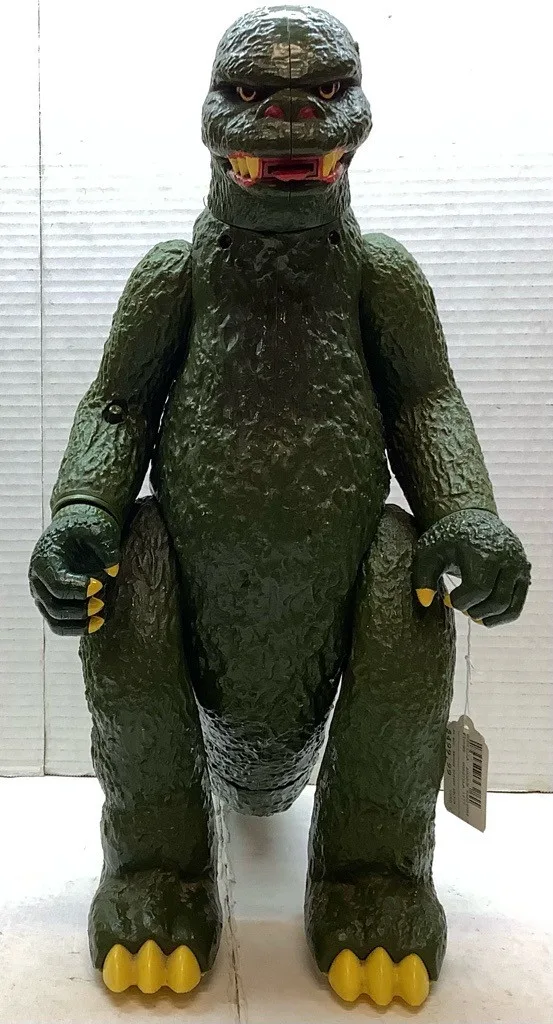
Treat the Shogun Warriors Godzilla jumbo as the shelf anchor and the Q posket Tina Goldstein as the accent. Put the 19-inch Godzilla on a low, deep surface, then raise the 6-inch Tina to roughly its chest height with a riser so both faces read at eye level. Keep at least one figure-width of empty space between them, and check the Godzilla's broken tongue switch and no-box condition before you build the display around it.
Why these two figures work together despite the size gap
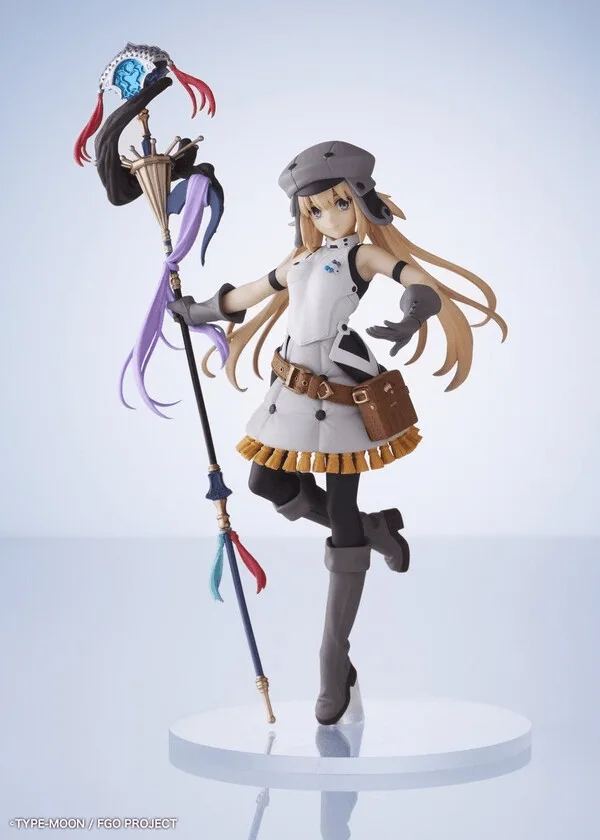
The Shogun Warriors Godzilla jumbo is about 19 inches tall and 22 inches head to tail, while the Q posket Tina Goldstein figure is about 6 inches tall in a box roughly 4.75 by 7 by 3.5 inches. That is roughly a three-to-one height difference, so the pairing only works if you stop treating them as equals. Give Godzilla the anchor role and Tina the accent role, and the size gap becomes intentional contrast instead of an accident.
The styles also pull in different directions. Tina's Q posket treatment uses the line's signature oversized eyes and soft, stylized proportions, while the 1977 Godzilla jumbo is a chunky vintage vinyl toy with a retro kaiju silhouette. Placed too close, they compete; separated by height and distance, each one reads as its own focal point.
Measure your shelf before you commit to a layout
Godzilla's 22-inch head-to-tail length is the number most people forget. A shelf that is 24 inches wide can technically hold the figure, but the tail will run out of room the moment you add anything else. Measure depth as well as width, because a 19-inch-tall figure on a shallow shelf is a tipping risk.
For Tina, the 6-inch figure height is easy to place, but the 7-inch box height matters if you plan to keep her boxed or store it nearby. Decide up front whether Tina is displayed out of box or in box, because that changes how much vertical space the accent zone needs.
Build the display in three zones
Zone one is the anchor platform: a low, deep surface for Godzilla with clearance behind the tail. Zone two is the riser zone, where Tina sits elevated to about the middle of Godzilla's body so her face is not lost at knee height. Zone three is negative space, the gap that keeps the two figures from reading as one cluttered mass.
If your shelf is shallow, rotate Godzilla slightly so the tail angles toward the back corner rather than straight out. This buys depth without hiding the head, which is where most of the character reads.
Light both figures for their materials
Tina's smaller scale rewards a closer, softer light source, because hard light on a 6-inch figure exaggerates every seam. Godzilla's larger vinyl body can take a broader, slightly stronger light from above and slightly in front, which helps define the textured skin without washing out the silhouette.
Avoid pointing a single bright lamp directly between the two figures. That placement flattens both of them and destroys the height contrast you built the display around.
Seven steps to pair these two figures without a cluttered shelf
- Step 1: Pick the anchor surface first: Choose a low, deep shelf or table for the Godzilla jumbo before you place anything else. It is about 19 inches tall and 22 inches head to tail, so it needs more depth than a typical display ledge. Common mistake: starting with the small figure and then discovering Godzilla's tail has nowhere to go.
- Step 2: Confirm the condition you are displaying: This Godzilla is pre-owned with no box and a broken tongue switch. Decide whether you are showing the wear openly or angling the figure so the affected area faces the wall. Checkpoint: if the missing box matters to you, resolve that before building the layout around it.
- Step 3: Set Godzilla's stance and tail angle: Rotate the figure so the tail runs toward the back corner rather than straight forward. This preserves shelf depth and keeps the head and chest facing the viewer. Common mistake: squaring the figure to the shelf edge, which pushes the tail into the walkway or off the edge.
- Step 4: Add a riser for Tina: Raise the 6-inch Q posket Tina Goldstein so her face sits around the middle of Godzilla's body. A simple riser or a stack of stable boxes works; the goal is eye-level reading, not height for its own sake. Checkpoint: if Tina's face is below Godzilla's knees, the pairing reads as an afterthought.
- Step 5: Leave deliberate negative space: Keep at least one figure-width of empty shelf between them. The gap is what tells the eye these are two separate focal points rather than one crowded group. Common mistake: filling the gap with a third small item, which collapses the height contrast.
- Step 6: Light each figure for its material: Use a softer, closer light on the 6-inch Tina and a broader light from above and slightly in front for the larger vinyl Godzilla. Never place one bright lamp directly between them. Checkpoint: step back three feet; if both figures read clearly, the lighting is working.
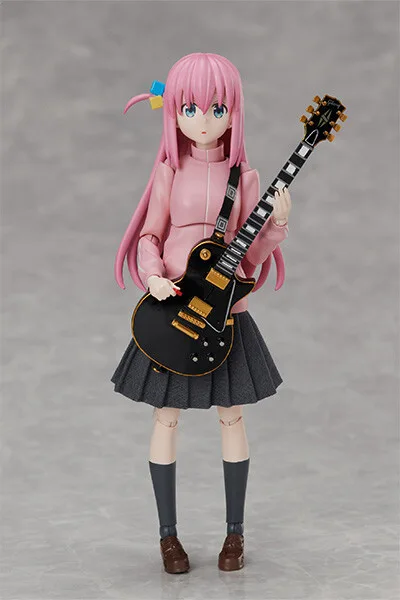
- Step 7: Test the layout from where you actually sit: View the shelf from your normal chair or doorway, not from directly in front at close range. Adjust the riser height or gap until both figures read from that real viewing angle. Next step: if the pairing still feels off, swap Tina for a same-scale accent such as the 1/12 scale Gotoh Hitori BUZZmod and rebuild the accent zone.
Catalog facts worth knowing before you style the shelf
- Fantastic Beasts: Non-Scale Figure - Q posket Tina Goldstein (Ver. A)(105040017) - Entertainment Hobby Shop Jungle: Q posket Tina Goldstein (Ver. A) is a Banpresto release from 2022, about 6 inches tall, in a box about 4.75 x 7 x 3.5 inches, listed at USD 18.89 against a catalog comparison price of USD 26.99. The low price and small footprint make Tina a low-risk accent piece, so you can experiment with riser height and placement without much cost.
- Godzilla: Shogun Warriors Jumbo Figure - Godzilla 1977(105127996) - Entertainment Hobby Shop Jungle: The Godzilla Shogun Warriors jumbo from Toho is a 1977 pre-owned item, about 19 inches tall and 22 inches head to tail, with no box and a broken tongue switch. The broken switch and missing box mean this is a display piece, not a collector-grade boxed item, so plan the shelf around visible wear rather than hiding it.
- Bocchi The Rock!: 1/12 Scale Action Figure - Gotoh Hitori BUZZmod (223131M)(105108809) - Entertainment Hobby Shop Jungle: The Bocchi The Rock! Gotoh Hitori BUZZmod is a 1/12 scale Aniplex+ action figure from 2024, about 5.27 inches tall, limited to one item per person. At roughly 5.27 inches it sits close to Tina's scale, so it can work as a second accent if you want a small-scale cluster instead of a single accent.