Quick answer
A non-stick pan usually sticks because the pan isn't hot enough when oil is added, or because residue buildup creates a rough surface. Adjust your preheat routine and cleaning method before assuming the coating is dead.
Why even good non-stick pans can stick
Non-stick coatings work best when the pan is preheated to the right temperature—too cold and food binds to the surface; too hot and the coating can degrade over time. The other common culprit is invisible carbon buildup from cooking sprays or overheated oil, which creates a sticky layer that no coating can overcome.
When to accept the coating is worn
If you've corrected heat and cleaning habits but the pan still sticks in a patchy pattern—especially in the center—the non-stick layer has likely worn thin. At that point, no fix will restore full performance. Replace the pan to avoid food burning and potential coating flakes in your meals.
Diagnose and fix your sticky pan
- Symptom: Food sticks mainly when you first add it to the pan, but releases after a few seconds.
- Likely cause: Pan wasn't hot enough when oil was added. Non-stick pans need a medium preheat (about 2-3 minutes) before adding oil. Test by flicking a drop of water onto the pan—it should sizzle gently, not evaporate instantly.
- Corrective action: Preheat the pan empty on medium heat for 2 minutes, then add oil and wait 30 seconds before adding food. Use an oil with a medium smoke point like canola or avocado. If food still sticks after this change, move to the next step.
- Symptom: Sticky patches or a brown film appear on the cooking surface after washing.
- Likely cause: Carbonized oil or food residue—often from cooking sprays or high-heat searing—has built up and is not removed by regular dish soap. Avoid cooking sprays; they contain lecithin that bonds to non-stick surfaces.
- Corrective action: Boil a mixture of 1 part white vinegar to 2 parts water in the pan for 5 minutes. Let cool, then scrub gently with a soft sponge and baking soda paste. Rinse thoroughly and dry. If residue remains after two tries, the coating may be permanently damaged.
- Stop or choose another option: If the pan has deep scratches, peeling, or widespread sticking after trying both fixes, the non-stick layer is compromised. Replace the pan. The MEGASTONE™ Frying Pan offers a durable alternative with even heating that helps prevent future sticking. Always use silicone, wood, or nylon utensils to extend the life of any non-stick pan.
A reliable replacement option
-
MEGASTONE™ Frying Pan, Non-Stick: The MEGASTONE™ Frying Pan features a thick bonded stainless steel base for rapid even heating and a premium non-stick coating. Even heat distribution helps you maintain the correct pan temperature, which is key to preventing sticking from the start.
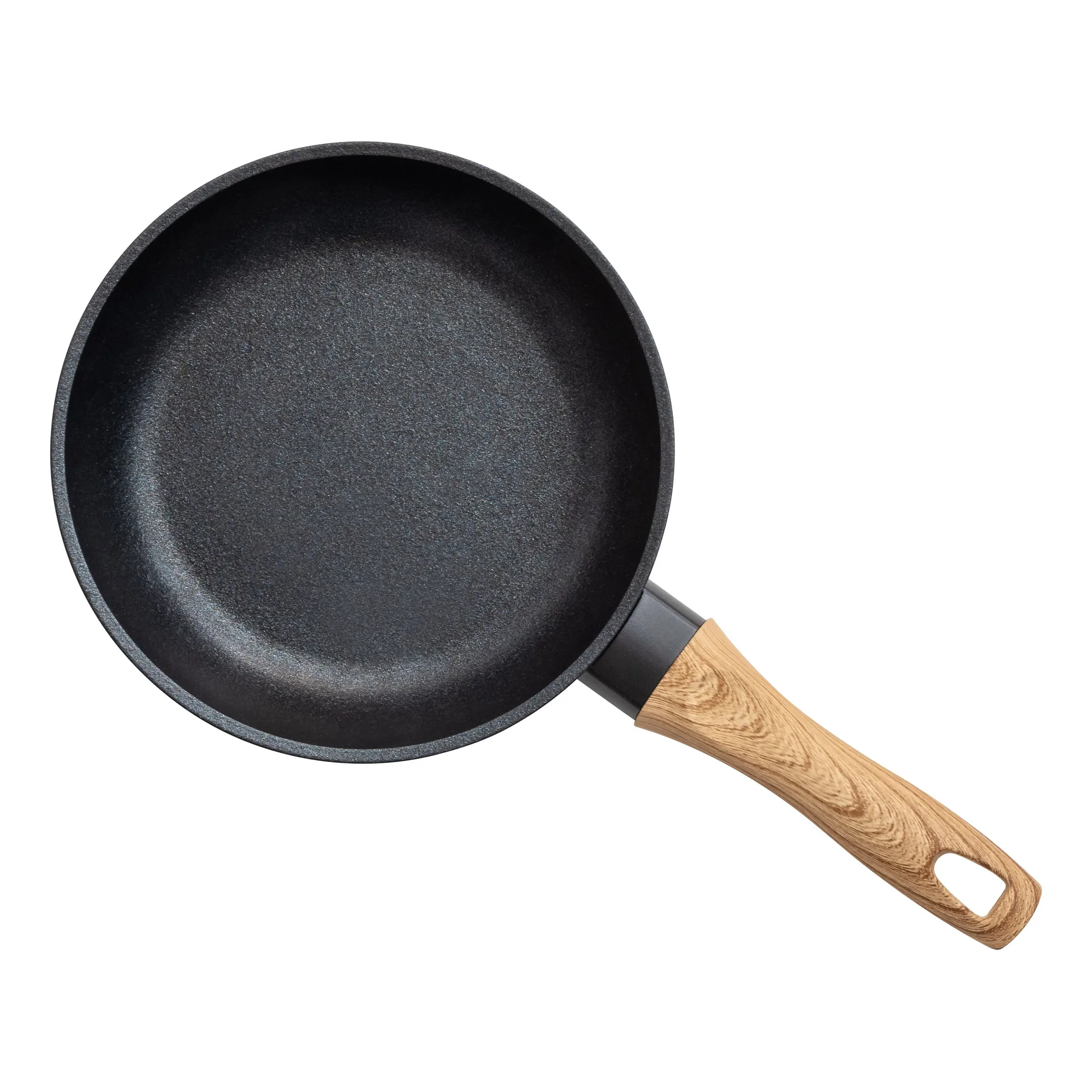
MEGASTONE™ Frying Pan, Non-Stick