Quick answer
Most sticking comes from heat that's too high, leftover cooking residue, or oil applied to a cold pan. Start with medium heat and a thin film of oil added once the pan is warm. If food still sticks after a thorough wash, the nonstick coating may be worn—no technique will restore it.
Heat is the most common culprit
Nonstick coatings are designed to release food at moderate temperatures. When you crank the burner to high, the coating can degrade and food proteins bond to the surface before the pan has a chance to release them. Preheating on medium for 1–2 minutes is enough for eggs, fish, and pancakes. If you see shimmering oil or a faint haze, pull the pan off the heat for 30 seconds before adding food.
Residue and polymerized oil
Even a clean-looking pan can have a microscopic layer of cooked-on oil or food residue. This layer creates a sticky surface that grabs food. Wash with warm water, a soft sponge, and a drop of mild dish soap after every use. For stubborn film, simmer a mixture of water and white vinegar for 2–3 minutes, then wipe with a non-abrasive cloth. Avoid steel wool or harsh scrubbers, which scratch the coating and make sticking worse.
Cooking spray and aerosol oils
Many cooking sprays contain lecithin and other additives that leave a gummy residue on nonstick surfaces. That residue builds up over time and causes sticking. Instead, use a small amount of regular cooking oil—about a teaspoon—spread with a paper towel or silicone brush. If you already use spray, wash the pan thoroughly with warm soapy water to remove the film before your next cook.
When the coating is worn
If your pan still sticks after you've controlled heat, cleaned thoroughly, and switched to regular oil, the nonstick coating may be scratched or depleted. You'll often see visible scratches, a dull patch, or food that bonds even at low heat. At that point, no amount of seasoning or cleaning will restore the release. Replace the pan or choose a model with a different nonstick technology, such as a no-coating surface.
Diagnose your sticking problem
- Food sticks only when you use high heat: Your pan is likely fine—the coating is overheating. Lower the burner to medium and preheat for 1–2 minutes before adding oil or food. If sticking stops at medium heat, keep using the pan.
- Food sticks even at low heat, and the pan looks clean: Invisible residue or polymerized oil is the likely cause. Wash with warm soapy water and a soft sponge; for stubborn film, simmer water and white vinegar, then wipe. If the surface feels tacky after washing, repeat the vinegar simmer.
- You see scratches, dull patches, or food bonds every time: The nonstick coating is worn and cannot be restored. Replace the pan or switch to a no-coating nonstick option like the Titanium Always Pan Pro. Do not try to season a worn nonstick pan—it won't bring back the release.
Our Place pans built for easy release
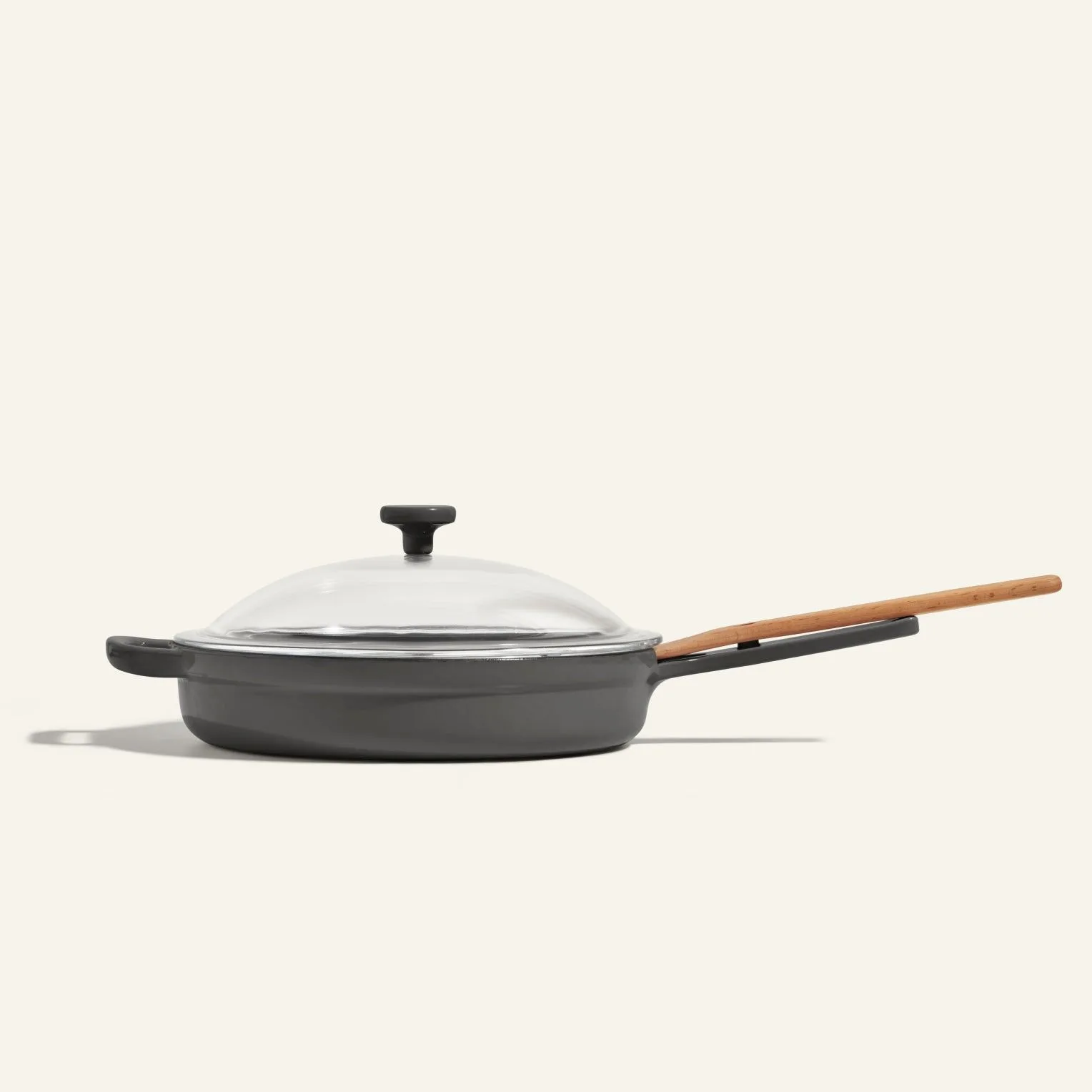
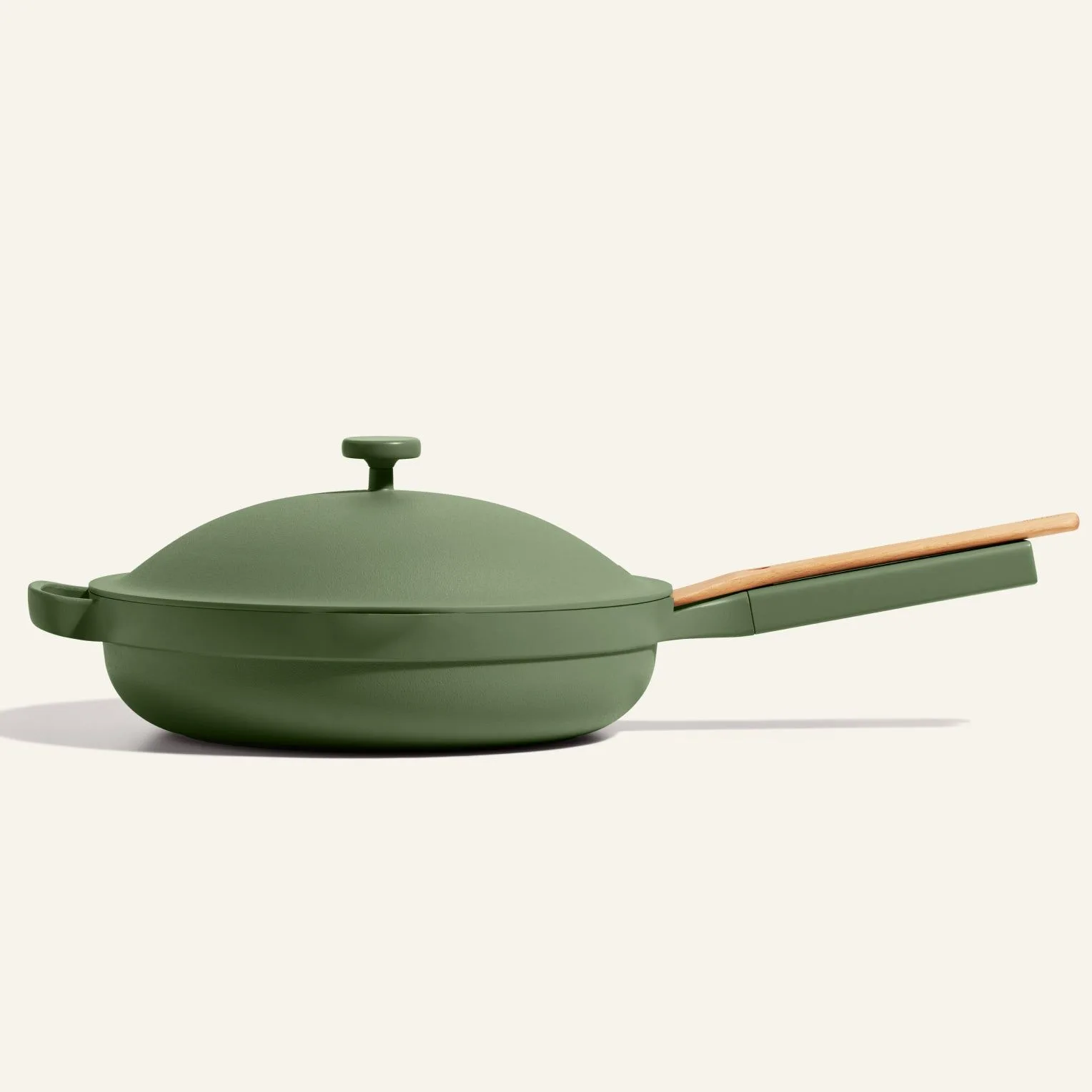
- Always Pan 2.0: The Always Pan 2.0 is a 10-in-1 bestselling cookware system with a ceramic nonstick surface for effortless cooking and cleanup. A single pan that replaces multiple pieces means fewer surfaces to maintain—and the ceramic nonstick is designed to release food without heavy oil.
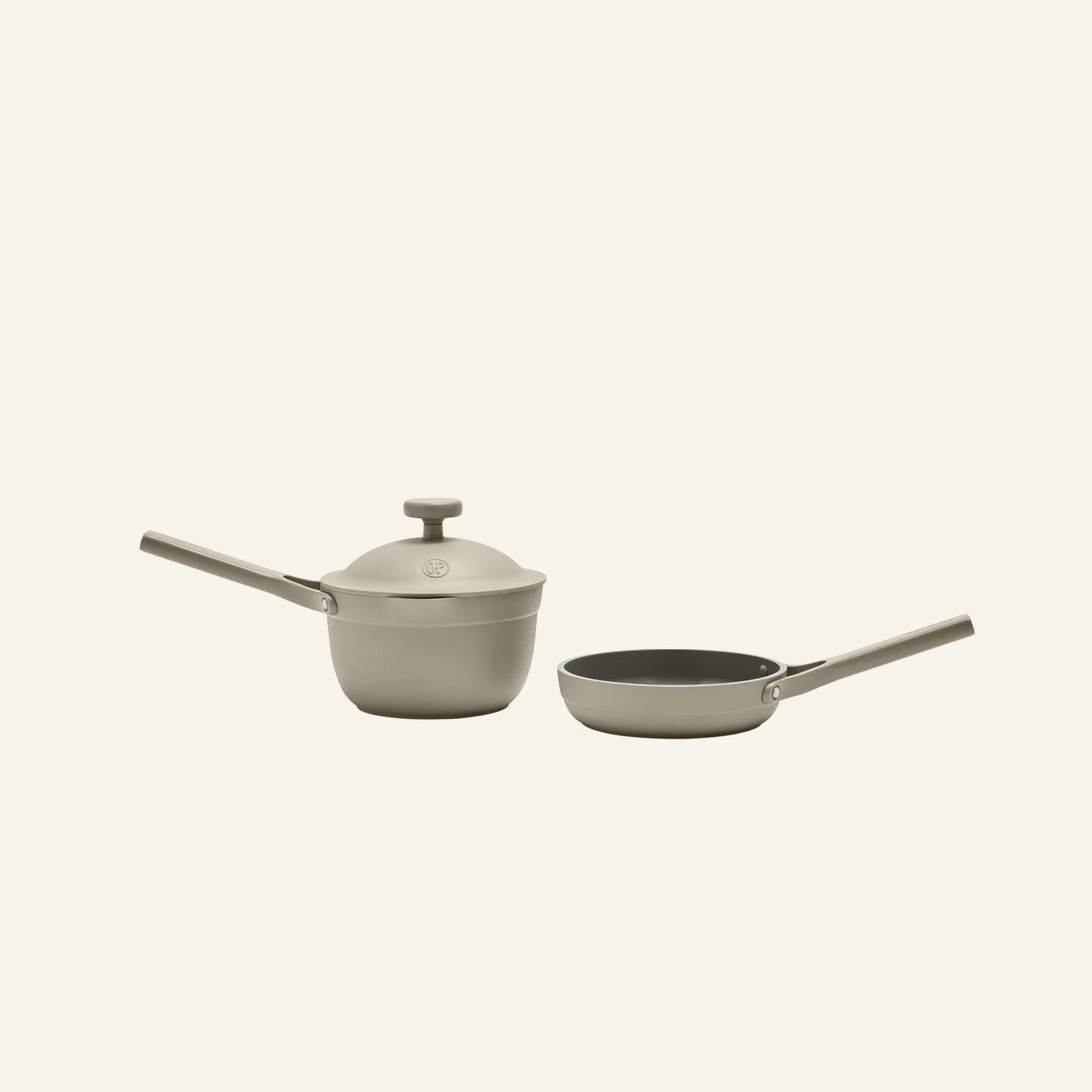
- Mini Always Pan 2.0: The Mini Always Pan 2.0 is an extra-handy, multifunctional, non-toxic nonstick pan designed to simplify your cooking. Its smaller size heats faster and is ideal for eggs or single servings, where precise medium heat is easier to control.
- Titanium Always Pan Pro: The Titanium Always Pan Pro features a no-coating nonstick surface for durable, long-lasting use and is compatible with stainless steel and beechwood spatulas. If you've worn through coated pans before, a no-coating surface avoids the flaking and sticking that comes with a degraded nonstick layer.