Quick answer
Match grind size to contact time: espresso needs a fine grind, pour over and drip sit in the middle, French press wants coarse, and cold brew wants the coarsest grind of all. If your coffee tastes sour or weak, grind finer; if it tastes bitter or dry, grind coarser. Change one variable at a time and keep the dose the same.
The coffee grind size chart, from fine to coarse
Think of grind size as a dial from powdery to gravelly. Finer particles expose more surface area, so water extracts flavor faster. Coarser particles slow extraction down. Your brewer decides how long water stays in contact with the coffee, so the grind has to match that time.
- Espresso: fine, like powdered sugar. Fast, pressurized shots need a fine grind to build resistance.
- Moka pot: fine to medium-fine, slightly coarser than espresso.
- Pour over and drip: medium, like table salt. This is the grind size for pour over and most automatic machines.
- AeroPress: medium-fine to medium, adjusted by steep time.
- French press: coarse, like sea salt. A long steep plus a metal filter rewards a coarse grind.
- Cold brew: extra coarse, like raw sugar or peppercorns. Hours of steeping need the coarsest setting.
How to set a grinder when the numbers mean nothing
A coffee grinder settings guide is only useful if you treat the numbers as relative. Two grinders set to "12" can produce completely different particle sizes, and a burr grinder's zero point drifts as burrs wear in. Use the chart above to pick a starting zone, then adjust by taste rather than chasing a number someone posted online.
Start at the middle of your grinder's range for drip or pour over, then move two clicks finer if the cup tastes thin or sour. Move two clicks coarser if it tastes bitter, ashy, or drying. Blade grinders are a special case: they chop unevenly, so pulse in one-second bursts and expect more fines and muddiness no matter what you do.
Coarse vs fine coffee grind: what actually changes in the cup
The coarse vs fine coffee grind decision controls two things at once: extraction speed and flow. Go too fine and water stalls, over-extracting the outer particles while the center stays under-extracted, which is why a too-fine pour over tastes both bitter and hollow. Go too coarse and water rushes through, leaving you with a sour, watery cup.
There is also a filter factor. Paper filters catch fine particles and slow the flow, so a grind that works in a French press will drain too slowly in a pour over cone. Metal and cloth filters let more sediment through, which is why French press and cold brew recipes tolerate, and even benefit from, a coarser grind.
Do you need a different grind for flavored or decaf coffee?
The brewer still decides the grind, but flavored and decaffeinated beans can behave slightly differently. Decaffeination and flavoring can make beans a touch softer or more brittle, so some brewers find they need to grind one step coarser than usual to keep the flow steady. Treat that as a starting adjustment, not a rule.
If you brew a flavored decaf like Decaf French Vanilla - Flavored Roasted Coffee, keep the same grind zone you would use for any comparable roast and adjust only if the cup tastes flat or the brew stalls. The flavoring is in the bean, not in the grind, so a coarser grind will not "hide" sweetness, it will just weaken the cup.
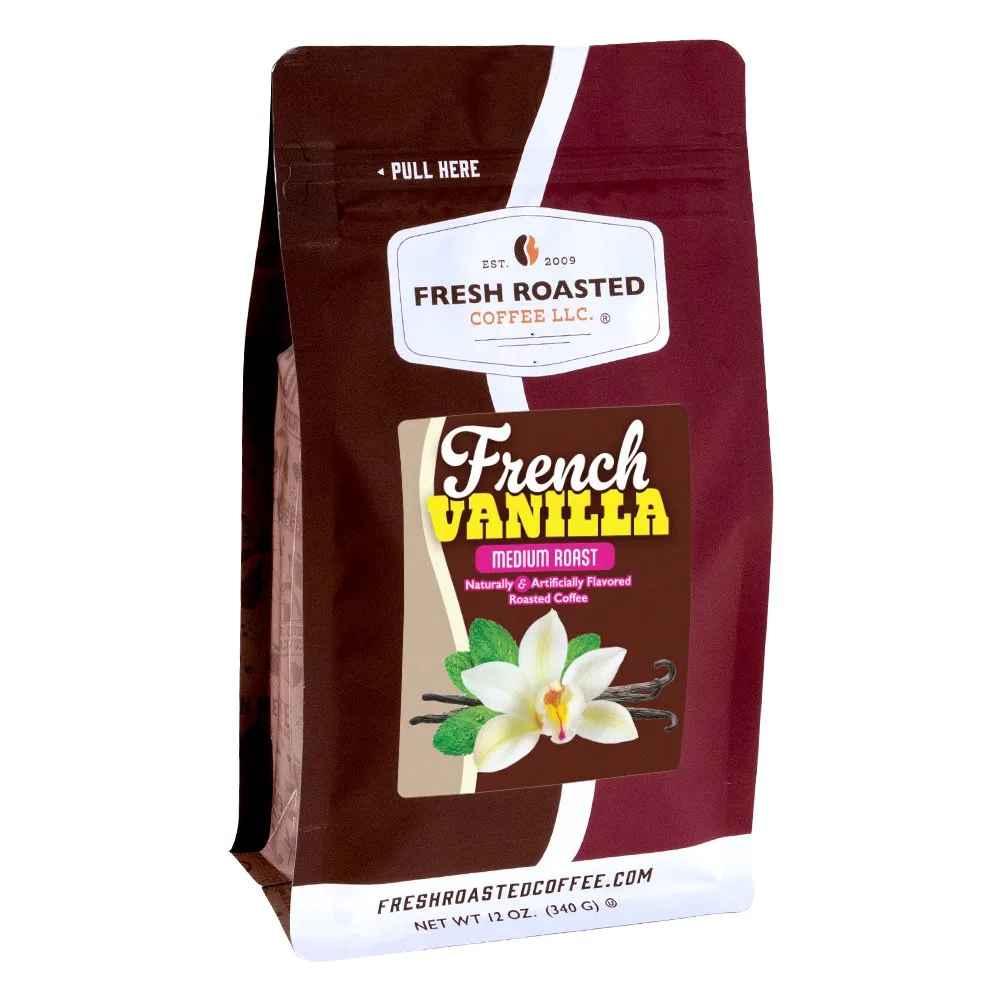
French Vanilla - Flavored Roasted Coffee
Grind size for cold brew and French press: why coarse wins
Cold brew steeps for 12 to 24 hours, so the grind size for cold brew has to be extra coarse. Fine particles would keep extracting the whole time and turn the batch bitter and sludgy, and they clog the filter when you strain. A coarse, even grind gives you a clean, sweet concentrate you can dilute to taste.
French press has the same logic on a shorter timeline. A four-minute steep with a metal mesh filter needs a coarse grind so the plunger moves smoothly and the cup stays free of grit. If your French press feels muddy, the grind is too fine, not the filter.
Espresso grind size is a moving target
Espresso grind size is the most sensitive setting in coffee because a 25-second shot amplifies every small change. A new bag of beans, a different roast level, or even a humid day can shift the flow enough to require an adjustment. Dial in by taste and time, not by a fixed number.
If you use pre-ground espresso capsules, you cannot change the grind, so adjust the other variables instead: dose, water volume, and brew temperature. Darker, bolder capsules like Dark Brazil - Espresso Capsules are built for that pressurized format, so they work best when you let the capsule do its job and tune the ratio around it.
Grind troubleshooting FAQ
My pour over drains too slowly. What now?
Go one or two steps coarser. A stalled bed usually means too many fines, not too little coffee. If it still stalls after two adjustments, check your filter and water temperature.
My French press tastes gritty.
Coarsen the grind and give the plunger a slow, steady press. Fine particles slip past metal mesh. A coarse, even grind is the single biggest fix for muddy French press.
My cold brew is bitter after 18 hours.
Use a coarser grind or shorten the steep. Long contact time plus fine particles over-extracts. Taste at 12 hours and strain when it tastes sweet, not before.
My espresso shot runs in 15 seconds.
Grind finer in small steps and keep the dose the same so you can tell what changed. Aim for a shot that tastes balanced, not just a target time.
Can I use the same grind for every brewer?
No. Contact time and filter type differ, so one grind will always be wrong for at least one method. Pick the grind for the brewer, then adjust for the bean.
Products that pair with these grind settings
- Hario® Ka-Ku Cold Brew Tea Bottle: The Hario Ka-Ku Cold Brew Tea Bottle has a 1.2L capacity and is designed to be stored upright or sideways with no spills. A large, sealable cold brew vessel makes it easy to steep a coarse grind overnight and store the concentrate without transferring it.
- Dark Brazil - Espresso Capsules: Dark Brazil - Espresso Capsules are bold and heavy-bodied and come in a Count option. If you do not have an espresso grinder, capsules remove the grind variable entirely so you can focus on dose and ratio.
- Decaf French Vanilla - Flavored Roasted Coffee: Decaf French Vanilla - Flavored Roasted Coffee is up to 97% caffeine-free and comes in Size and Grind options. Choosing a pre-set grind option is a practical shortcut when you want flavored decaf without adjusting your grinder for softer beans.