Quick answer
Choose a fry pan for high-heat searing and flipping, and a sauté pan for shallow braising and saucy dishes that need more surface area and a lid.
Shape and sides: the main difference
A fry pan (also called a skillet) has sloped sides that make flipping and tossing food easy. A sauté pan has straight, tall sides that hold more liquid and prevent splatter when you deglaze or simmer.
The sloped sides of a fry pan allow steam to escape quickly, which helps create a crisp crust on meats and vegetables. The straight sides of a sauté pan trap steam and liquid, making it ideal for cooking saucy dishes like stir-fries, braised greens, or pan sauces.
Capacity and lid compatibility
Fry pans are typically sold without lids because their sloped sides make a tight seal difficult. Sauté pans almost always come with a lid, which is essential for tasks like steaming vegetables or simmering a sauce.
Because of their straight sides, sauté pans offer more usable surface area for the same diameter. This means you can cook larger batches of ingredients without overcrowding, and you can reduce liquids without spilling.
Cooking techniques each pan excels at
A fry pan is the go-to for high-heat searing, sautéing vegetables, and cooking delicate foods like fish or eggs that need to be flipped. The sloped sides make it easy to slide a spatula under food.
A sauté pan is better for shallow frying, braising, and one-pan meals that start with a sear and finish with a sauce. The lid and straight walls let you simmer rice, cook down tomatoes, or braise chicken thighs without losing moisture.
Fry pan vs sauté pan: trade-offs at a glance
- Fry pan (skillet): Sloped sides, no lid. Best for high-heat searing, flipping, and foods that need quick steam release. If you frequently cook steaks, eggs, or stir-fries that you flip, start with a fry pan.
- Sauté pan: Straight sides, comes with a lid. Best for shallow braising, simmering sauces, and cooking larger batches without spilling. If you often make one-pan meals with a sauce or braise vegetables, a sauté pan is more versatile.
- The middle ground: If your cooking style mixes both techniques, owning one of each (like the 7pc Fry & Sauté Set) gives you the right tool for any recipe.
Product facts
-
7pc Fry & Sauté Set: Caraway’s 7pc Fry & Sauté Set includes both a fry pan and a sauté pan, covering sizzles, sears, and saucy recipes of all sizes. Owning both pans lets you match the pan shape to the dish—use the fry pan for searing steaks and the sauté pan for braising vegetables or making pan sauces.
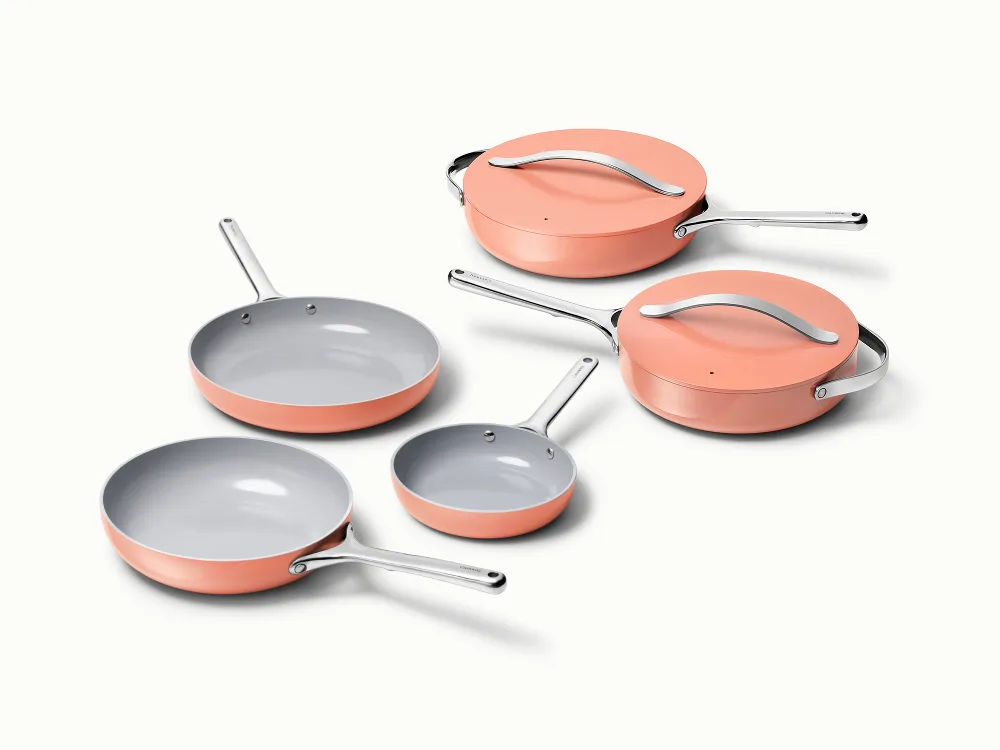
7pc Fry & Sauté Set
Which pan fits your cooking?
Best for
- Home cooks who sear steaks, cook eggs, or stir-fry vegetables and need a pan for high-heat flipping
- Cooks who already have a lid for another pan and want a lightweight pan for quick tasks
Not for
- Cooks who frequently braise meat, simmer sauces, or cook large batches of vegetables—a sauté pan’s lid and straight sides are better for those tasks