Quick answer
Apply circle lenses by first washing and drying your hands, then placing the lens on your dominant index finger, holding your upper lid open with the other hand, looking slightly down, and gently placing the lens on the lower part of your eye. Close your eye slowly and blink a few times. The biggest cause of tearing is rushing the placement or letting your lashes touch the lens, so keep your lid fully open until the lens settles.
Why your eyes water during insertion (and how to stop it)
Tearing usually happens for three reasons: your eyelid touches the lens before it lands, your finger is too wet or too dry, or you stare directly at your finger and blink at the last second. To avoid this, keep your upper lid pinned against your brow bone, look slightly downward into a mirror, and bring the lens up from below rather than straight on. If your eye still waters, stop, wait 30 seconds, and try again with a calmer approach. Forcing a lens onto a watery eye rarely works.
A common mistake is using tap water or saliva to wet the lens. Only use fresh contact lens solution. If you are a first time contact lens wearer, practice touching your eye with a clean, dry finger before you even open the lens package. This helps you get used to the sensation without wasting a lens.
Prepare your lens and your space before you start
Set up in a well-lit bathroom or bedroom with a mirror at eye level. Wash your hands with mild soap and dry them with a lint-free towel. Open the lens blister and use a lens scoop or your clean fingers to lift the lens out. Check that the lens is not inside out: it should look like a bowl, not a plate with flared edges. If the edges curve outward, flip it. Place the lens on your dominant index finger and make sure there is no debris or eyelash on it.
If you wear makeup, apply it after inserting the lenses. Mascara and eyeliner particles can stick to the lens and cause irritation. Also, avoid using lotion or oily hand cream right before handling lenses, as residue can cloud the lens.
A calm, repeatable insertion method
Stand or sit comfortably in front of the mirror. Use your non-dominant hand to hold your upper eyelid open by pressing gently on the lashes near the brow bone. Use your dominant hand to pull down your lower eyelid with your middle finger. Look slightly down and toward the mirror. Bring the lens toward your eye while looking at a fixed point. Place the lens on the lower white part of your eye, then slowly release your lower lid and look up. The lens should center itself. Close your eye gently and blink a few times. If it feels uncomfortable, remove it, rinse with solution, and try again.
A common mistake is pulling the upper lid too high or too low, which causes the lens to catch on your lashes. Another mistake is letting go of the lower lid too early, so the lens falls out. Keep both lids steady until the lens is fully on your eye.
What to do if the lens slips or feels scratchy
If the lens slips off-center, don't panic. Look in the opposite direction of where the lens is, then blink gently. For example, if the lens is stuck under your upper lid, look down and blink. If it feels scratchy, remove the lens immediately and inspect it for a tear, dust, or an eyelash. Rinse with fresh solution and reinsert. If the scratchiness continues, the lens may be inside out or damaged. Never rub your eye vigorously with a lens in place.
For circle lenses with a larger diameter, like 14.5mm, the lens covers more of your eye and may feel more noticeable at first. Give yourself a few minutes to adjust. If you have dry eyes, use rewetting drops made for contact lenses, not regular eye drops.
Removal without pulling or tearing
Wash and dry your hands. Look up and pull your lower lid down with your middle finger. Use your index finger and thumb to gently pinch the lens at its lower edge. Do not pinch the center of the lens, as this can scratch your eye. If the lens feels stuck, apply a drop of contact lens solution and blink before trying again. Once removed, clean and store the lens in fresh solution if it is a monthly or yearly lens.
A common mistake is rushing removal and scratching the white of your eye with a fingernail. Keep your nails short and filed. If you wear circle lenses for a full day, remove them before bedtime and never sleep in them unless your eye care professional says it is safe.
Step-by-step circle lens application
- Wash and dry your hands: Use mild soap and a lint-free towel. Any oil or lotion on your fingers can transfer to the lens and cause irritation. Checkpoint: your hands should be completely dry before touching the lens.
- Inspect the lens: Place the lens on your dominant index finger. Check that it is a bowl shape, not a plate with flared edges. Look for debris or tears. If the edges flare outward, the lens is inside out. Flip it and re-check.
- Hold your eyelids open: Use your non-dominant hand to lift your upper lid by pressing near the brow bone. Use your dominant hand to pull down your lower lid with your middle finger. Keep your upper lid fully open until the lens is on your eye.
- Look down and place the lens: Look slightly down into a mirror. Bring the lens up from below and place it on the lower white part of your eye. Release your lower lid slowly, then look up and blink gently. If the lens feels uncomfortable, remove it, rinse with solution, and try again.
- Center and settle the lens: Close your eye and blink a few times. If the lens is off-center, look in the opposite direction and blink until it centers. Never rub your eye vigorously with the lens in place.
- Remove with care: Wash and dry your hands. Look up, pull your lower lid down, and gently pinch the lower edge of the lens with your index finger and thumb. Avoid pinching the center. Keep nails short to avoid scratching your eye.
Circle lenses that are easy to handle for beginners
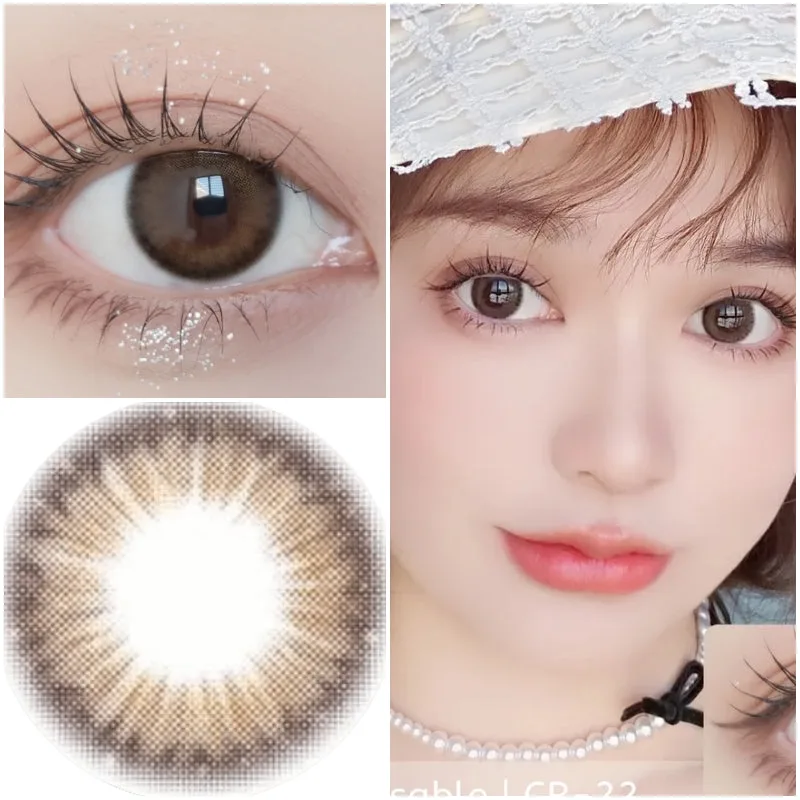
- Halo Choco (CR22): Halo Choco (CR22) has a 14.2mm diameter, 40% water content, and 8.6 base curve, and is available in prescription powers from 0.00 (plano) to -4.00. The 14.2mm diameter is closer to a natural iris size, so it may feel less bulky during insertion than larger circle lenses. The 40% water content and 8.6 base curve are common specs that many wearers find comfortable for daily wear.
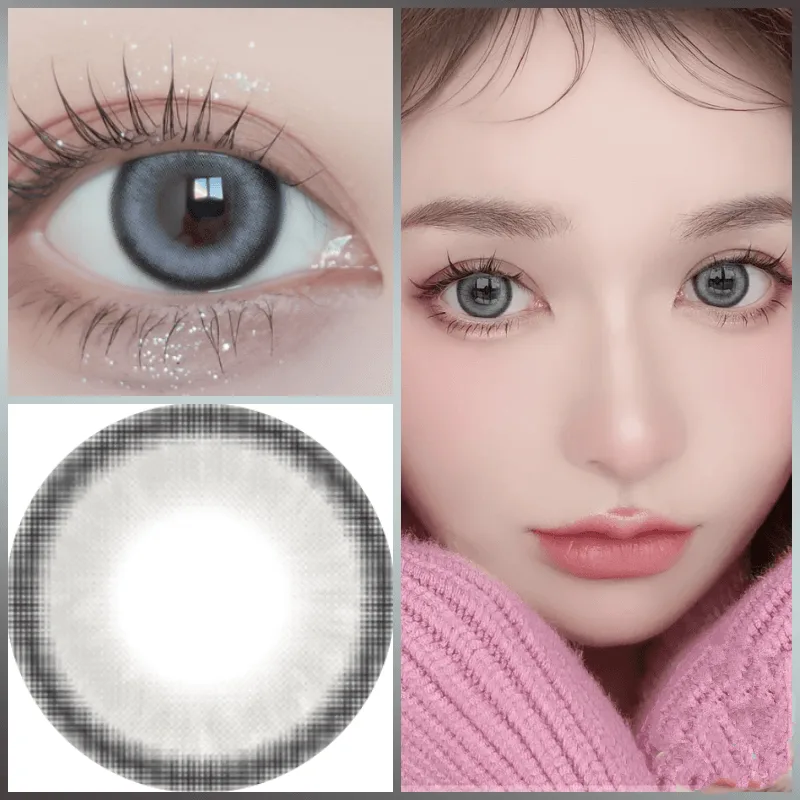
- Ringlight Gray (CR85): Ringlight Gray (CR85) has a 14.5mm diameter, 40% water content, and 8.6 base curve, and is available in a range of prescription powers including plano. The 14.5mm diameter gives a more noticeable enlarging effect, which can be slightly harder to center at first. If you are a beginner, practice with a smaller diameter lens until you are confident.