Quick answer
To play Maximum Apocalypse, pick a monster deck and matching heroes, deal each player their starting hand and gear, then take turns moving, scavenging, and fighting until you complete the scenario objective. Set up takes about 10 minutes once cards are sorted. If you want a narrative campaign instead of a single session, the Maximum Apocalypse RPG: Core Book gives you rules for character creation, skills, exploration, scavenging, combat, crafting, equipment, and vehicles.
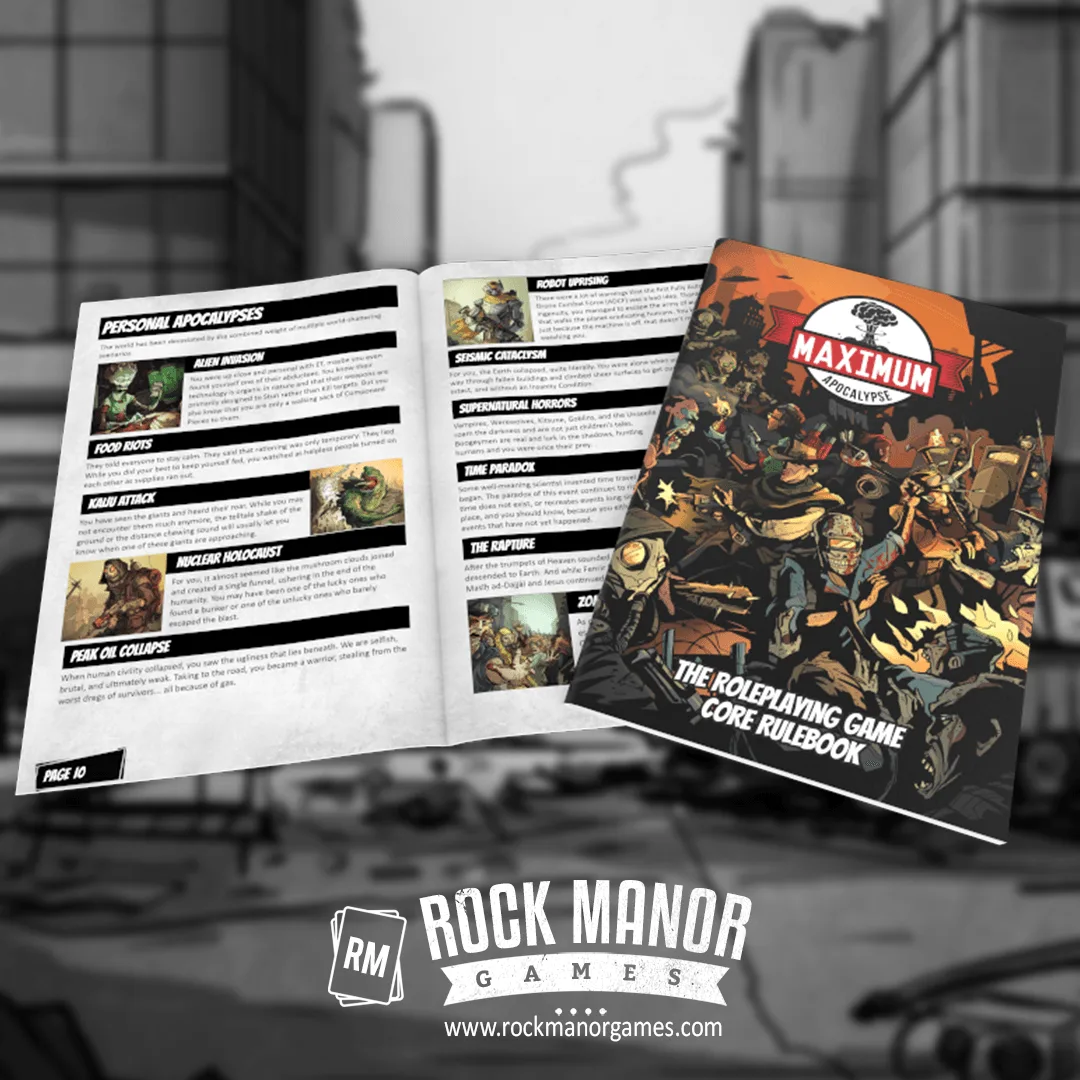
Maximum Apocalypse RPG: Core Book
Maximum Apocalypse is a cooperative survival game where the board itself is the threat: monsters spawn, resources run thin, and your team has to decide whether to push for the objective or hole up and heal. The first game usually feels chaotic for two or three rounds, then clicks once you understand the turn rhythm. This walkthrough covers setup, the rules that actually matter on turn one, and the mistakes that cost new groups the most time.
You do not need every expansion to start. One core set and one monster deck is enough for a full session. The extras below are worth knowing about because they change what the game asks of you, not just how much content sits in the box.
What you need before you start
Sort the monster deck, hero cards, gear cards, and map tiles before anyone sits down. Maximum Apocalypse asks players to draw from several small decks, and unsorted piles are the single biggest cause of a slow first turn. Give each player a hero board, their starting gear, and a hand of cards. Put the monster deck and the map tiles within reach of everyone, not just the person running the table.
Decide the scenario before you deal. The scenario tells you which tiles to place, what the win condition is, and how the monster deck behaves. If you are teaching new players, choose the shortest scenario in the rulebook. A long scenario with four first-timers is how a two-hour game becomes a four-hour game.
- Checkpoint: every player should be able to point to their hero's special ability before turn one begins.
- Keep the discard piles separate. Mixing gear discards with monster discards is the most common setup error.
Maximum Apocalypse setup, step by step
Build the map first. Place the starting tile, then add tiles according to the scenario diagram, leaving room to expand as players explore. Shuffle the monster deck and place it face down. Each player takes their hero, their starting gear, and draws up to their hand limit. Place the health and ammo tokens where everyone can reach them, because you will move them constantly.
Once the map is built, read the scenario objective out loud. This matters more than it sounds: Maximum Apocalypse scenarios often have a specific extraction or survival condition, and players who assume 'kill everything' will waste turns fighting when they should be moving. Confirm the lose condition too, so nobody is surprised when the monster deck runs out or a timer triggers.
- Common mistake: building the map from memory instead of following the scenario diagram, which can make the objective unreachable.
- Checkpoint: the table should agree on the win condition before the first turn.
The turn structure you actually use
On your turn, you move, then take one main action such as scavenging, attacking, or using a card ability, then resolve any monster spawns or end-of-turn effects. Movement is limited by your hero and gear, so plan your position before you commit to an action. If you move first and then realize you needed to be somewhere else, you have usually wasted the turn.
Scavenging is how you get gear, but it is not free. Each scavenge risks drawing a monster or triggering a hazard, so the group should decide who scavenges and who guards. Fighting is resolved with your hero's attack value plus any gear bonuses; ammo is a resource, not a formality, and running dry mid-fight is a real risk in longer scenarios.
- Common mistake: spending every turn scavenging while the monster deck builds up unchecked.
- Checkpoint: after each full round, ask whether the team is closer to the objective than it was last round. If not, change the plan.
Your first game walkthrough: the first three rounds
Round one is about information. Explore one new tile, scavenge once if it is safe, and let the monsters come to you rather than chasing them. Round two is where the group should commit to a direction: pick a route toward the objective and stick to it. Round three is usually when the first real fight happens, and by then you should know whether your team has enough ammo to finish the scenario or needs to retreat and re-gear.
If you are playing with a full player count, assign roles out loud. One player handles map exploration, one handles combat, and one tracks the monster deck and discard piles. This is not a rule, but it prevents the most common table problem: everyone tracking everything and nobody tracking anything.
- Common mistake: splitting the party across the map in round one, which makes monster spawns harder to manage.
- Checkpoint: by the end of round three, every player should have contributed to the objective, not just survived.
When to move from the board game to the RPG
The board game gives you a tight, repeatable survival puzzle. The Maximum Apocalypse RPG: Core Book gives you a different experience: character creation based on the survivors' occupations before the world fell, plus rules for skills, exploration, scavenging, combat, crafting, equipment, and vehicles. If your group keeps asking 'what happened before this scenario,' the RPG is the natural next step.
You do not have to choose one or the other. Many groups play the board game for a quick session and use the RPG Core Book for a longer campaign. The rules are separate, so you are not converting anything; you are just picking the format that fits the night.
- The RPG Core Book is a reference, not a scenario pack. Expect to build your own story with it.
Maximum Apocalypse first-game checklist
- Sort every deck before players sit down: Separate monster, gear, and hero cards, then place discard piles next to their draw piles. Checkpoint: no card should be in a pile it does not belong to.
- Build the map from the scenario diagram: Place the starting tile and follow the diagram exactly rather than improvising the layout. Checkpoint: the objective tile is reachable from the starting tile.
- Read the win and lose conditions aloud: Confirm the objective, the extraction or survival condition, and what triggers a loss. Checkpoint: every player can state the win condition in one sentence.
- Assign roles for the first three rounds: Name one explorer, one fighter, and one player tracking the monster deck and discards. Checkpoint: nobody is tracking everything alone.
- Review the round after it ends: Ask whether the team moved closer to the objective and whether ammo is still sufficient. Checkpoint: if the answer is no, change the plan before the next round.
Products that change how you play
- Maximum Apocalypse RPG: Core Book: Contains rules for character creation, skills, exploration, scavenging, combat, crafting, equipment, and vehicles, letting you create survivors based on their occupations before the world fell. Use this when your group wants a persistent campaign with custom survivors instead of a single board game scenario.
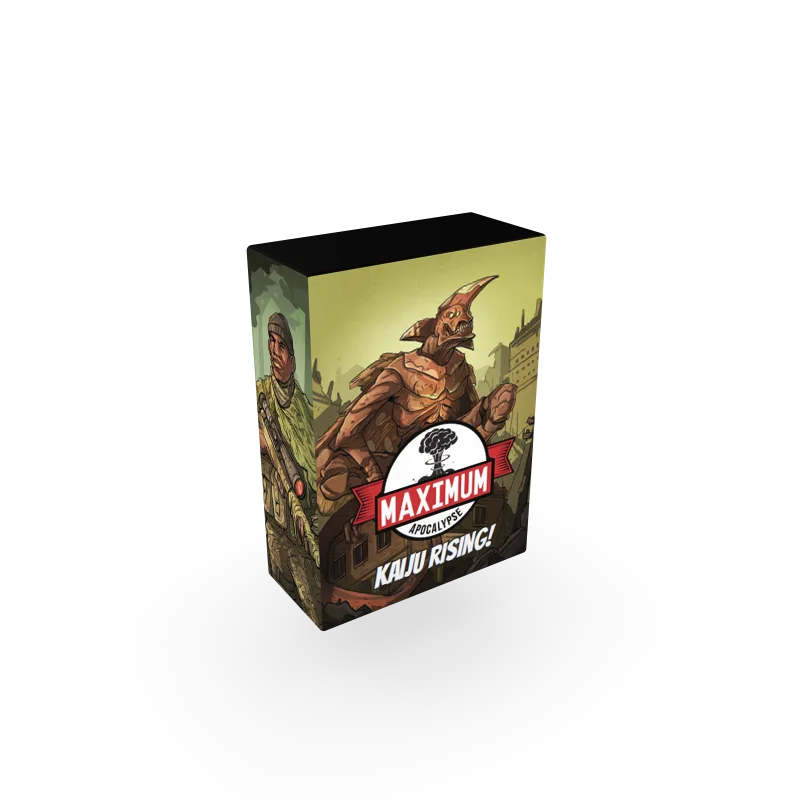
- Maximum Apocalypse: Kaiju Rising: Adds two new survivor characters, the Army Ranger and Scientist, plus a new Kaiju apocalypse deck. A good second purchase if you have played the core monster decks and want a different threat type and two new hero playstyles.
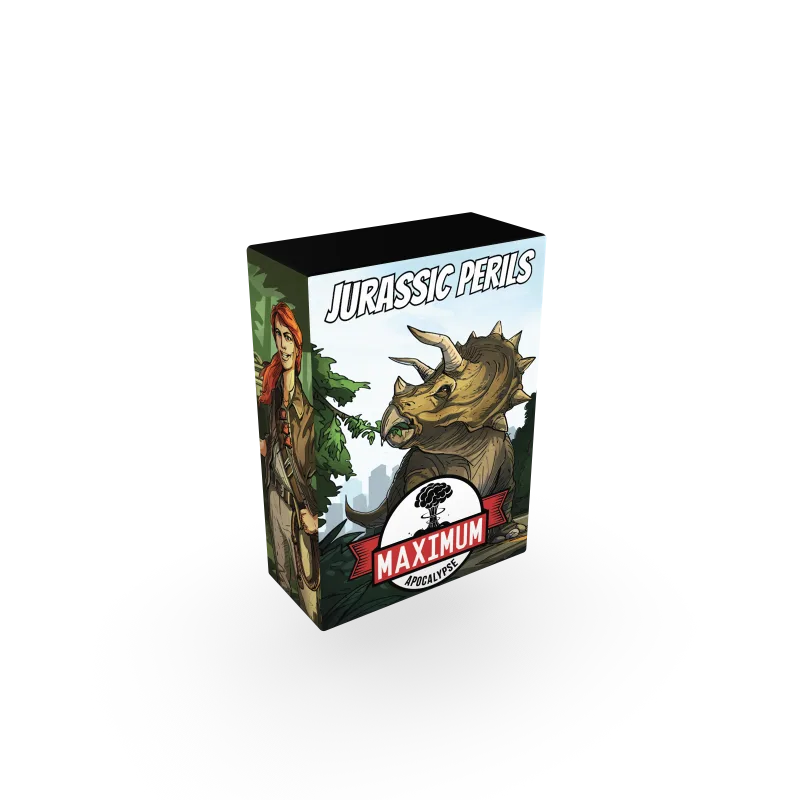
- Maximum Apocalypse: Jurassic Perils: An expansion featuring Dinos and the Adventurer character, described as a Kickstarter limited exclusive. Worth checking availability before you plan around it, since limited exclusives can be hard to restock.
Set up the map, read the scenario out loud, and play three rounds before you judge the game. Most groups find the rhythm by then, and if you want more story than a single session can hold, the Maximum Apocalypse RPG: Core Book is the clean next step.