If you’ve just unboxed a Baking Steel griddle, you’re probably eager to start cooking. But before you crack an egg or slide a pancake onto the surface, there’s one crucial step: seasoning. Seasoning your steel griddle creates a natural, non-stick layer that improves with use, making everything from fried eggs to stir-fries a breeze. In this guide, we’ll walk you through the simple process of seasoning your Baking Steel griddle, plus share tips for keeping it in top shape for years to come.

Baking Steel
Seasoning isn’t just about preventing food from sticking—it’s about building a protective barrier that prevents rust and enhances flavor. Unlike cast iron, steel is lighter and heats more evenly, but it still needs a little love to reach its full potential. With a few minutes of effort, you can transform your griddle into a kitchen workhorse that rivals any restaurant-grade surface.
Why Season Your Baking Steel Griddle?
Seasoning is the process of baking oil into the surface of your steel, creating a polymerized layer that is naturally non-stick and rust-resistant. This layer not only prevents food from sticking but also adds a subtle flavor boost to your dishes. Over time, the seasoning darkens and becomes more effective, much like a well-loved cast iron skillet.
Your Baking Steel griddle is made from high-quality steel that’s built to last, but without proper seasoning, it’s more prone to sticking and rusting. By investing a little time upfront, you’ll enjoy a non-stick surface that makes cooking and cleanup easier. Plus, a well-seasoned griddle is a joy to use—eggs slide right off, and pancakes flip effortlessly.
- Seasoning creates a non-stick surface that improves with use.
- It protects against rust and corrosion.
- It adds a subtle, savory flavor to your food.
What You’ll Need
Before you start, gather a few simple supplies. You’ll need a high-smoke-point oil (like grapeseed, flaxseed, or avocado oil), a paper towel or lint-free cloth, and a stove or oven. Avoid using olive oil, as it has a lower smoke point and can leave a sticky residue.
You’ll also want to make sure your griddle is clean and dry. If it’s brand new, wash it with warm soapy water to remove any manufacturing residue, then dry it thoroughly. If it’s already been used, give it a good scrub to remove any food particles before seasoning.
Step-by-Step Seasoning Instructions
Start by applying a thin, even layer of oil to the entire surface of your griddle—including the sides and handle if it’s a reversible model. Use a paper towel to spread the oil, then wipe away any excess. The goal is to have a barely-there sheen, not a puddle of oil.
Next, heat your griddle. If you’re using the oven method, preheat your oven to 400°F (200°C) and place the griddle upside down on the middle rack. Put a baking sheet or foil on the rack below to catch any drips. Bake for one hour, then turn off the oven and let the griddle cool completely inside. If you’re using the stovetop method, heat the griddle over medium heat until it starts to smoke, then let it cool. Repeat this process 2-3 times for the best results.
- Apply a thin layer of oil—less is more.
- Heat to the oil’s smoke point to polymerize.
- Repeat 2-3 times for a durable seasoning.
How to Maintain Your Seasoned Griddle
Once your griddle is seasoned, maintaining it is easy. After each use, let it cool slightly, then wipe it down with a paper towel. For stubborn bits, use a plastic scraper or a soft brush—avoid harsh abrasives that can strip the seasoning. If needed, wash with mild soap and water, but always dry it thoroughly and apply a light coat of oil afterward.
With proper care, your seasoned griddle will last for generations. And if you ever notice the seasoning wearing thin, simply repeat the seasoning process to bring it back to life. A little maintenance goes a long way in preserving your griddle’s non-stick surface and preventing rust.
- Clean with mild soap and water when needed, then dry and oil.
- Avoid metal utensils that can scratch the seasoning.
- Store in a dry place to prevent rust.
Troubleshooting Common Seasoning Issues
If your griddle is sticky after seasoning, it’s likely because you used too much oil or didn’t heat it enough. Don’t worry—this is easy to fix. Simply heat the griddle again to burn off the excess oil, then wipe it down and start fresh with a thinner layer.
If you notice rust spots, scrub them off with a steel wool pad, then re-season the affected area. Rust is usually a sign that the seasoning has worn off and moisture has reached the steel. With a quick touch-up, your griddle will be as good as new.
- Sticky surface? Reheat and wipe off excess oil.
- Rust spots? Scrub and re-season.
- Uneven seasoning? Apply a thin layer and heat again.
Seasoning your Baking Steel griddle is a simple, rewarding process that ensures non-stick cooking and protects your investment. With just a few minutes of effort, you’ll have a versatile cooking surface that performs beautifully for years. Pair it with the right tools, like the Baking Steel Artisan Dough Cutter for slicing your creations, and you’ll be well on your way to restaurant-quality meals at home. Happy cooking!
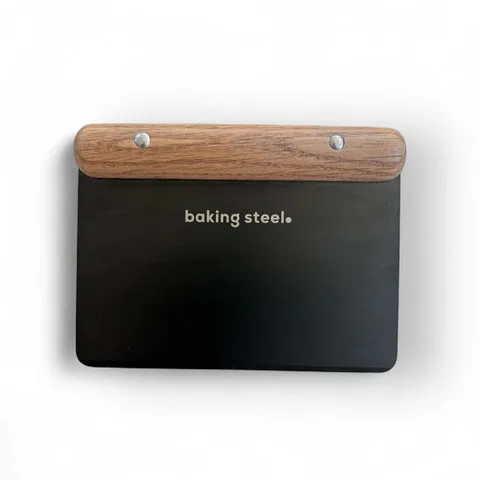
Baking Steel Artisan Dough Cutter