Quick answer
To season a carbon steel wok, scrub off the factory coating, dry it thoroughly, apply a thin layer of high-smoke-point oil, and heat the wok until the oil polymerizes into a dark, nonstick patina.
Why seasoning matters for carbon steel woks
Carbon steel woks do not come with a nonstick coating. Instead, the cooking surface becomes naturally nonstick through seasoning—a layer of polymerized oil. This process fills microscopic pores in the metal and creates a smooth, dark patina that improves with each use. Without seasoning, food sticks, and the wok may rust. The initial seasoning is quick, but the patina will deepen over time as you cook with oil.
A properly seasoned wok also distributes heat more evenly and allows you to use less oil than a conventional skillet. Both the Babish 14-Inch Carbon Steel Flat Bottom Wok and the Oster Sangerfield 14-Inch Carbon Steel Wok come with protective factory coatings that must be removed before seasoning. Follow the steps below to prepare your wok correctly the first time.
Step-by-step wok seasoning process
- Step 1: Scrub off the factory coating: Wash the wok with hot water and a mild dish soap. Use a stiff sponge or scrub pad to remove the waxy protective coating. Rinse thoroughly. A faint oily sheen should remain—that is normal. If the wok still feels tacky, repeat the scrub.
- Step 2: Dry the wok completely: Place the wok over medium heat for 2-3 minutes to evaporate all moisture. Water spots cause rust, so ensure a bare metal appearance. Do not skip drying; any water left will cause flash rust before you even start seasoning.
- Step 3: Apply a very thin layer of oil: Use a paper towel to rub high-smoke-point oil (such as grapeseed, peanut, or avocado oil) over the entire interior surface. Then wipe off the excess with a clean paper towel—the layer should be so thin it barely looks oily. Thick oil drips and forms sticky spots that never polymerize. Less oil equals a smoother patina.
- Step 4: Heat the wok until it smokes: Place the wok over high heat. Rotate it occasionally so all sides reach the smoke point. The oil will darken and start to smoke; continue until the entire interior turns a bronze or dark brown color. This takes about 5-8 minutes on a gas stove, longer on electric. Do not let the wok sit still—moving it prevents an uneven patchy layer.
- Step 5: Cool and repeat (optional for a stronger base): Turn off the heat and let the wok cool completely. Repeat steps 3-4 once or twice more for a more durable initial seasoning. Some users prefer three rounds for a jet-black base. After cooling, the wok should feel slippery but not sticky. If it feels tacky, you used too much oil—burn it off and restart from step 3.
Products referenced in this guide
-
Babish 14-Inch Carbon Steel Flat Bottom Wok: The Babish 14-Inch Carbon Steel Flat Bottom Wok uses heavy gauge steel for even heat distribution and is rust-resistant for easier cleaning. Its even heat helps the seasoning layer form uniformly across the cooking surface, reducing hot spots.
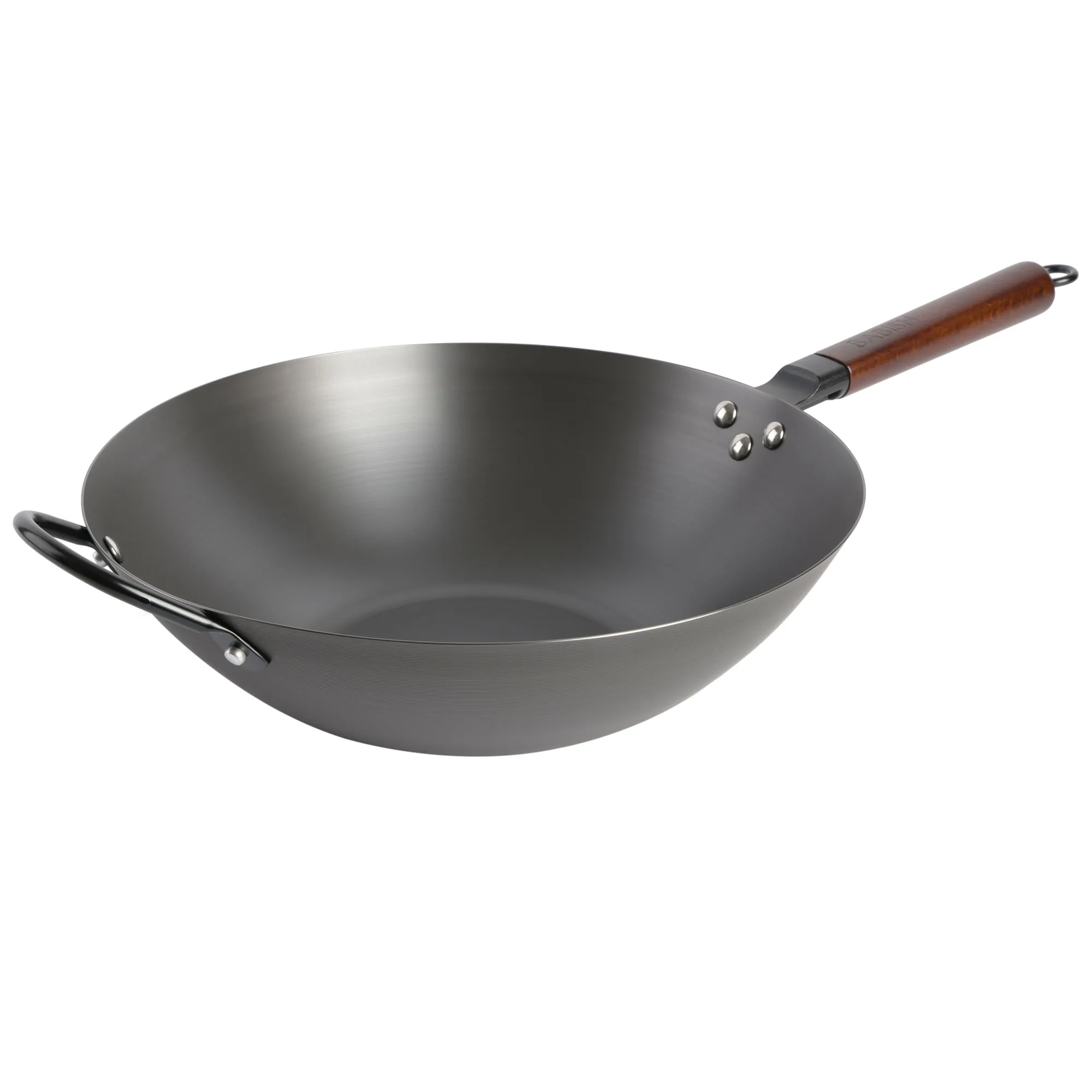
Babish 14-Inch Carbon Steel Flat Bottom Wok
-
Oster Sangerfield 14-Inch Carbon Steel Wok w/ Wood Handles: The Oster Sangerfield 14-Inch Carbon Steel Wok has a concave stainless steel body designed for stir-frying and pan-searing, with a flat base for stovetop stability. The flat base keeps the wok steady during the seasoning process, especially when working on an electric or induction cooktop.
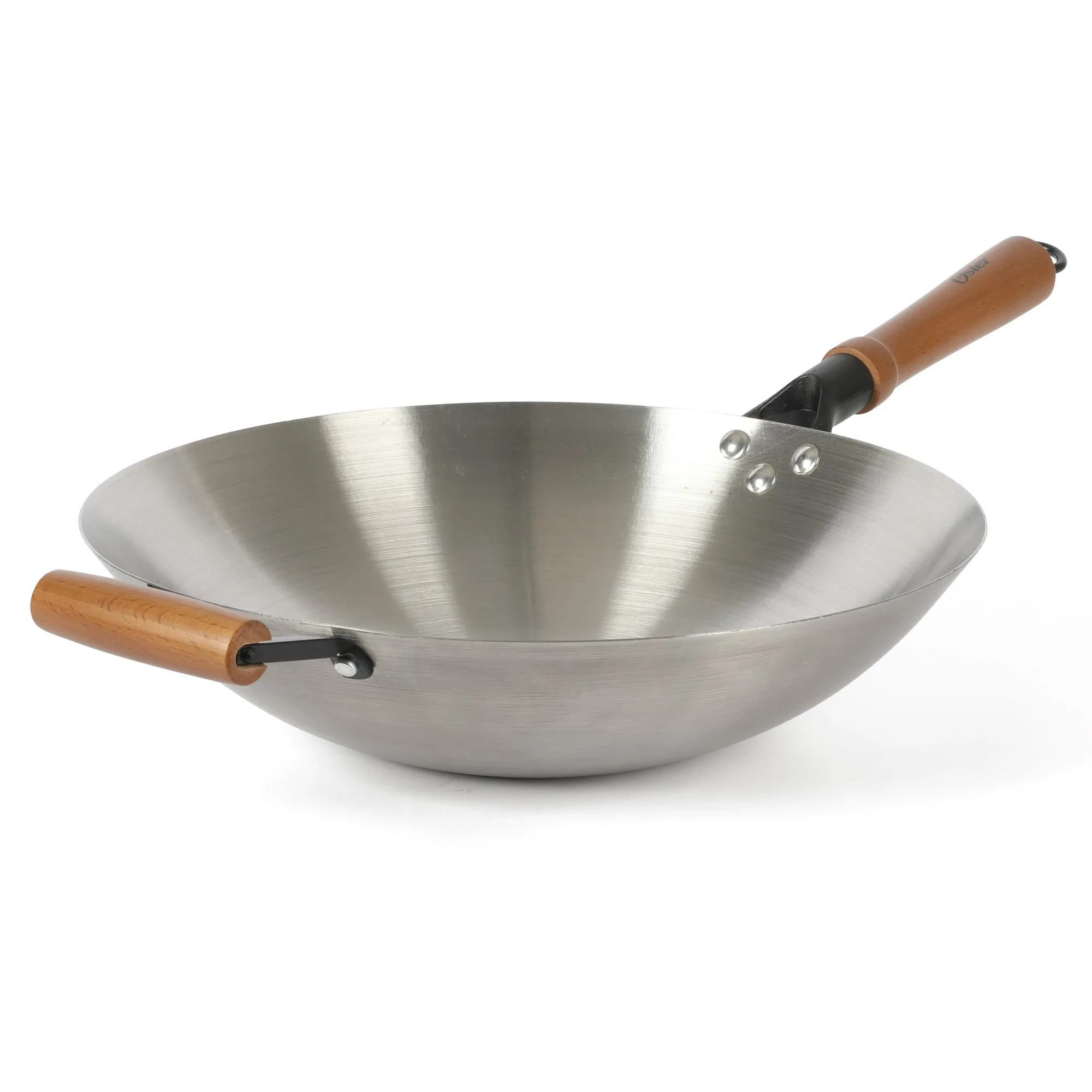
Oster Sangerfield 14-Inch Carbon Steel Wok w/ Wood Handles