Quick answer
Keep bulk whole grain rye flour in an airtight, opaque container in a cool, dark, dry spot, and move anything you will not bake through within about a month into the freezer. Whole grain rye contains the bran and germ, so its oils go rancid faster than white flour. Label the container with the milling or purchase date so you always know what you are baking with.
Whole grain rye flour is a different animal from the white flour most of us grew up storing in a paper bag on a pantry shelf. Because the whole kernel is milled, the bran and germ come along for the ride, and those parts carry oils that oxidize over time. That is why a bag of rye can smell perfectly fine for weeks and then turn sharply bitter before you notice anything looks wrong.
The good news is that rye flour does not need special equipment to stay fresh for months. It needs four things: a barrier to air and moisture, protection from light, a cool and stable temperature, and a habit of labeling what you put away. The steps below are the same ones we use for the flour we mill in store, and they work whether you bought a six-pack or filled a five-gallon bucket.
Start with flour that is actually fresh
No storage method can rescue flour that was already old when you bought it. Whole grain rye is at its best in the first few weeks after milling, so buy from a source that mills frequently and tells you when. If you are buying in bulk to save money, split the purchase with a friend or two if you cannot realistically bake through it within a few months. Freshness at the start is the single biggest factor in how long the flour stays good.
Smell the flour before you store it. Fresh whole grain rye smells sweet, slightly grassy, and a little earthy. If it smells like crayons, old oil, or cardboard, return it or use it up immediately in a strongly flavored bake rather than putting it away for months.
- Buy the smallest bulk size you will finish in three to four months unless you plan to freeze most of it.
- Write the milling date on the bag the day it arrives if the label does not already include one.
Choose containers that actually seal
The container matters less than the seal. A zip-top bag with the air pressed out works for short-term storage, but for months you want a rigid container with a gasket or a tight-locking lid. Square or rectangular containers waste less pantry space than round ones, and clear containers let you see how much is left without opening the lid. If your container is clear and your pantry gets any light, store it inside a cabinet or slip it into a paper bag.
Size the container to the amount of flour. A half-empty five-gallon bucket holds a lot of air, and every time you open it you exchange the stable air inside for humid kitchen air. Splitting bulk flour into several smaller containers means you open only one at a time and leave the rest sealed.
- Glass jars with rubber gaskets, food-grade buckets with gamma lids, and heavy-duty cambro-style bins all work well.
- Avoid reusing containers that held strong-smelling foods, since flour picks up odors.
Pick the right temperature zone
A cool, dark pantry between roughly 50°F and 70°F is fine for flour you will use within a month or two. Above that range, the oils in whole grain rye break down noticeably faster. The freezer is the better choice for long-term storage, and it does not harm the flour as long as you manage moisture. The refrigerator is the trickiest option because of the humidity and food odors cycling through it, so use the fridge only if you have no freezer space.
Keep flour away from the stove, the dishwasher, and any spot that swings in temperature. A cabinet next to the oven feels convenient but is one of the worst places in the kitchen for whole grain flour.
- Freeze bulk rye in portions you can thaw and use within a few weeks.
- Never store flour in a garage or shed where temperatures climb in summer.
Portion, label, and rotate
Divide bulk flour into a working container and longer-term portions. Label every container with the flour type and the date, because whole grain rye and whole wheat look nearly identical in a jar. Use the oldest flour first, and keep a small note in your pantry or on your phone listing what you have and when it was milled. This is the step most people skip, and it is the reason good flour quietly goes bad at the back of the shelf.
If you freeze portions, press as much air out as possible and seal them well. Flour is hygroscopic, meaning it pulls moisture from the air, and repeated thaw-and-refreeze cycles invite condensation inside the package.
- A piece of masking tape and a marker on each container takes ten seconds and saves a lot of guesswork.
- Keep a small amount in your everyday canister and refill it from the sealed bulk container rather than scooping from the big one.
Thaw and use frozen flour correctly
When you pull a portion out of the freezer, leave it sealed on the counter until it reaches room temperature. Opening the bag while it is still cold lets humid kitchen air condense directly onto the flour, which can lead to clumping and, eventually, mold. This usually takes a few hours for a small container and overnight for a large one, so plan ahead rather than rushing it in a warm spot.
Once thawed, use that portion within a few weeks. Refreezing thawed flour is possible but each cycle degrades quality a little, so portion sizes should match how fast you bake. If you bake a loaf or two a week, a two-quart container in the freezer is about right for a month of use.
- Never thaw flour in direct sun or next to a heat source.
- If you see condensation inside the bag, let the flour air-dry briefly before baking with it.
Know the signs of spoilage
Rancid flour announces itself by smell first. Fresh rye is mild and slightly sweet; spoiled rye smells like old oil, paint, or a damp basement. Taste a small pinch if you are unsure, and spit it out if it is bitter or sharp. Visible mold, clumping that does not break up, or a sour, musty odor means the flour should be discarded, not baked into something and hoped for the best.
Whole grain rye stored well will typically stay good for two to three months in a cool pantry and six months or more in the freezer, though the exact window depends on how fresh it was when you got it and how stable your storage conditions are. When in doubt, bake a small test batch before committing a whole recipe.
- A faint grassy smell is normal; a sharp or waxy smell is not.
- If one container in a batch has spoiled, check the others before assuming they are fine.
The rye flour storage routine, step by step
- 1. Check freshness before you store: Smell the flour and note the milling or purchase date. Fresh whole grain rye smells sweet and grassy, not waxy or like old oil. Checkpoint: if it already smells stale, use it now instead of storing it for months.
- 2. Split bulk flour into usable portions: Divide the bulk amount into a small working container and several sealed long-term portions sized to what you bake in two to four weeks. Common mistake: storing everything in one giant bucket, which means opening and aerating the whole supply every time you bake.
- 3. Seal it in an airtight, light-blocking container: Use a gasketed jar, a food-grade bucket with a gamma lid, or a heavy-duty bin. Keep clear containers inside a dark cabinet. Checkpoint: press the lid down and listen for the seal; if air moves freely, the container is not doing its job.
- 4. Store cool and stable, freeze for long term: Keep daily-use flour in a pantry between about 50°F and 70°F. Freeze anything you will not bake through in a month or two. Common mistake: parking flour next to the oven or dishwasher, where heat swings shorten shelf life.
- 5. Label and rotate every container: Write the flour type and date on each container and use the oldest first. Keep a simple inventory note so nothing hides at the back of the shelf. Checkpoint: if you cannot tell which container is older, you have already lost track.
- 6. Thaw sealed and use promptly: Move frozen portions to the counter and let them come to room temperature fully sealed before opening. Use thawed flour within a few weeks. Common mistake: opening the bag while cold, which pulls moisture straight onto the flour.
- 7. Inspect before each bake: Smell and taste a pinch before you measure. Discard anything moldy, clumped, or sharply bitter. Next step: if the flour is fine but you are unsure about a recipe, bake a small test batch first.
What we mill and how it ships
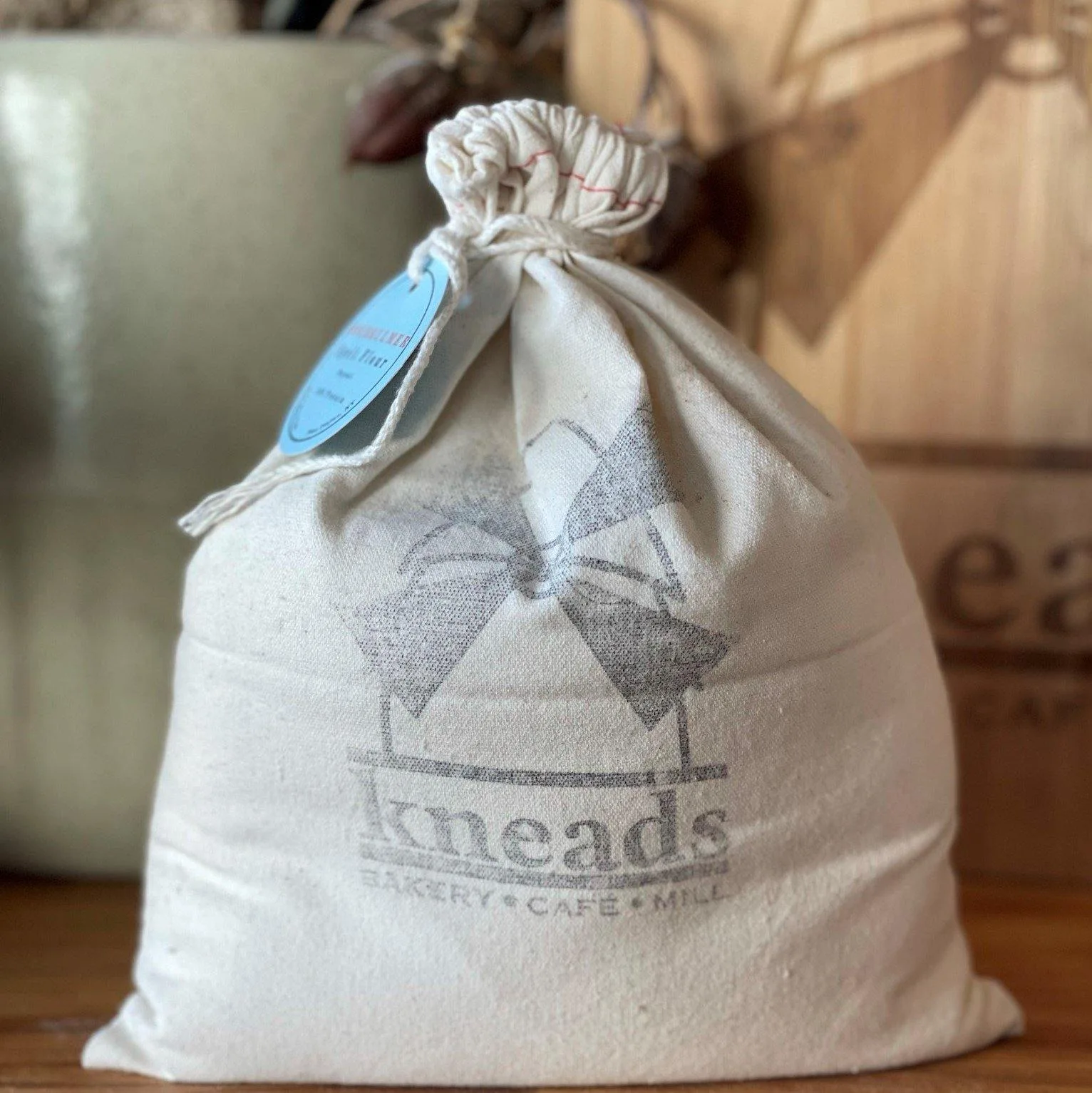
- Whole Grain Spelt Flour Retail 6pk: Freshly milled whole grain spelt flour, milled in store on our New American Stone Mill, sold as a retail six-pack with 2 lbs (908 g) per unit. The six-pack format lets you keep one unit in your working canister and freeze the rest sealed, which is exactly the portioning strategy whole grain flour needs.
- Hot Dog Buns (4pk): Sesame topped buttery buns sold four per pack, tagged for cookout meals and summer holidays. A reminder that whole grain baking fits everyday meals, not just special occasions, so it is worth storing flour in amounts you will actually bake through.
Whole grain rye flour rewards a little planning. Buy it fresh, split it into portions you will actually use, seal it against air and light, and lean on the freezer for anything beyond a month or two. Do that, and the flour you pull out in January will still taste like the day it was milled.