Quick answer
Use a sticker book like the In A Mood Sticker Book to assign a sticker to each mood and place it on a calendar or journal page for a simple, visual daily mood tracker.
Why a sticker book works for mood tracking
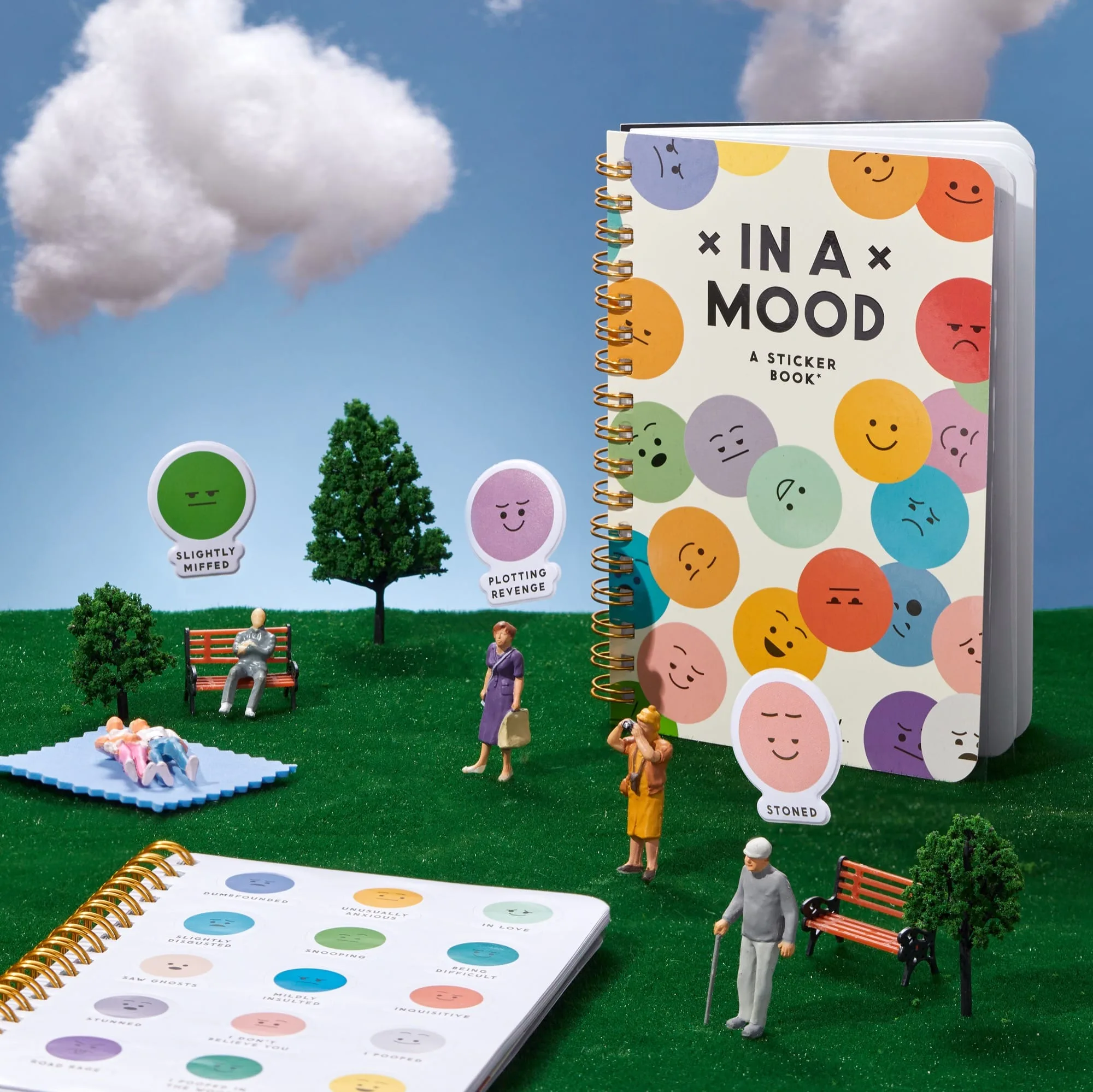
A sticker book gives you a ready-made set of expressive icons, so you don't have to draw or write out your feelings each day. The In A Mood Sticker Book includes a wide range of moody emoticons, making it easy to match a sticker to how you feel without overthinking it.
This method works especially well if you prefer a quick, low-pressure check-in over a detailed journal entry. The tactile act of peeling and placing a sticker can also make the habit more satisfying and consistent.
What to consider before you start
You'll need a surface to stick your mood tracker on—a monthly calendar page, a bullet journal spread, or even a blank wall calendar. The stickers are designed to be used, so they peel off easily and stick well to paper.
Keep in mind that the sticker book is not a reusable system; once a sticker is placed, it stays. That's fine for a disposable or monthly tracker, but if you want to reuse the same calendar for multiple months, consider using a separate sheet or a journal you don't mind filling up.
Steps to create your sticker book mood tracker
- Choose your tracking surface: Pick a monthly calendar page, a weekly spread in your journal, or a blank sheet of paper divided into a grid. Make sure the surface is smooth and flat so the stickers adhere well. Avoid textured or glossy paper—stickers may not stick as securely.
- Assign a mood to each sticker: Flip through your In A Mood Sticker Book and decide which emoticon represents each mood you want to track. For example, a smiley for happy, a frowning face for sad, a sleepy face for tired, and an angry face for frustrated. Write a small key at the top or side of your page so you remember the codes. Don't assign too many moods at once—start with 4-6 to keep the tracker simple and easy to fill daily.
- Place one sticker per day: Each day, choose the sticker that matches your dominant mood and stick it in the corresponding date slot. Do this at the same time each day—right after breakfast or before bed—to build a consistent habit. If you miss a day, don't skip it—just leave the spot blank and continue. Forcing a sticker for a day you don't remember can distort your tracker.
- Review your patterns weekly: At the end of each week, look at the stickers you've placed. Notice which moods appear most often and whether certain days of the week trigger specific feelings. This visual pattern can help you spot trends without analyzing every detail. Don't judge the patterns—just observe. The goal is awareness, not perfection.
- Start a fresh page each month: When the month ends, begin a new page. You can reuse the same mood key or adjust it based on what you learned. Over time, you'll see how your moods shift with seasons, work cycles, or personal events. Keep your old pages in a binder or folder—they become a personal mood history you can look back on.
Product used in this guide
-
In A Mood Sticker Book: Adults like stickers, too. This book features a wide range of moody emoticons designed to be used on calendars, labels, or notes. You get a diverse set of emotions in one book, so you can track subtle mood shifts without needing multiple sticker packs.
In A Mood Sticker Book