Quick answer
Use fishbone pliers to grip and pull out bones in the direction they grow, working from the tail toward the head for clean removal.
Why fishbone pliers beat regular tweezers
Fish bones are thin and brittle. Regular tweezers often crush or snap them, leaving fragments behind. Fishbone pliers have a serrated surface that holds onto delicate bones without breaking them, and an inner spring keeps the tool ready for the next grip without extra effort.
How to remove fish bones step by step
- Prepare the fish: Rinse the fish fillet under cold water and pat it dry. Place it skin-side down on a clean cutting board. Run your fingertip along the centerline to locate the pin bones. Working on a dry surface prevents the fish from slipping.
- Grip the bone near the base: Open the fishbone pliers and clamp the serrated jaws as close to the flesh as possible around the exposed end of the bone. Avoid gripping the tip, which is more likely to snap. A common mistake is gripping too high, which breaks the bone.
- Pull in the direction of the bone: Gently pull the bone straight out in the direction it grows (usually toward the head or at a slight angle). Do not twist or yank sideways. Pulling against the grain increases the chance of tearing the flesh.
- Check for remaining bones: After removing all visible bones, run your fingers lightly over the fillet again. Any missed bones will feel like small bumps. Remove them the same way. A second pass catches bones that were hidden under the surface.
Recommended tool
-
Fishbone Pliers: The WÜSTHOF Fishbone Pliers feature an inner spring that allows for better handling of delicate fishbones, preventing them breaking off during removal. A serrated surface holds onto thin and frail bones as they are extracted. This means you can remove bones cleanly without leaving splinters, and the spring action reduces hand fatigue during longer prep sessions.
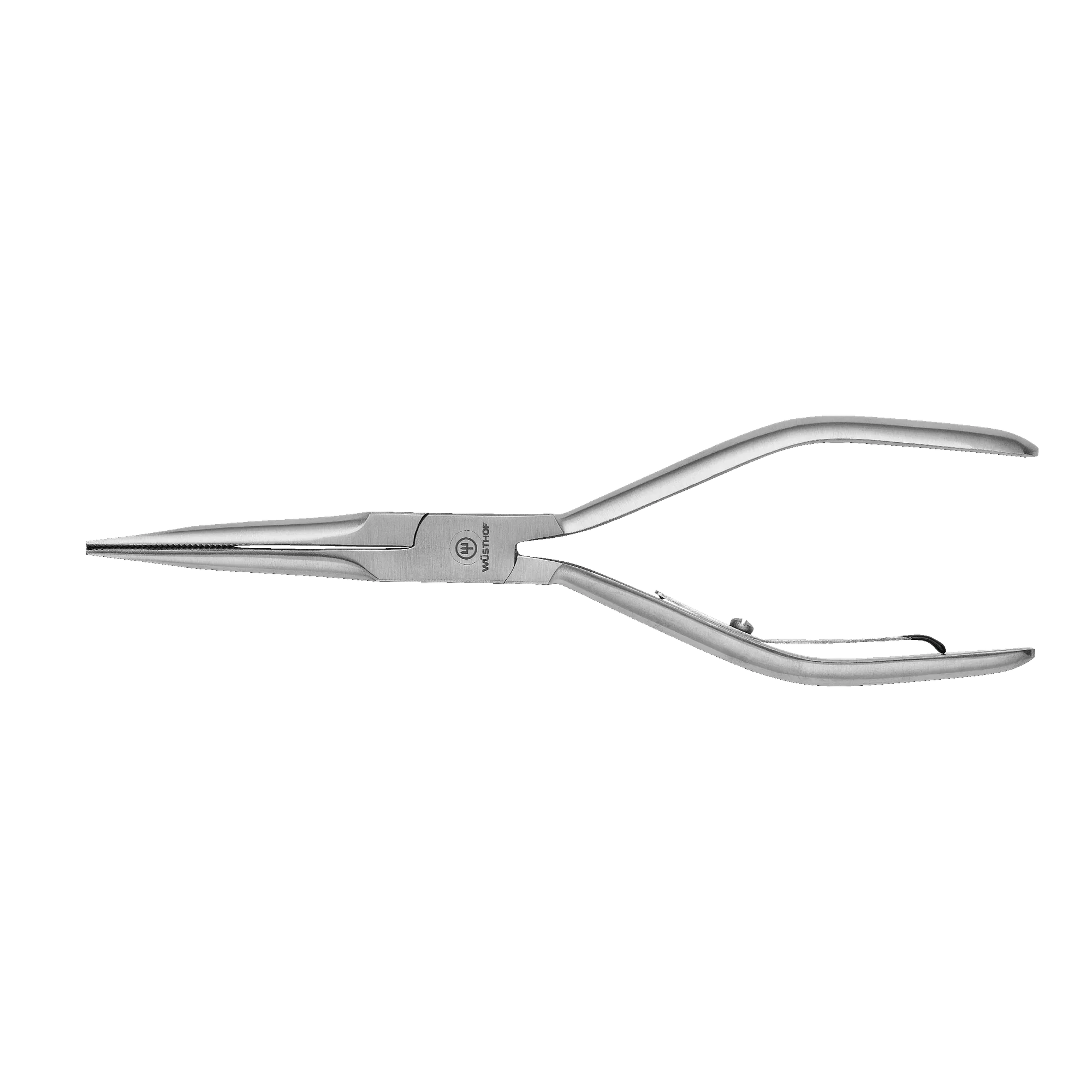
Fishbone Pliers