Quick answer
Look for certified organic durum wheat semolina, a bronze-die extrusion for texture, and a shape that matches your sauce. The right organic pasta holds sauce better and cooks evenly.
What does organic pasta really mean?
Organic pasta starts with wheat grown without synthetic pesticides, herbicides, or fertilizers. In the US, the USDA Organic seal means the farm and processor follow strict standards. For pasta, the key is the wheat itself: organic durum wheat semolina gives a firm bite and nutty flavor.
Organic certification also covers how the pasta is processed. No artificial preservatives or colors are allowed, so the pasta keeps its natural golden hue. If you see a brand like Giadzy using organic ingredients, you know the entire supply chain is audited.
Texture and shape matter more than you think
The way pasta is shaped affects how sauce clings. Bronze-die extrusion creates a rough surface that grabs sauce, while Teflon dies produce a slick finish. Look for pasta that mentions bronze dies or traditional methods.
Shape also determines cooking time and mouthfeel. Long, thin shapes like spaghetti chitarra work well with light olive oil or tomato sauces. Hollow shapes like bucatini trap sauce inside each strand. Short, curled shapes like caserecce hold chunky sauces in their ridges.
Price vs. value: what you're paying for
Organic pasta often costs more than conventional because organic wheat yields are lower and certification adds overhead. But you get a product free of synthetic residues and often made with heritage wheat varieties that have more flavor.
A 2-pack can save money per box while keeping your pantry stocked. Compare the per-pound price: if a single box costs $7.50 and a 2-pack costs $13.80, you save about 8% per box. That adds up if you cook pasta weekly.
How to choose organic pasta: decision rules
- Check the ingredient list: Look for 'organic durum wheat semolina' as the first ingredient. Avoid blends with refined flours or additives. The simpler the list, the better.
- Match shape to sauce: Long, thin shapes (spaghetti, bucatini) pair with smooth sauces. Short, ridged shapes (caserecce) grab chunky sauces. Hollow shapes trap sauce inside. If you often make chunky vegetable sauces, choose caserecce. For creamy sauces, go with bucatini.
- Consider the package size: A 2-pack saves money per box and ensures you have backup for busy nights. Single boxes work if you cook pasta infrequently. If you cook pasta at least once a week, the 2-pack is the better value.
- Look for bronze-die extrusion: Pasta made with bronze dies has a rough, porous surface that holds sauce. It also releases starch into the cooking water, which helps emulsify sauces.
Organic pasta options from Giadzy
-
2-Pack Organic Caserecce Pasta: The 2-Pack Organic Caserecce Pasta is a Sicilian shape with scrolled curves, designed to hold chunky sauces. Its ridges and curls trap hearty ragù or vegetable sauces, making every bite flavorful.
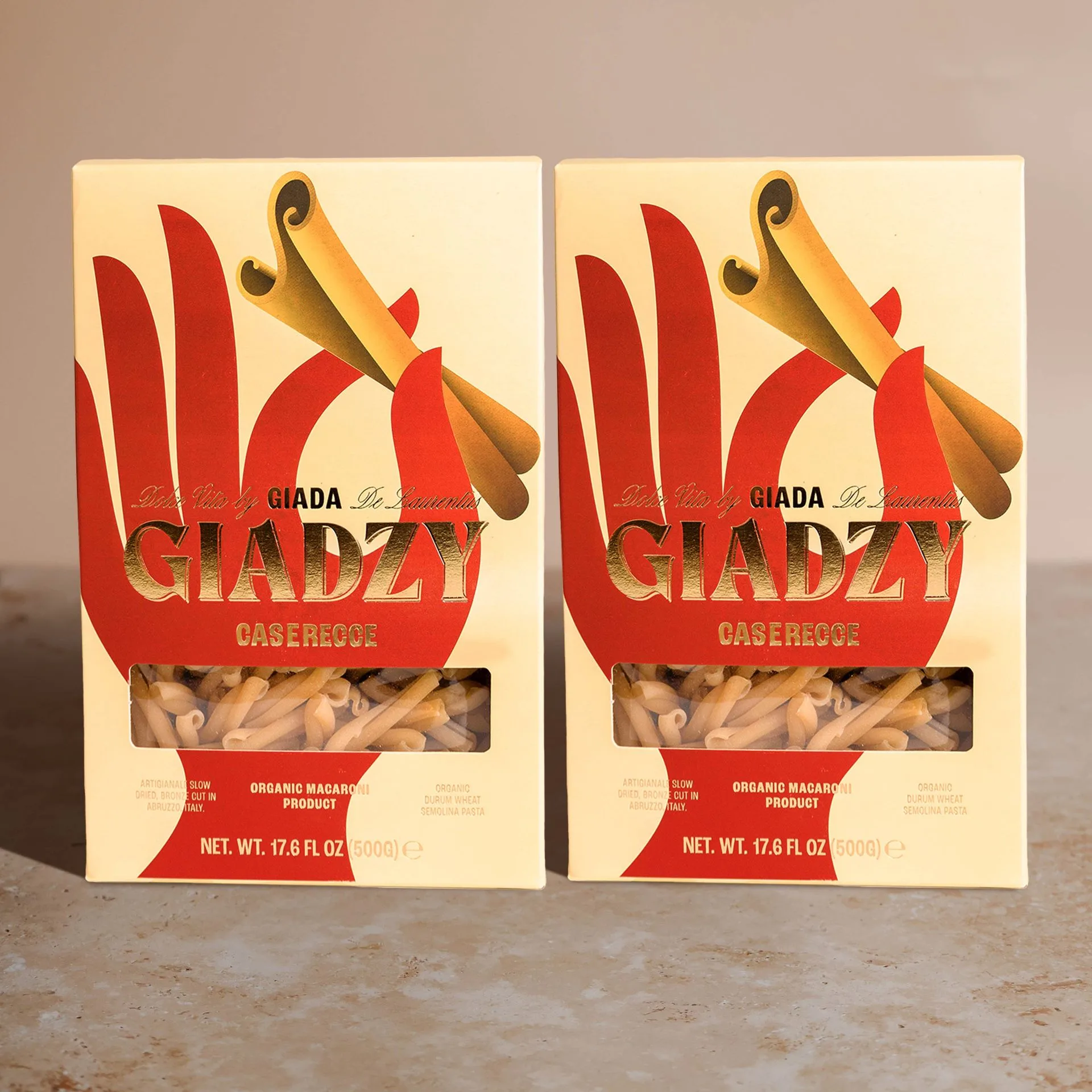
2-Pack Organic Caserecce Pasta
-
2-Pack Organic Bucatini Pasta: The 2-Pack Organic Bucatini Pasta is hollow like a straw, which lets sauce flow inside each strand. Use it with creamy or oil-based sauces that can fill the tube, giving you sauce in every bite.
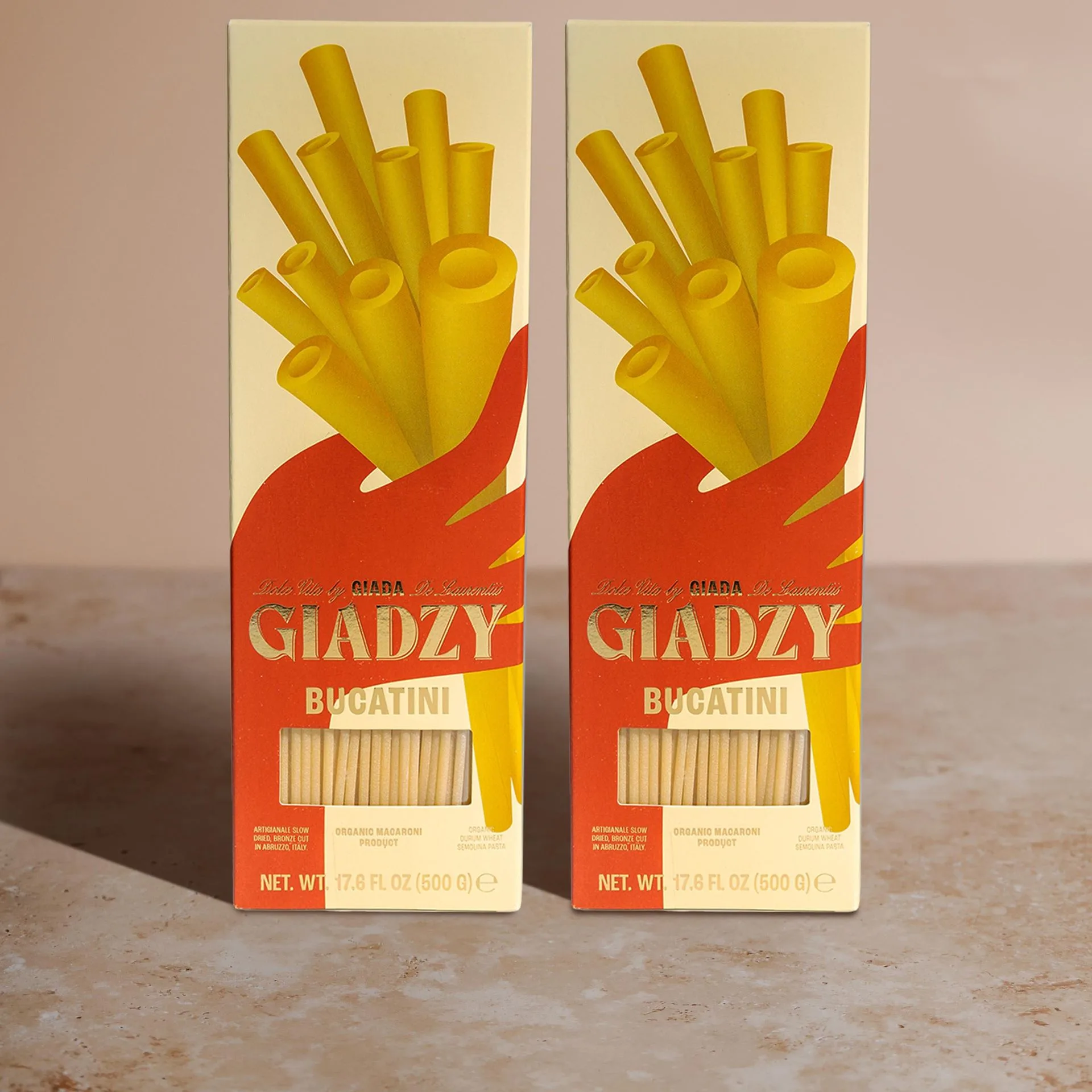
2-Pack Organic Bucatini Pasta
Which organic pasta is right for you?
Best for
- Home cooks who want clean ingredients without synthetic pesticides
- Anyone who enjoys pasta with hearty, chunky sauces that need texture to cling
Not for
- Those on a strict budget who need the lowest possible price per pound
- Cooks who only use very thin, delicate sauces that don't benefit from rough pasta surfaces