Quick Answer
Most Traveler lid leaks come from a lid that is not fully seated, a gasket that is twisted or missing, or pressure built up inside the bottle. Re-seat the gasket, line up the logos on the lid and body, and tighten until snug. If the leak continues after those steps, the gasket or lid likely needs replacing.
Start With the Simplest Cause: Lid Alignment
Before you assume the worst, check that the lid is actually seated correctly. The Traveler lid is designed to line up with the logo on the side of the bottle, and when those marks are aligned, the lid sits flat and the seal can do its job. If the lid is cross-threaded or only partially tightened, liquid will find the gap every time you tilt the bottle.
- Unscrew the lid completely and wipe the threads on both the lid and the bottle neck.
- Set the lid on straight, then turn it until the lid logo lines up with the side logo.
- Tighten until you feel firm resistance, but do not force it past that point.
Inspect the Gasket Before You Blame the Lid
The gasket is the soft ring inside the lid that creates the actual seal. It can twist, fold, or pop out during washing, and a gasket that is not sitting flat will leak even when the lid is tightened correctly. Remove the gasket, rinse it, and press it back into its groove so it sits evenly all the way around. If the gasket is stretched, cracked, or missing, no amount of tightening will stop the leak.
- Run a finger around the gasket to feel for twists or high spots.
- Check that the gasket is fully seated in the lid groove, not resting on top of it.
- If the gasket is damaged, replace it rather than trying to stretch it back into shape.
Pressure and Temperature Can Push Liquid Out
Hot drinks and carbonated drinks build pressure inside a sealed bottle. That pressure has to go somewhere, and if the lid is not tight, it will push liquid through the threads. Let hot drinks cool for a few minutes before sealing the lid, and avoid filling past the fill line so there is room for expansion. If you carry the Traveler in a bag, keep it upright; a lid that is fine on a desk can still weep if the bottle lies on its side for hours.
- Fill to the fill line, not to the very top.
- Let hot beverages cool slightly before closing the lid.
- Carry the bottle upright when possible, especially in a backpack or tote.
When to Stop Troubleshooting and Replace the Lid
If you have re-seated the gasket, aligned the logos, tightened the lid properly, and the leak still happens, the problem is likely a worn gasket or a lid that has been dropped or warped. At that point, replacing the gasket or the lid is the practical fix. Continuing to tighten a damaged lid can strip the threads and make the bottle harder to seal in the future.
- Stop tightening if the lid spins past the alignment point without getting snug.
- Replace the gasket first; it is the cheapest and most common fix.
- If a new gasket does not solve it, replace the lid.
Leak Diagnosis Checklist
- Leak at the threads: Liquid seeps where the lid meets the bottle neck, usually because the lid is cross-threaded or not tightened to the alignment mark. Re-seat the lid, align the logos, and tighten until snug.
- Leak from under the lid: Liquid escapes from the gasket area even when the lid is tight, which points to a twisted, folded, or worn gasket. Remove, rinse, and re-seat the gasket; replace it if damaged.
- Leak only with hot or fizzy drinks: Pressure builds inside the bottle and pushes liquid through the seal when the lid is not fully tight. Cool hot drinks slightly, do not overfill, and check the lid before carrying.
- Leak after a drop or dishwasher cycle: A warped lid or stretched gasket will not seal no matter how carefully you tighten it. Replace the gasket first, then the lid if the leak continues.
Product Facts That Help With Leak Diagnosis
- Traveler: The Traveler is a 36 oz leak-proof thermos with two rocks glass-inspired lid covers that double as 10 oz cups. The lid covers are separate from the main seal, so a leak around the top usually points to the main gasket, not the cup covers.
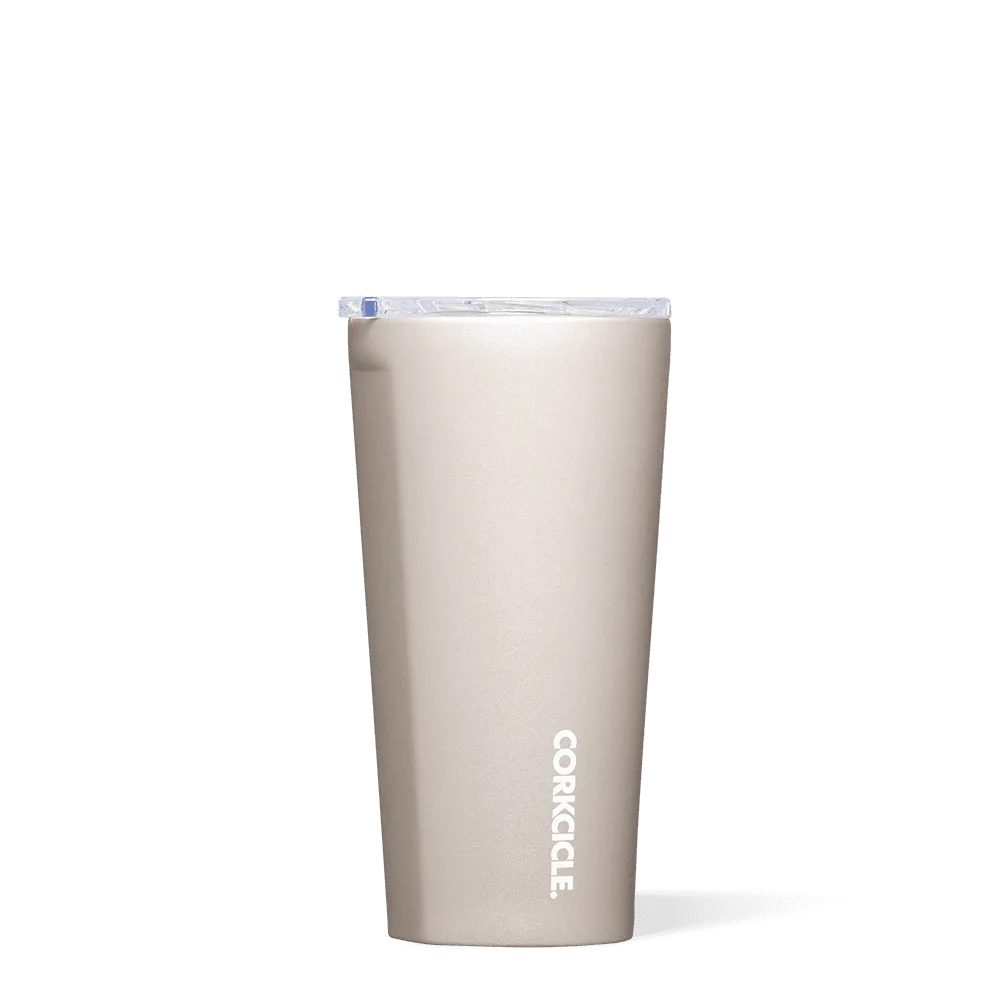
- Pure Taste Tumbler: The Pure Taste Tumbler has a ceramic-coated interior and a sliding, shatterproof lid. If you are comparing lid designs, a sliding lid and a screw-on thermos lid fail in different ways, so the fix depends on which lid you own.
- Classic Coffee Mug: The Classic Coffee Mug is 16 oz or 22 oz, stainless steel, triple-insulated, with a non-slip bottom. A mug-style lid is not meant for tossing in a bag, so leaks there are often a use-case mismatch rather than a defect.