Quick answer
Choose a 32-pitch (32P) spur gear for a good balance of strength and smoothness in most RC crawlers. Match the pitch to your pinion gear and select steel or hardened steel for durability, or aluminum for weight savings if you run a slipper clutch.
Why pitch matters
Spur gear pitch refers to the number of teeth per inch of pitch diameter. Common pitches include 32P, 48P, and 64P. A lower number (32P) means larger, stronger teeth that handle more torque but run slightly rougher. Higher pitches (48P, 64P) are smoother and quieter but less tolerant of dirt and shock loads.
For RC crawlers and trail trucks that operate at low speeds with high torque, 32P is the most popular choice. It offers enough strength for brushless motors and heavy rigs without the noise and wear of coarser gears.
Material trade-offs
Spur gears come in steel, hardened steel, aluminum, and plastic. Steel and hardened steel are the most durable and resist wear from dirt and debris. They are heavier and can transfer more vibration to the drivetrain.
Aluminum gears are lighter and reduce rotating mass, which helps acceleration and suspension response. However, they wear faster than steel, especially if you run a slipper clutch or encounter grit. Plastic gears are the quietest and cheapest but strip easily under high torque.
When to replace
Replace a spur gear when you see missing teeth, cracked teeth, or excessive wear that creates a rough or skipping mesh. Also replace if the gear has been damaged in a crash or if you change the pinion gear pitch (they must match).
A worn spur gear accelerates pinion wear and can shed debris into the transmission. Catching wear early saves you from replacing both gears.
Decision rules for choosing a spur gear
- Match pitch exactly: The spur gear and pinion gear must have the same pitch (e.g., both 32P). Mixing pitches causes poor mesh, noise, and rapid wear.
- Match tooth count to your setup: Higher tooth counts give lower gear ratios (more top speed, less torque). Lower tooth counts give higher gear ratios (more torque, less speed). Use an online gear ratio calculator to dial in your desired final drive ratio.
- Choose material based on drivetrain: Use steel or hardened steel for rigs with a slipper eliminator or direct-drive setup where the gear takes full shock loads. Use aluminum only if you run a slipper clutch that absorbs impacts and you want to reduce rotating mass.
- Inspect after every run: Check for chipped teeth, cracks, or uneven wear. Replace immediately if any tooth is missing or damaged to avoid damaging the pinion and transmission.
Recommended product
-
32p Spur Gear: Incision 32p Spur Gear for use with Incision Slipper Eliminator and VFD Transmissions. Not for use with the VFD Slipper that comes with the VFD Twin. If you run an Incision slipper eliminator or a VFD transmission (non-slipper version), this 32P steel spur gear is a direct-fit, durable upgrade that matches the pitch of common pinion gears.
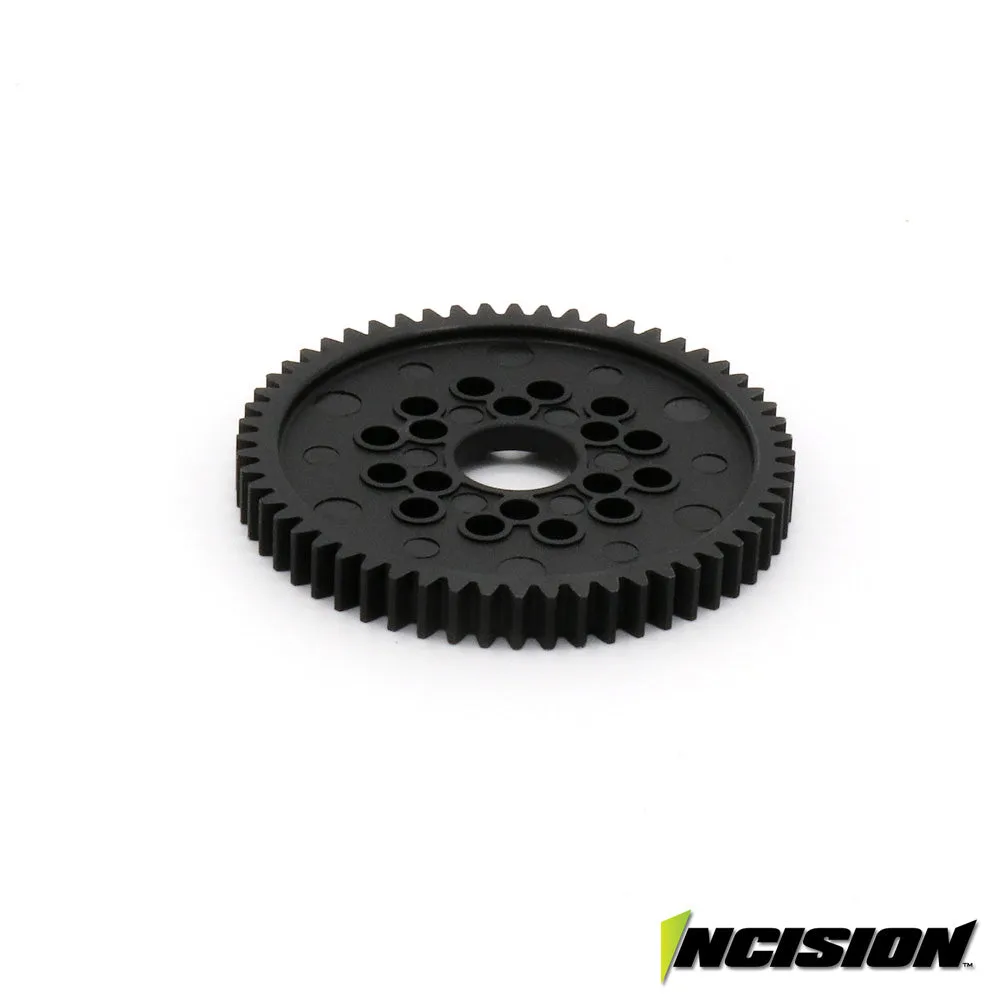
32p Spur Gear
Which spur gear is right for you?
Best for
- Crawlers and trail trucks using 32P pinion gears and Incision slipper eliminator or VFD transmissions
- Drivers who want a durable steel gear that resists wear from dirt and torque
Not for
- Rigs that still use the factory VFD Twin slipper clutch (the Incision 32P spur gear does not fit that slipper)
- High-speed on-road cars that benefit from smoother 48P or 64P gears