Quick answer
Match the bra to the motion, not to the label. For walking, lounging, and errands, a low-support bralette is enough. For cycling, lifting, and gym sessions, choose a compressive style with a secure band. For running, jumping, or anything with real bounce, choose high support with adjustable or locked-in straps. If you are between levels, size down in band fit before you size up in coverage.
What support level actually measures
Support is not the same as compression. Support is how much a bra limits vertical and side-to-side movement; compression is how tightly the fabric squeezes. A bra can be compressive but still allow bounce if the band is loose or the straps stretch. That is why two bras in the same size can feel completely different at a run.
The three practical levels are low, medium, and high. Low support handles daily wear and slow movement. Medium support handles controlled movement where you are not leaving the ground much. High support handles repeated impact. Your bust size and your activity both decide which level you need, which is why a low impact vs high impact bra comparison only makes sense once you name the workout.
How to choose a sports bra by activity
Start with the highest-impact thing you will do in the bra, not the average. If you run twice a week and walk the rest, buy for the run. A high-support bra worn for walking is not wasted; it is just more bra than the walk requires.
Next, check adjustability. Straps that adjust and a band that can be snugged let one bra cover more than one activity. Fixed straps and a soft band keep a bra comfortable but limit how much you can tune it. Neither is wrong; they simply serve different days.
- Walking, errands, lounging: low support is enough. Look for a soft band and unlined cups.
- Yoga, pilates, climbing, lifting: medium support. Look for a wide underband and straps that stay put when you raise your arms.
- Running, HIIT, jumping, court sports: high support. Look for a compressive fit, a firm band, and straps that do not stretch under load.
- Switching between two activities in one day: pick the higher support level and adjust the straps down for the easier session.
Fit guidance: the band does the work
Most support problems are band problems. The band should sit level all the way around and stay put when you lift your arms. If it rides up in the back, it is too loose, even if the cups feel fine. If it digs in hard enough to leave deep marks that last, it is too tight.
For the straps, you should be able to slide one finger under them without much effort. Straps that press down or leave marks are carrying weight the band should be carrying. For the bust, check for spillover at the top and sides; if you see it, the cup or the size is wrong, not the support level.
Always test with movement. Jump, reach overhead, and twist in the fitting room or at home before you commit. A bra that feels fine standing still can fail the first time you run. If the brand offers a wide size range, use the size chart rather than guessing, and re-measure if your weight or training volume has changed.
Decision rules for picking your support level
- If your feet leave the ground: Choose high support with a firm band and straps that do not stretch under load. Running, HIIT, and jumping belong here.
- If you stay grounded but move continuously: Choose medium support with a wide underband that stays level when you reach overhead. Cycling, lifting, yoga, and climbing fit here.
- If the bra is for lounging, errands, or layering: Choose low support with a soft band and unlined cups, and size for comfort rather than compression. A bralette is the right tool, not a compromise.
- If you are between two levels: Buy the higher support level and adjust the straps for easier days. One bra can cover more than one activity when it is adjustable.
Bras and bottoms that match these levels
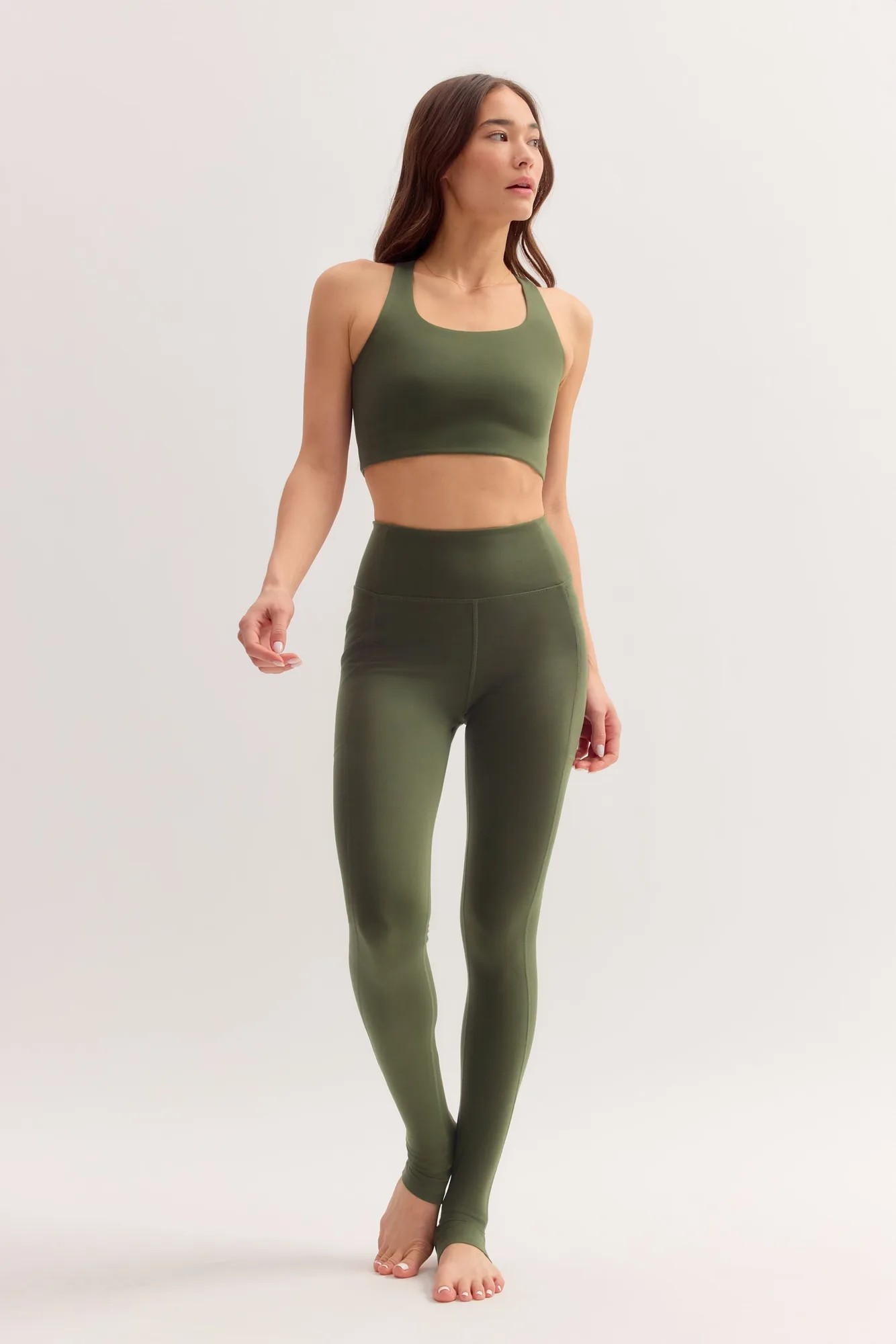
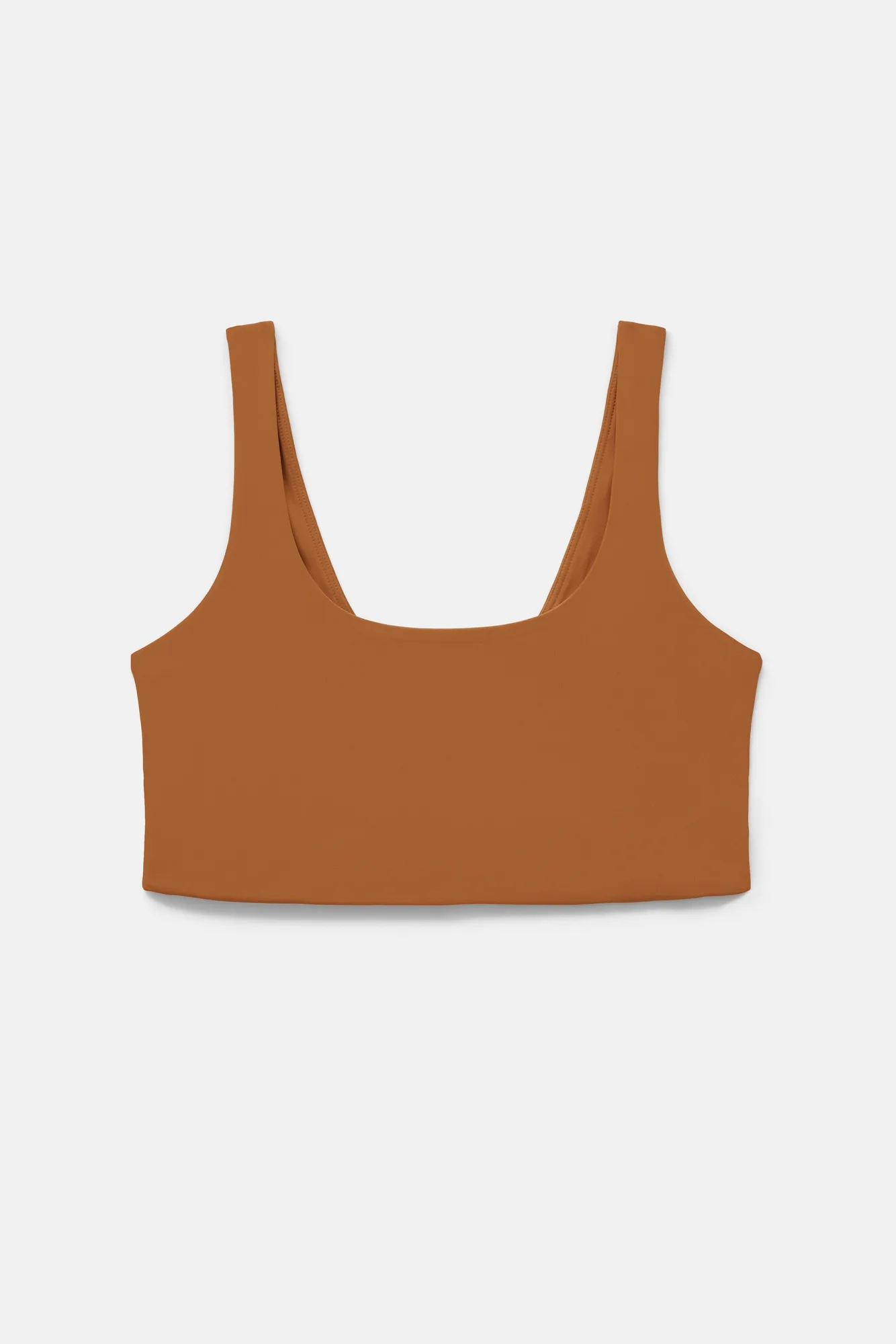
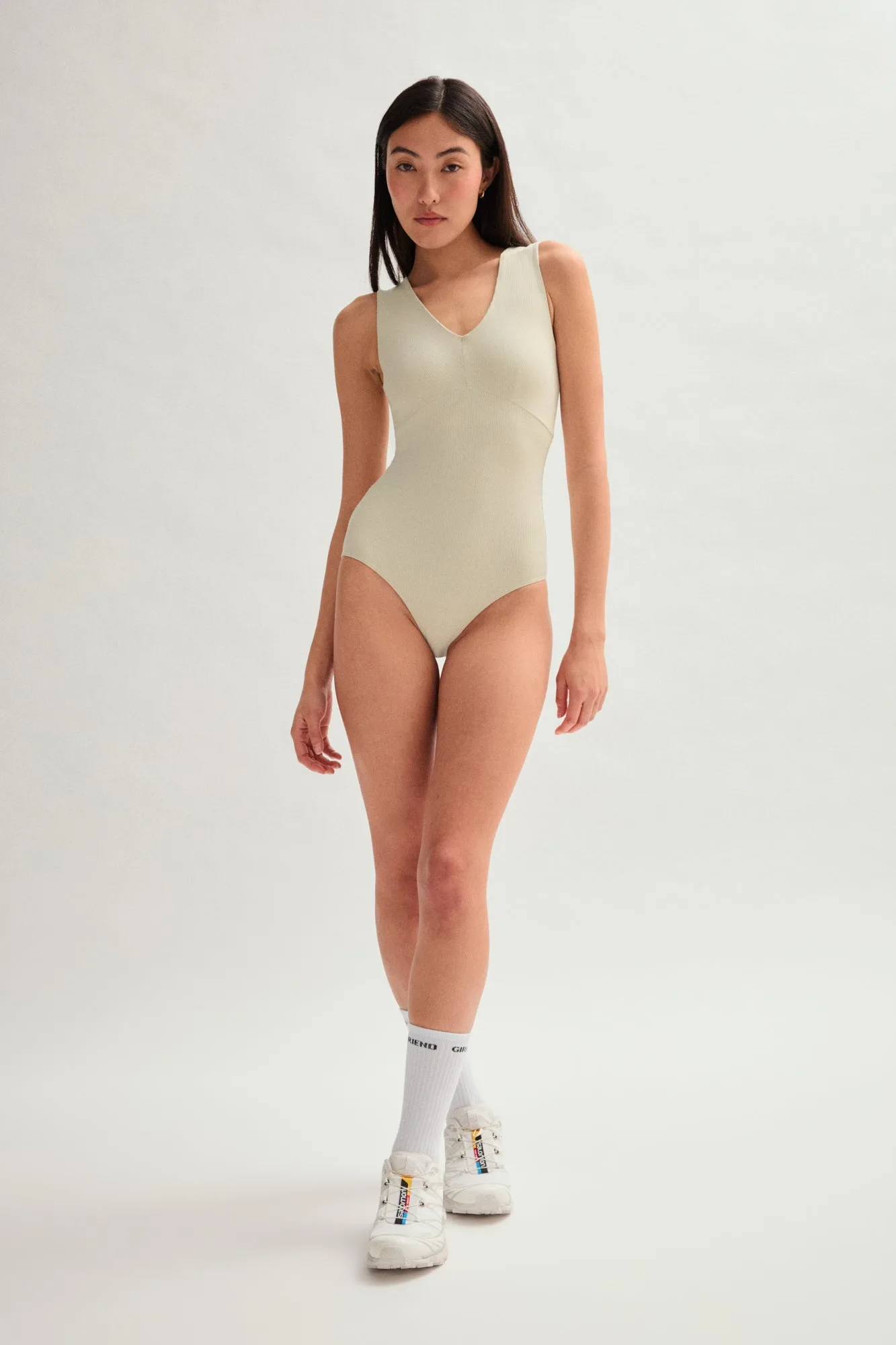
- Black Scoop Bralette: Scoop neck and low back design, available in sizes XXS through 6XL, positioned for lounging and everyday wear. This is a low-support option, so it suits errands, rest days, and slow movement rather than running.
- Suede Scoop Bralette: Light support with a scoop neck and low back, available from XXS to 6XL in a suede colorway. A second low-support choice when you want a relaxed fit and a different color, not a bra for high-impact sessions.
- Skyline High-Rise Pocket Bike Short: High-rise design with an 8.5-inch inseam, pockets, and compressive fabric. Pairs with a medium or high support bra for workouts, and the pockets keep small items hands-free.
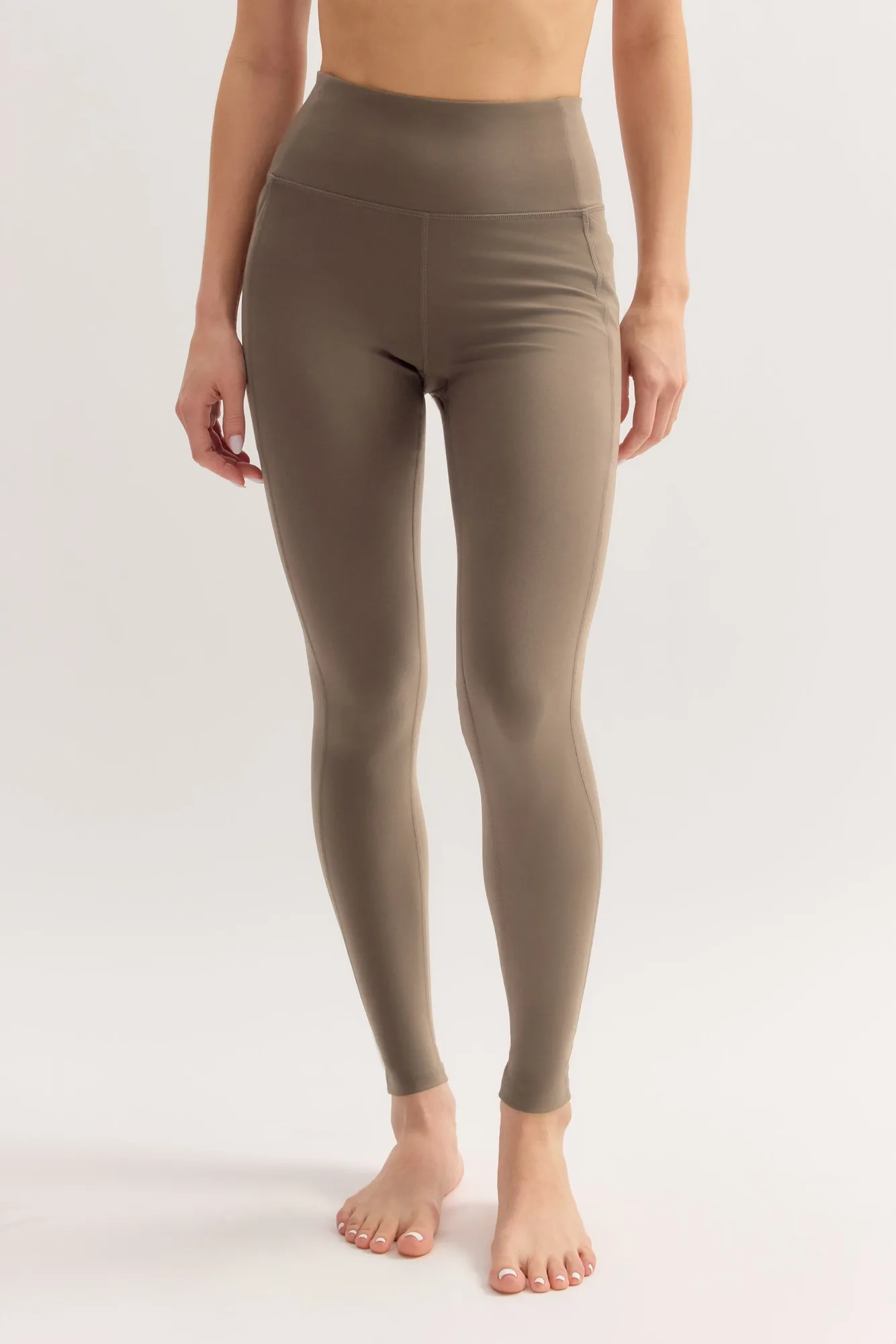
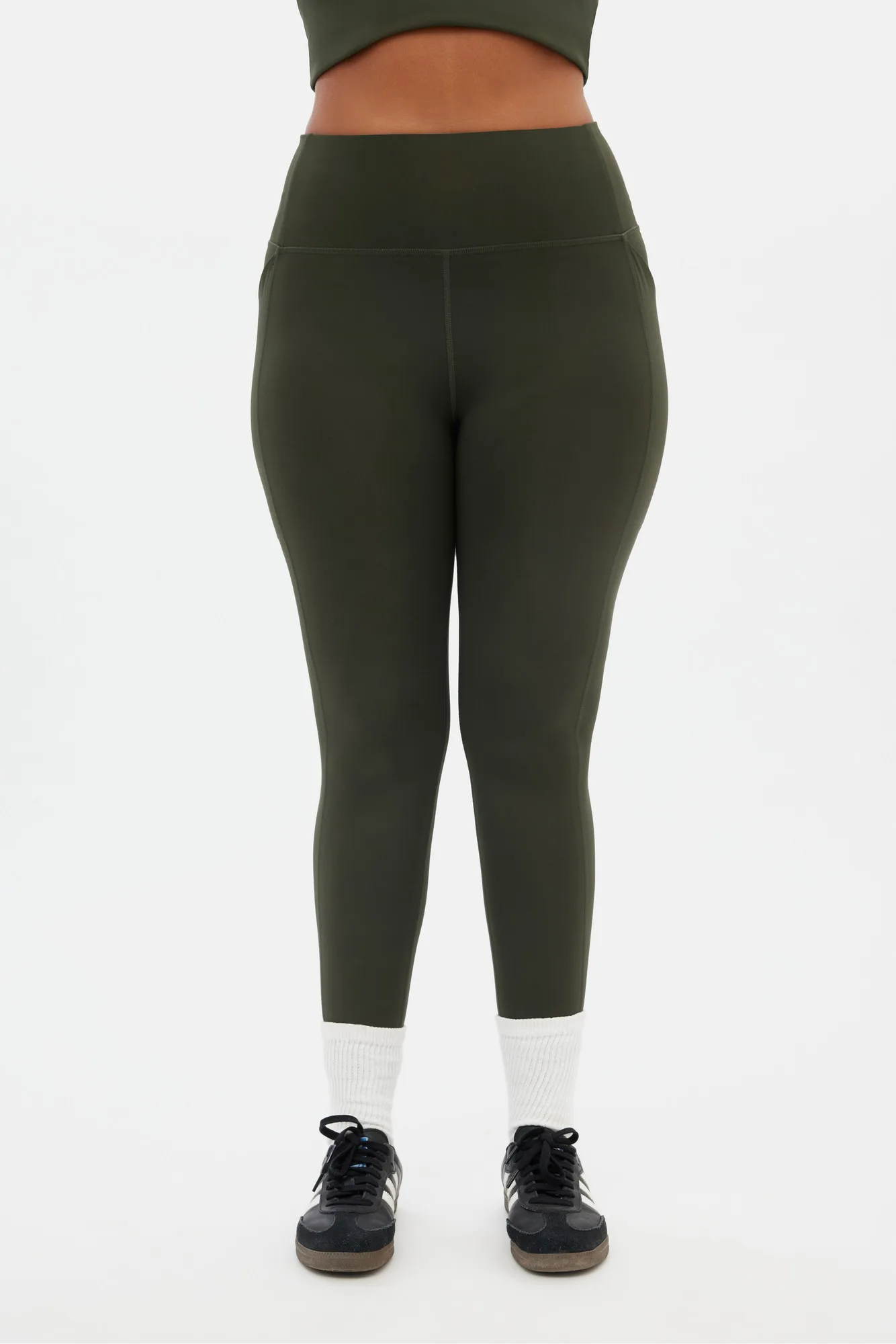
- Stone Compressive Pocket Legging: Compressive fabric with a pocket, available in two inseam options. The two inseam choices let you match coverage to your activity and height, which matters more than the color when you train often.
Who each support level is for
Best for
- Low support: lounging, errands, and slow movement
- Medium support: yoga, lifting, cycling, and climbing
- High support: running, HIIT, jumping, and court sports
- Anyone who wants one bra to cover two activities with strap adjustment
Not for
- High-impact training in a low-support bralette
- All-day lounging in a high-support compressive bra if you want a relaxed feel
- Buying by cup size alone without checking band fit
- Assuming a compressive legging or short replaces the need for the right bra