Quick answer
Most bamboo cutlery cracking comes from moisture swings, not from normal use. Bamboo swells when it soaks and shrinks as it dries, so a fork or spoon left in water, then dried on a hot radiator or in direct sun, can split along the grain. Wash and dry your set by hand straight after each meal, oil it lightly once a month, and retire any piece where the split reaches across the handle or a tine.
Symptom: hairline splits along the grain
A thin crack that runs lengthwise, parallel to the bamboo fibres, is the most common problem. It usually appears first near the cut end of a handle or along the edge of a spoon bowl. This type of split is the bamboo releasing stress as it loses moisture, and it often starts after a hot wash, a long soak, or a spell in a drying rack next to a heat source.
If the crack is short, thin, and does not open when you flex the piece gently, it is usually cosmetic. Sand it lightly with fine grit in the direction of the grain, then oil the whole piece so the surface seals again.
Symptom: the split opens when you use it
A crack that widens when you press down on a fork tine or spoon bowl has gone past the surface layer. Bamboo is a grass, and its strength runs along the fibres, so a split that crosses the grain or reaches a tine root will keep travelling with every meal.
This is the point to stop using that piece for eating. A split bamboo spoon repair with food-safe glue can hold a decorative item together, but glue lines in a working utensil trap moisture and food, and the split will reopen. Replace the piece instead of risking a splinter in your mouth.
Cause: soaking and dishwasher heat
Leaving cutlery in the sink, in a water bottle, or in a lunch bag that gets damp is the fastest way to cause bamboo cutlery cracking. The bamboo takes on water, expands, and then shrinks hard when it dries. Dishwasher cycles add heat and long wet periods on top of that, which is why hand washing is the safer routine.
Wipe or rinse your set as soon as the meal ends, then dry it with a cloth rather than leaving it to air dry in a puddle. If you carry a set in a bag, empty and dry the pouch at the end of the day.
Cause: drying too fast or too hot
Bamboo cutlery drying tips matter as much as washing habits. Radiators, oven tops, direct sun on a windowsill, and hot air vents pull moisture out of the outer layer faster than the core, and that uneven shrinkage is what opens a split.
Dry your set at room temperature, standing upright or lying flat on a cloth, away from heat. If your home is very dry in winter, a light coat of food-safe oil after drying slows moisture loss and keeps the surface from looking chalky.
Cause: skipping oil and letting the surface dry out
Bamboo cutlery care mistakes usually come down to two habits: never oiling, and oiling too much. A thin coat of food-safe mineral oil or coconut oil once a month, rubbed in with a cloth and left for a few minutes before buffing off, keeps the surface sealed without leaving a greasy film.
Do not soak the set in oil and do not oil it while it is still wet from washing. Water trapped under oil is a good way to encourage both cracking and dark spots.
When to stop repairing and replace
Stop repairing when the split crosses the grain, when a tine or spoon edge moves under light pressure, when you can feel a raised splinter, or when dark mould appears in the crack and does not lift with a baking soda scrub. Any of those signs means the piece is no longer safe or hygienic for food.
If only one piece in a set has failed, you do not have to replace the whole set. A replacement fork or spoon is cheaper than a new set, and keeping the healthy pieces in rotation is the zero-waste choice.
Diagnose your split in 30 seconds
- Hairline crack, no movement: A thin line along the grain that does not open when you flex the piece. Sand lightly with fine grit, oil the whole piece, and return it to normal use. Cosmetic. Keep using it and watch for changes.
- Crack opens under pressure: The split widens when you press a tine or spoon bowl, or it crosses the grain. Glue will not hold in a working utensil because moisture and food get into the line. Stop eating with it. Replace that piece.
- Splinter, soft spot, or dark mould in the crack: A raised splinter, a spongy area, or black marks that survive a baking soda scrub mean the bamboo has broken down inside the split. Discard it. Do not try to repair or sand it back.
What a well-made set gives you
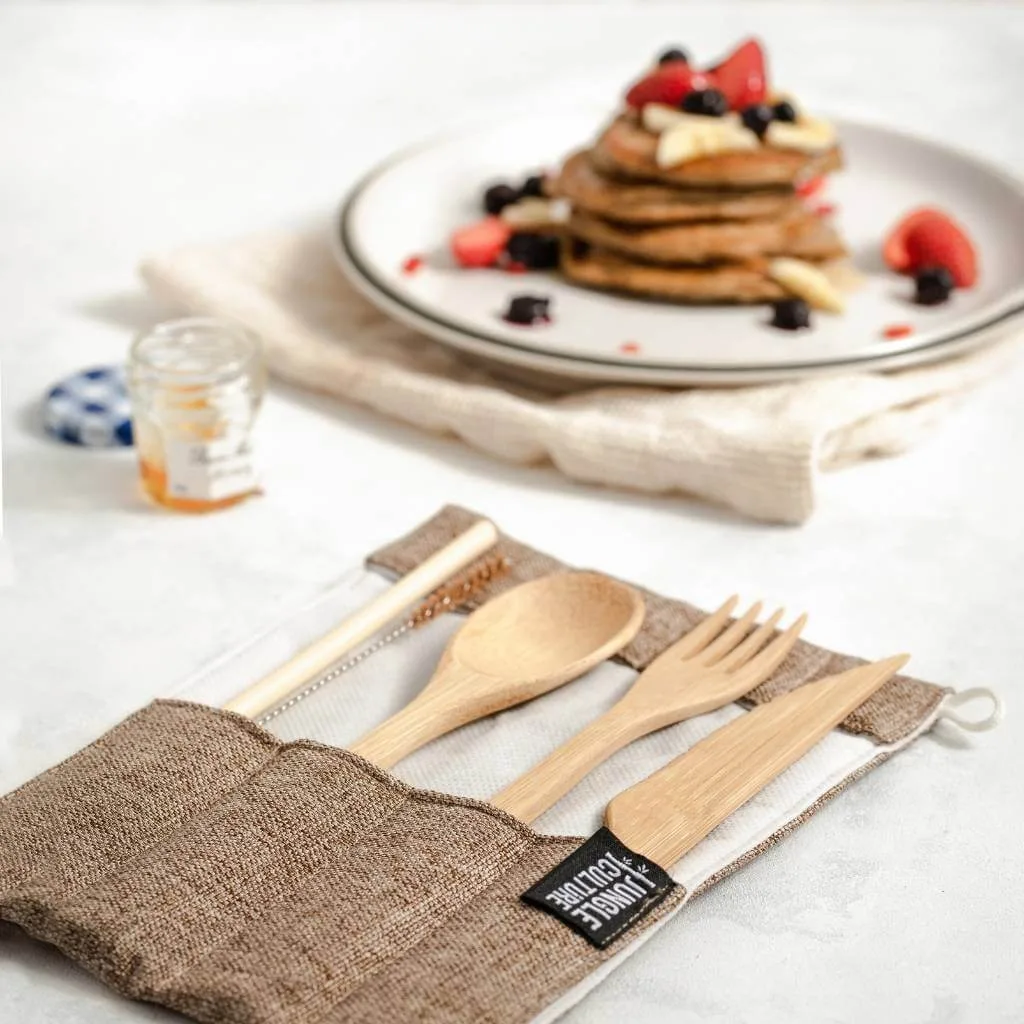
- Bamboo Cutlery Set (Brown bag): Jungle Culture's bamboo cutlery set is ethically sourced and handmade in Vietnam by local artisans, and includes a serrated bamboo knife, fork, tablespoon, bamboo straw, and a coconut fibre straw cleaning brush. A set with a brush included makes it easier to clean the straw properly after every use, which is one of the habits that prevents moisture sitting inside the hollow pieces.
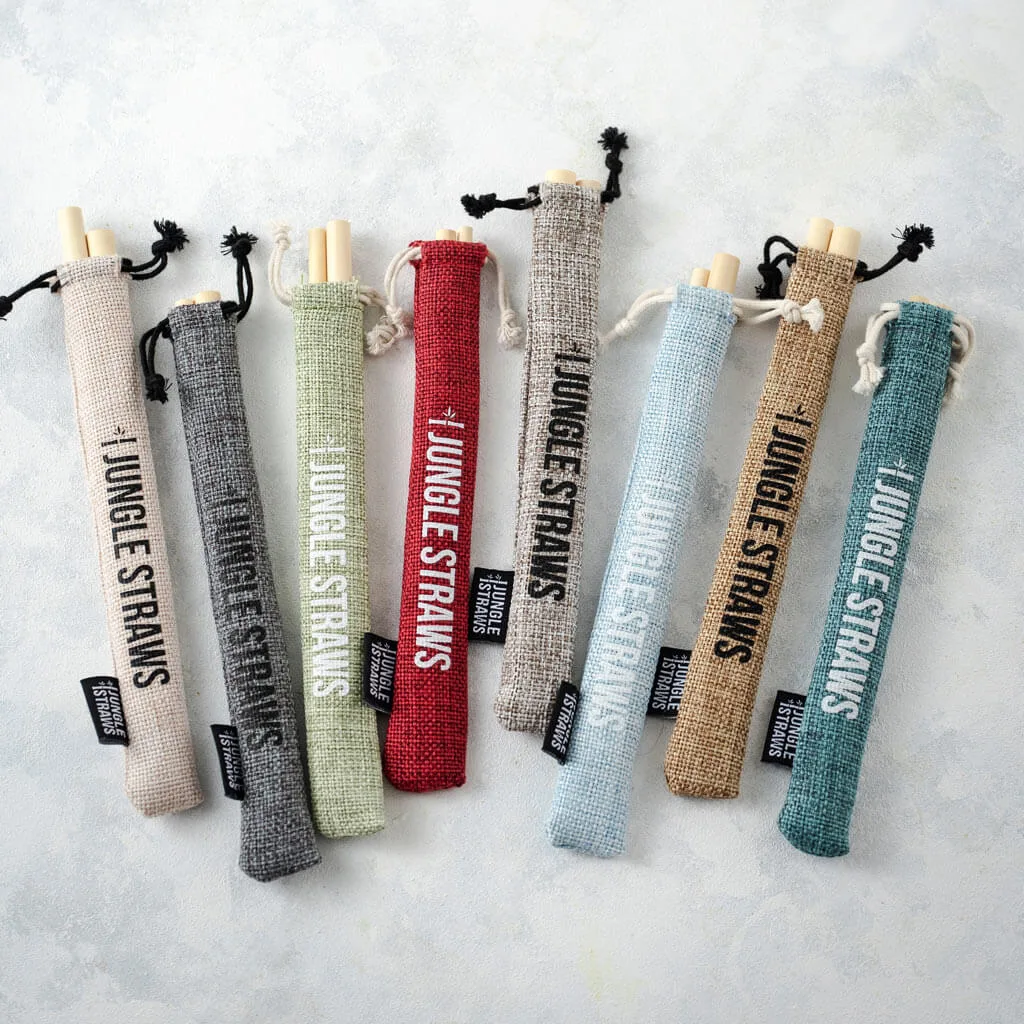
- Reusable Bamboo Drinking Straws w/ Natural Jute Bag (Pack of 6): The reusable bamboo straws are hand crafted and harvested by local artisans at a small family-run farm in rural Vietnam, made without harmful pesticides or chemicals. Straws crack for the same moisture reasons as forks, so drying them upright with the brush nearby keeps the whole set in service longer.