Quick Answer
To keep your fully automatic espresso machine brewing great coffee, clean the brew unit, drip tray, and grinder daily, and descale the internal boiler every 1–3 months depending on water hardness.
Why regular cleaning matters for your espresso machine
Coffee oils and mineral deposits build up inside any espresso machine over time. If left alone, they can dull the flavor of your espresso, slow down brewing, and even shorten the life of internal parts. A fully automatic machine handles grinding, tamping, and brewing for you, but it still relies on you to keep the brew group and water lines clear.
Daily rinsing takes under a minute and prevents stale coffee oils from sticking to internal parts. Monthly descaling removes limescale that no amount of wiping can reach. Skipping either step can lead to bitter shots, slower flow, or error messages on the display.
What happens if you skip maintenance
When you skip cleaning, coffee oils and fine grounds accumulate inside the brew group and pipes. Over time, the machine may produce weaker espresso, take longer to heat, or stop working entirely. Descaling is especially important if you have hard water, because mineral deposits can clog the internal boiler and valves.
Step-by-step cleaning routine
- Daily: rinse the brew unit: After your last espresso of the day, remove the brew unit and rinse it under warm running water. Avoid soap, which can leave a residue that affects flavor. Wipe the shower screen and let the unit air-dry completely before reinstalling. Check that the brew unit is completely dry before you put it back.
- Empty and rinse the drip tray and grounds container: Take out the drip tray and used coffee grounds container daily. Rinse them with warm water and let them air dry. A common mistake is leaving the drip tray wet, which can cause mold or odors. Dry the drip tray before reinserting it to prevent stale smells.
- Wipe the exterior and steam wand: After each use, wipe the machine exterior and steam wand with a damp cloth. Purge the steam wand briefly to clear milk residue, which can harden and clog the nozzle. Always purge the wand right after steaming to avoid baked-on milk.
- Clean the brew unit: Remove the brew unit according to your machine's manual and rinse it under warm water. Do not use soap; it can leave residue that affects coffee flavor. Check the brew unit for coffee grounds and rinse it thoroughly before reinstalling.
- Descale the machine: Use a descaling solution designed for espresso machines. Run the descaling cycle as directed in your manual, then rinse with fresh water to remove any leftover solution. Descale every 2-3 months or when the machine signals it's time.
- Clean the integrated grinder: Run a grinder cleaning tablet through the grinder to remove coffee oil residue. Then wipe the bean hopper and burrs with a dry cloth. Avoid water near the grinder. Clean the grinder monthly to keep the coffee grounds fresh and prevent clogging.
- Wipe down the exterior and drip tray: After each use, wipe the exterior with a soft damp cloth and empty the drip tray. Check for coffee spills or milk residue around the spouts and clean them promptly. Daily exterior and drip tray care prevents sticky buildup and keeps the machine looking new.
Why a KitchenAid® machine makes this easier
-
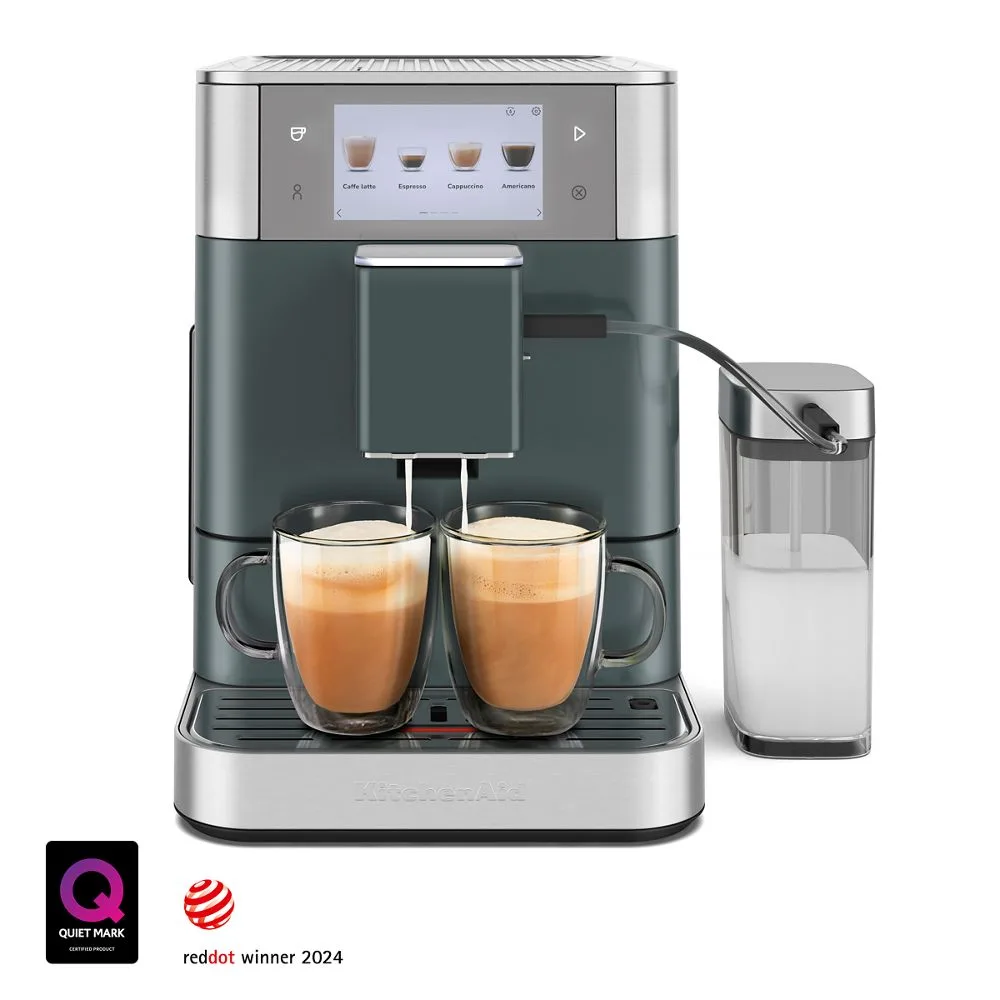
Juniper: The KitchenAid Juniper Fully-Automatic Espresso Machine offers fully-automatic operation for easy brewing of espresso and other coffee beverages, and includes an integrated grinder. Because the grinder and brew unit are built in, regular cleaning keeps every part working smoothly so your espresso stays fresh and your machine lasts longer.
Juniper