Quick Answer
Lawyer Up is an asymmetrical two-player courtroom card game: one player prosecutes, the other defends. Each game starts with Discovery, where you draft evidence to support your case and bury what helps your opponent. Build your argument, play your strategies, then resolve the verdict. Learn it by playing the first case twice — once per side — before adding expansions.

Lawyer Up
Lawyer Up looks like a bluffing game until you realize the verdict is mostly decided by what you let your opponent keep during Discovery. That is why new players who 'just start arguing' usually lose to someone who drafted better two turns earlier.
This walkthrough covers setup, the two roles, the Discovery draft, the argument phase, and how the verdict actually gets decided. It assumes the base Season 1 courtroom game and a first case played straight out of the box.
Set Up the Courtroom in the Right Order
Lay the case board between you, then place the case deck and evidence piles where both players can reach them. Choose sides: one player takes the Prosecution role, the other the Defense. Each player takes their role deck and starting hand as listed on the case setup. Shuffle the jury or verdict components only if your case uses them — the Witch Trial case, for example, does away with the jury entirely and is led by an angry mob instead.
The most common setup mistake is dealing role cards before the case deck is shuffled and cut. If the case deck is stacked from the last game, Discovery becomes predictable and the whole match feels scripted. Shuffle the case deck first, then deal roles, then deal opening hands.
- Checkpoint: both players should be able to name their role, their starting hand size, and whether this case uses a jury or a mob before the first card is drawn.
- If you are teaching a new player, let them choose Prosecution — it has the clearer win condition in most cases.
Understand What Each Role Is Actually Trying to Do
The Prosecution is the noble side: you are trying to prove the case and secure a conviction. The Defense is the steadfast side: you are trying to create reasonable doubt or get an acquittal. Both roles use the same core loop — draft evidence, play strategies, argue — but they want opposite outcomes from the same card pool.
This matters during Discovery because the same card can be a weapon for one player and a liability for the other. A strong piece of physical evidence helps the Prosecution but can be buried by the Defense. Learn to read each card as 'who does this help if it stays in play?' rather than 'is this a good card?'
- Checkpoint: before drafting, say out loud which evidence types your side needs. If you cannot name two, you are drafting blind.
- Roles are fixed for the whole game — you do not switch sides mid-case.
Run Discovery as a Draft, Not a Cleanup Phase
Discovery is where each game begins: players draft vital evidence to support their case and bury evidence that might help their opponent. Treat this as the most important phase of the match. Every card you take is a card your opponent cannot use, and every card you bury is a card neither of you can play later.
New players often grab the flashiest card instead of the card that completes their argument. A boring supporting document that locks in your case is usually worth more than a dramatic card you cannot back up. Watch what your opponent passes — the cards they let go tell you what they already have.
- Checkpoint: at the end of Discovery, each player should be able to state their case in one sentence using only cards they hold.
- Do not rush this phase. Slow Discovery wins more games than clever arguing.
Play the Argument Phase Without Overcommitting
Once Discovery ends, players take turns playing evidence and strategies to build their argument. Each play should advance your stated case, not just fill a slot. If a card does not support your one-sentence case from Discovery, it is usually better held than played.
The common mistake here is dumping your strongest card early to 'set the tone.' That gives your opponent full information and time to answer. Hold one strong card back as a closer, and make your opponent spend resources responding to smaller plays first.
- Checkpoint: if you have played more than half your hand and still cannot explain your case, you are playing cards instead of building an argument.
- Track what your opponent has buried — it tells you which arguments they cannot counter.
Resolve the Verdict and Learn From It
When the argument phase ends, resolve the verdict using the case's win condition. Standard cases check the jury; the Witch Trial instead uses an angry mob ready to hang anybody they believe is a witch, and the Prosecution's goal is to hang three. Read the specific case card before you start — win conditions vary by case, and assuming the standard jury check is the fastest way to lose a case you were winning.
After the verdict, spend two minutes reviewing Discovery. Ask which single buried card would have changed the outcome. That habit improves your drafting faster than playing ten more games.
- Checkpoint: confirm the case's win condition before the first turn, not when the verdict is called.
- Play the same case twice, switching sides, to see how the other role values the same cards.
Your First Game, Step by Step
- Step 1 — Shuffle the case deck, then assign roles: Shuffle and cut the case deck before anyone picks Prosecution or Defense, then deal starting hands per the case setup. Checkpoint: a stacked case deck makes Discovery predictable — shuffle first, always.
- Step 2 — Read the case win condition out loud: Confirm whether the case uses a jury or a special condition such as the Witch Trial's angry mob and its hang-3 goal. Checkpoint: if neither player can state the win condition, stop and read the case card.
- Step 3 — Draft Discovery with a stated case in mind: Take evidence that supports your side and bury evidence that helps your opponent. Say your one-sentence case before you pass. Checkpoint: drafting the flashiest card over the most useful one is the most common beginner loss.
- Step 4 — Argue, but hold one card back: Play evidence and strategies that advance your stated case, keeping one strong card as a closer. Checkpoint: emptying your hand early gives your opponent full information and time to respond.
- Step 5 — Resolve the verdict, then review Discovery: Apply the case's win condition, then ask which single buried card would have flipped the result. Next step: replay the same case as the other role before adding Season 2 or an expansion.
Season 1 and Beyond: What to Add After You Learn the Base Game
- Lawyer Up: Season 2: Lawyer Up: Season 2 includes 3 brand new cases — Celebrity Divorce, Private Eye, and Casino Heist — along with a robust Solo expansion. Once you can run Discovery and the argument phase without checking the rulebook, Season 2 gives you three fresh cases plus a solo mode so you can practice drafting alone.
- Lawyer Up: Witch Trial: The Witch Trial does away with the jury and is instead led by an angry mob who is ready to hang anybody they believe is a witch; the Prosecution's goal is to hang 3. This is the clearest example of why you must read each case's win condition — the standard jury check does not apply here, so your Discovery priorities change completely.
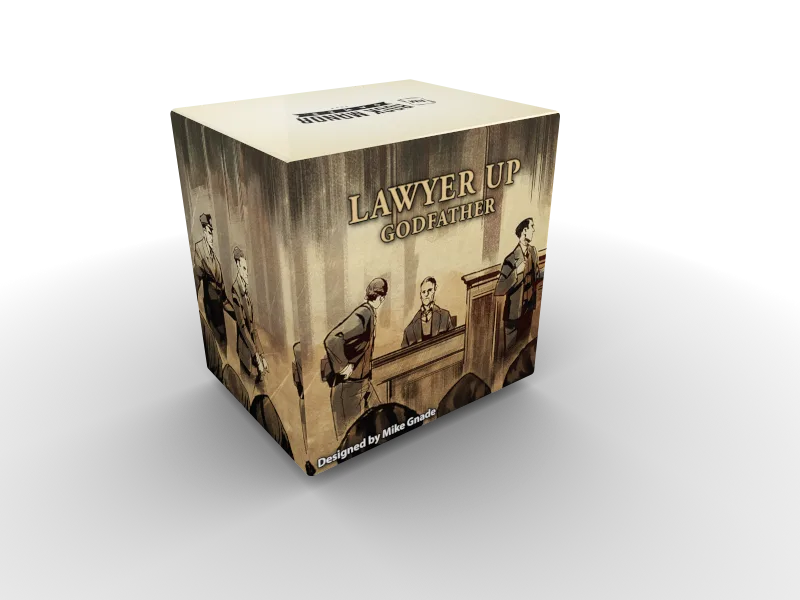
- Lawyer Up: Godfather: The Godfather expansion adds 22 Witness cards, 6 Strategies, a 54-card case deck, and a 24-card Dossier. More witness and strategy cards widen the Discovery pool, which rewards players who already understand drafting before they add it.
Lawyer Up rewards players who treat Discovery as the real game and the argument phase as the payoff. Learn the base case from both sides first, then bring in Lawyer Up: Season 2 for new cases and solo play or Lawyer Up: Witch Trial when you want a case that rewrites the win condition.