Quick answer
Start by removing duplicate and rarely used pieces, then group what's left by cooking job rather than by size. Store the pieces you use daily within easy reach, and use vertical, stacking, or nesting methods for the rest. The goal is not to fit more cookware but to make every piece you keep easy to grab and put back.
Measure your storage before you buy anything
Pull out a tape measure and note the interior width, depth, and height of your cabinets, drawers, and any open shelving. Also check clearance above the shelf where you plan to store taller items, and measure your tallest pot with its lid on. Write these numbers down and keep them with you when shopping for organizers or new cookware. Without measurements, it is easy to buy a stackable rack or a new pan that fits the shelf in theory but not in practice.
Purge duplicates and orphan pieces first
Empty one cabinet at a time and sort every pot, pan, and lid into three groups: used weekly, used occasionally, and not used in the past year. Be honest about the third group. Duplicate sizes, warped pans, and lidless pots take up space that could go to pieces you actually cook with. If you are unsure about a piece, set it aside for a month and see whether you miss it. This step is the single biggest space gain in most small kitchens, and it costs nothing.
Group by cooking job, not by size
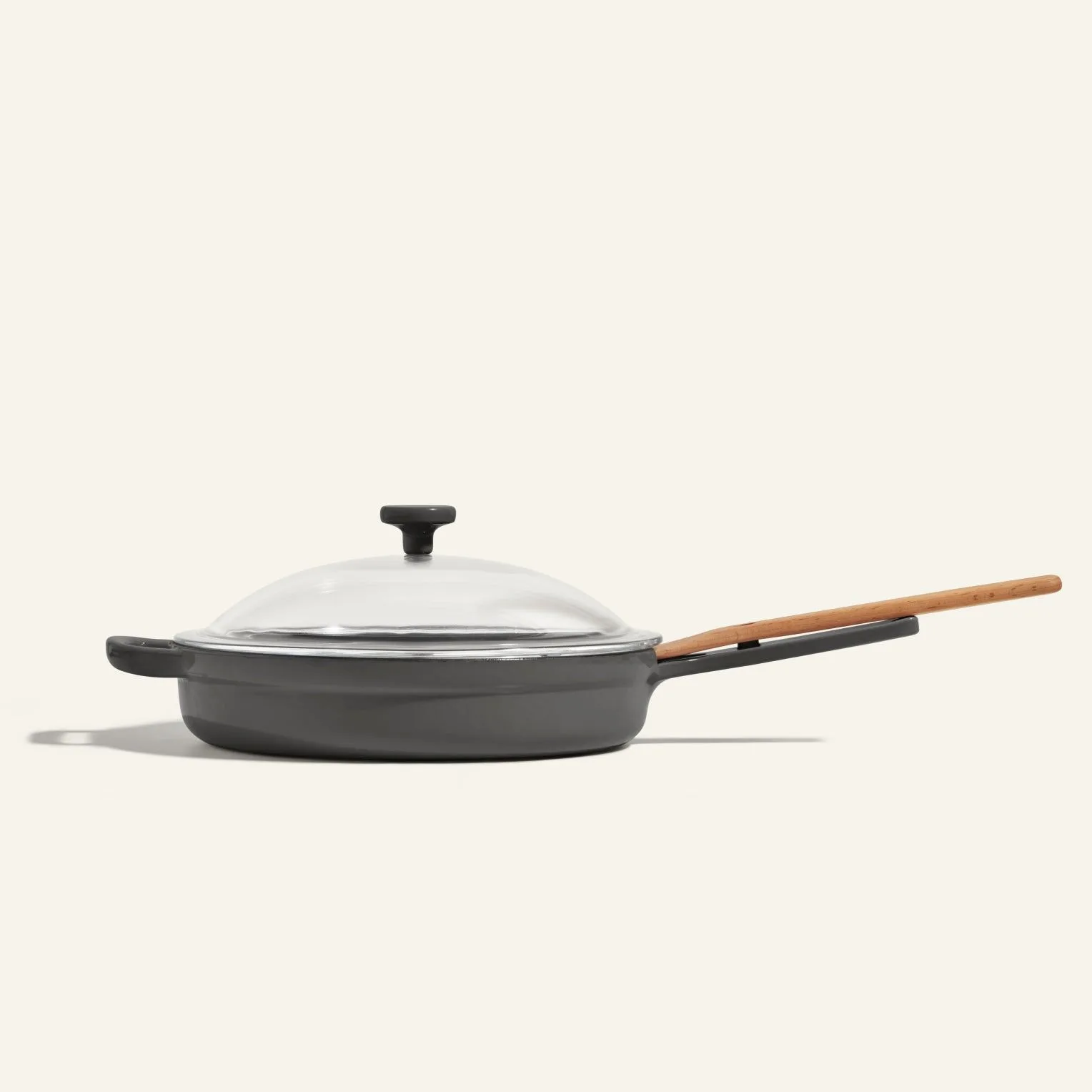
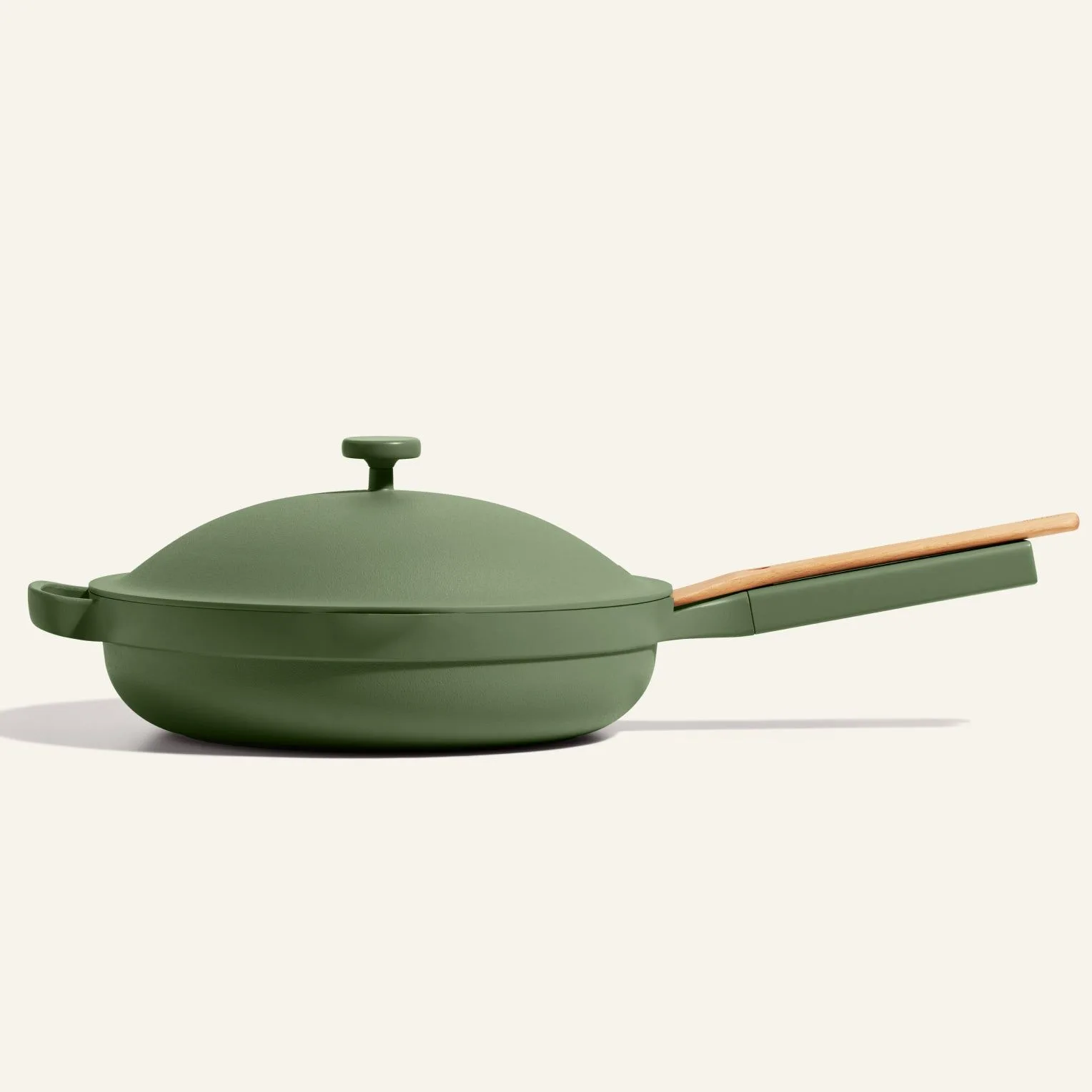
Instead of stacking all large pots together and all small pans together, group by what you actually do: boiling and steaming, sautéing and frying, baking and roasting, and serving. This makes it faster to pull everything for a meal in one reach and helps you see gaps or overlaps. A multifunctional piece such as the Always Pan 2.0 can replace several single-job pans, which frees an entire shelf or drawer for the pieces that remain.
Choose a storage method that matches the space
Vertical lid storage, stackable racks, and nesting are the three workhorses of small kitchen cookware storage. Vertical racks or file-style dividers keep pans and lids upright so you can see and grab them without unstacking. Stackable racks add a second tier inside a tall cabinet. Nesting works best for pots of graduated sizes, but only when the nonstick surfaces are protected. Pick one method per cabinet rather than mixing all three, so the system stays predictable.
Protect nonstick surfaces while nesting and stacking
Nonstick coatings scratch when bare pans slide against each other, so place a felt pad, a thin towel, or a lid between nested pieces. Never nest a smaller pan inside a larger one without a barrier, and avoid stacking heavy cast iron on top of nonstick. If you are short on dividers, store lids upright in a separate rack or in a drawer with a lid organizer. This one habit keeps the surface you paid for working properly.
Keep daily cookware accessible and store the rest higher or lower
The pieces you use every day belong between knee and shoulder height, ideally on the first shelf you open or in a drawer beside the stove. Occasional pieces, such as a large stockpot or a specialty pan, can go on a high shelf, in a deep lower cabinet, or in an under-bed bin if your kitchen truly has no room. Labeling those out-of-the-way spots with a short list taped inside the door saves you from buying a duplicate because you forgot what was there.
Your step-by-step small kitchen storage plan
- Measure every storage zone: Record interior width, depth, and height for each cabinet, drawer, and open shelf, plus clearance above the shelf. Measure your tallest pot with the lid on. Checkpoint: if you cannot close the door with the new organizer inside, it is the wrong size.
- Empty one cabinet and sort into three piles: Sort into used weekly, used occasionally, and not used in a year. Remove the third pile and store it outside the kitchen for a month before deciding. Common mistake: keeping duplicate sizes because they were expensive, then having no room for the pan you reach for daily.
- Group by cooking job: Create zones for boiling and steaming, sautéing and frying, baking and roasting, and serving. Keep each zone together on one shelf or in one drawer. Checkpoint: you should be able to pull everything for one meal from a single zone.
- Pick one storage method per cabinet: Use vertical dividers for pans and lids, a stackable rack for a tall cabinet, or nesting for graduated pots. Do not mix methods in the same cabinet. Common mistake: stacking pans flat without dividers, which hides the bottom pieces and leads to unstacking every time.
- Add a barrier between nested or stacked pieces: Place felt pads, thin towels, or lids between nonstick surfaces. Keep heavy cast iron off nonstick pans and store lids upright in a rack or drawer organizer. Checkpoint: no bare nonstick surface should touch another pan.
- Place daily pieces at knee-to-shoulder height: Move the pans you use most to the first shelf or drawer beside the stove. Send occasional pieces to high shelves or deep lower cabinets and label those spots. Next step: after one week, note which piece you still reach past, and move it to the out-of-the-way zone.
Cookware that earns its footprint
- Always Pan 2.0: The Always Pan 2.0 is a 10-in-1 bestselling cookware system with a ceramic nonstick surface, available in colors including Spice, Char, Blue Salt, Sage, Steam, Indigo, Lavender, Vanilla Bean, Crescent, Turmeric, Clay, and Charm. One pan that handles multiple cooking methods can replace several single-purpose pieces, which is the fastest way to free shelf space in a small kitchen.
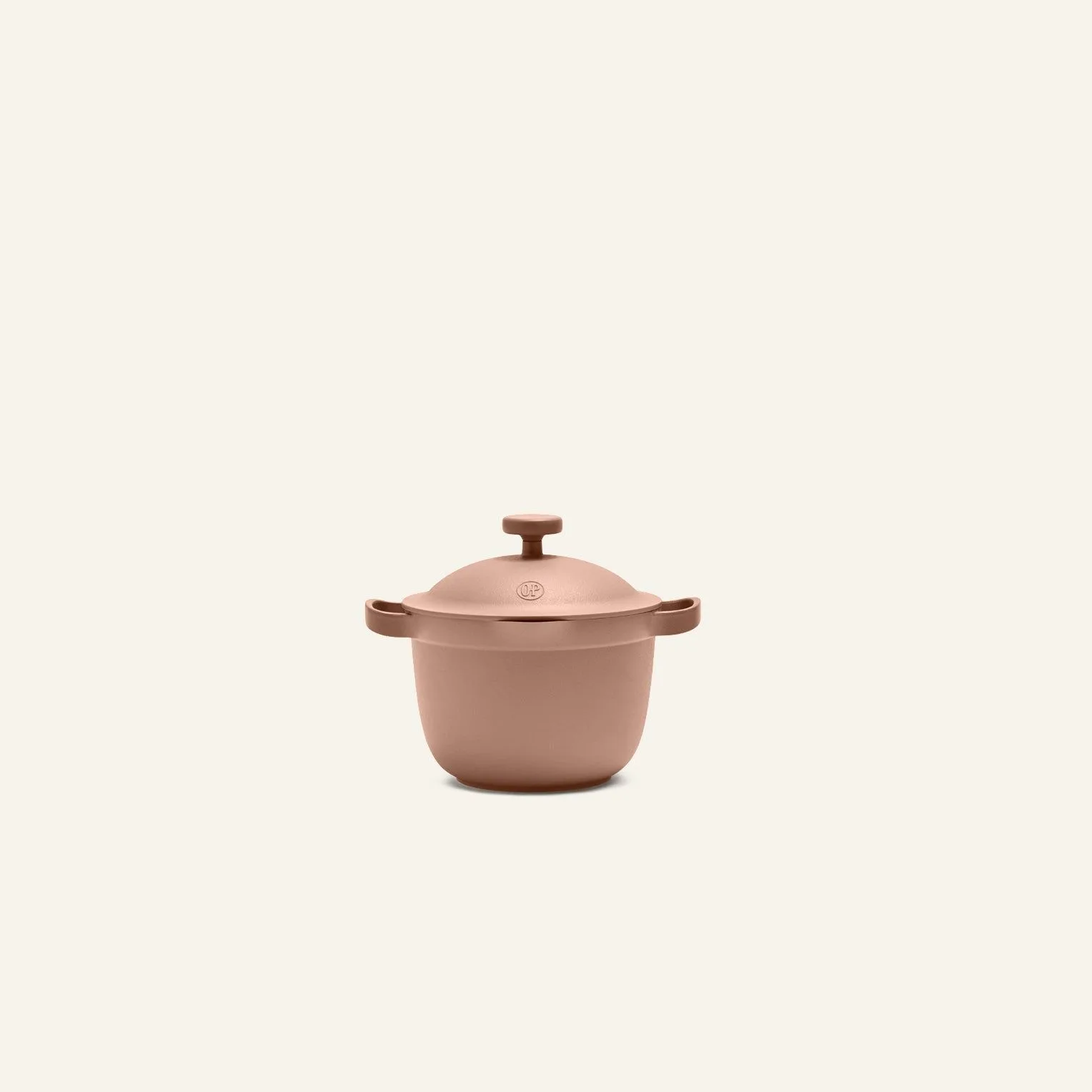
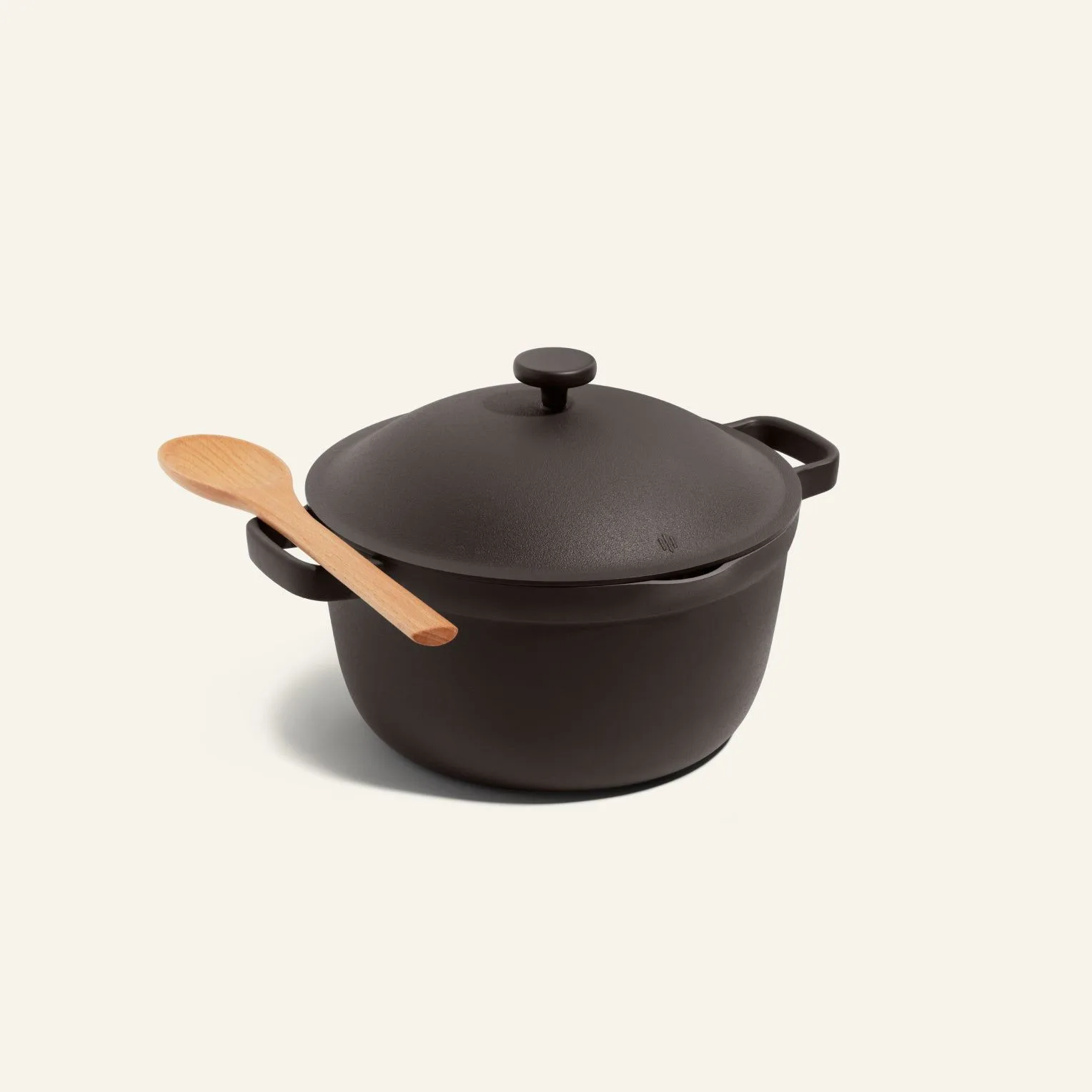
- Perfect Pot: The Perfect Pot is an 8-in-1 family-sized, stovetop-to-oven nonstick pot available in colors including Spice, Char, Blue Salt, Sage, Clay, Lavender, Steam, Vanilla Bean, Turmeric, Charm, Rosa, and Azul. A single family-sized pot that moves from stovetop to oven reduces the need for separate boiling, steaming, and baking vessels, so you can dedicate one cabinet to it instead of three.
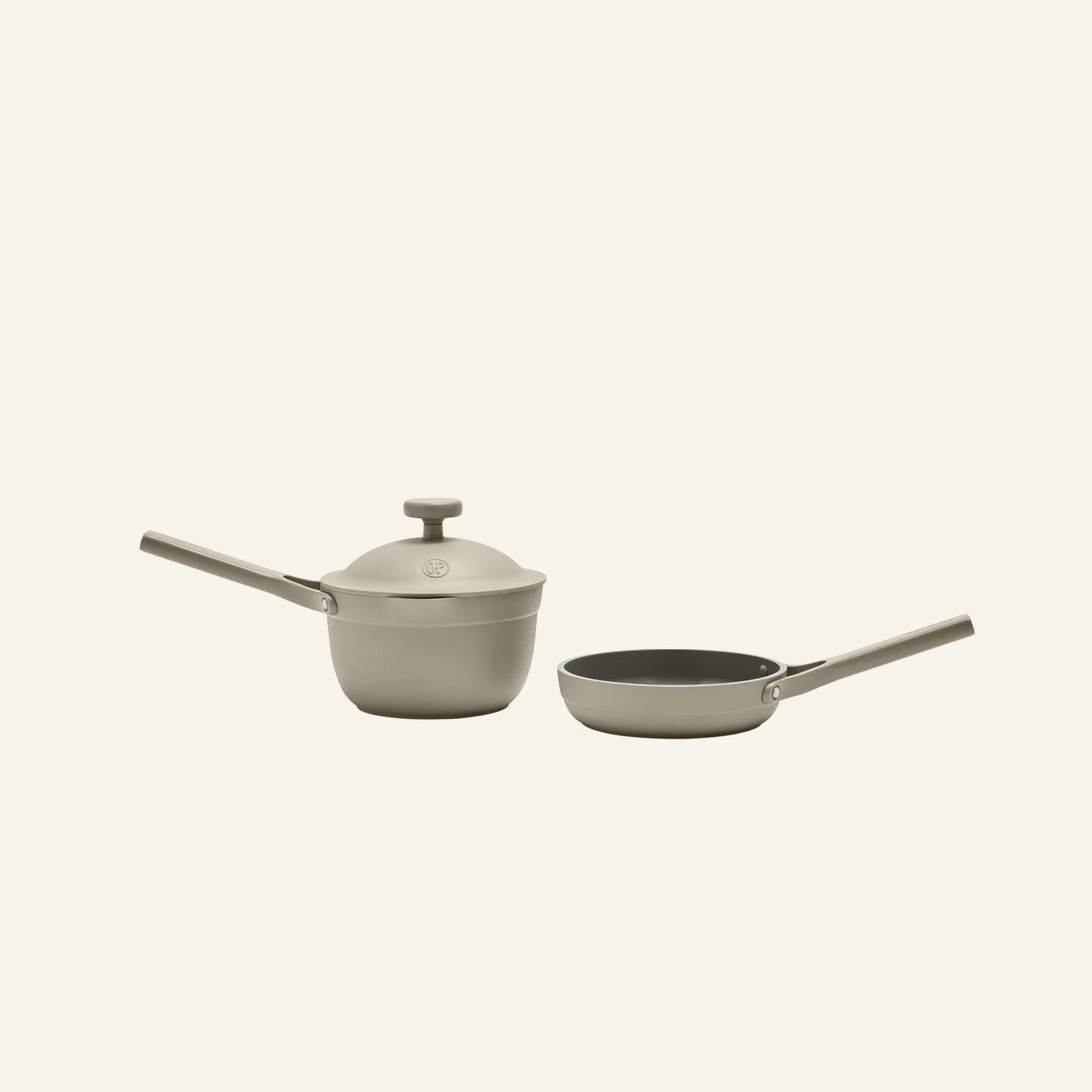
- Mini Always Pan 2.0: The Mini Always Pan 2.0 is a multifunctional, non-toxic nonstick pan available in colors including Blue Salt, Cream, Steam, Spice, Sage, Char, Tierra, Cielo, and Lavender. Its compact size nests more easily than full-sized pans and fits narrow shelves or drawers, making it a practical daily piece when counter and cabinet space is tight.