Quick answer
To use a larding needle, chill your fat strips until firm, load a strip into the needle's hollow point, then push the needle through the roast with the grain and release the fat inside. Work in rows about 2 cm apart, and wipe the needle between insertions to keep it moving smoothly.
What larding does for lean cuts
Larding inserts strips of fat—called lardons—into the interior of a roast. As the meat cooks, that fat renders and bastes the meat from the inside, which helps lean cuts like pork loin, venison, or beef eye of round stay moist. It also carries flavor into the center of the roast, where surface seasoning cannot reach. This is different from barding, which wraps fat around the outside.
Choosing and preparing the fat
Use firm back fat, pork fat, or chilled bacon. Cut the fat into strips about 5 cm long and 5 mm thick—thin enough to fit the needle, thick enough to render slowly. Partially freeze the strips for 20–30 minutes; cold fat slides through meat far more easily than soft fat. If you are using bacon, avoid very salty or heavily smoked varieties, which can overpower the roast.
Setting up your workspace
Place the roast on a stable cutting board with the grain running left to right. Keep the fat strips on a chilled plate nearby. Have paper towels on hand to wipe the needle between insertions. A pair of kitchen tweezers helps pull the fat strip through if it gets stuck.
Step-by-step larding technique
- Chill the fat and the roast: Pat the roast dry and refrigerate it while you prepare the fat strips. Cold meat and cold fat both resist tearing and slide together more cleanly. Checkpoint: the fat should feel firm but still flexible, not rock-hard.
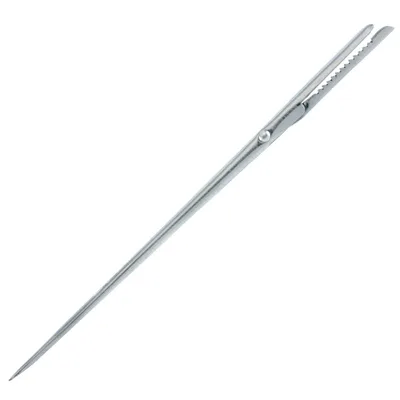
- Load the needle: Open the hinged tip of the larding needle, lay one fat strip into the hollow channel, and close the tip so the strip is held securely. Leave a small tail of fat sticking out at the handle end. Common mistake: overfilling the needle, which makes the first push difficult and can tear the meat.
- Pierce with the grain: Push the needle into the roast following the direction of the muscle fibers, not across them. Push until the tip emerges from the far side or reaches the depth you want. Checkpoint: the needle should move with steady resistance, not require force.
- Release and withdraw: Open the tip to release the fat strip, then pull the needle straight back out. The fat stays inside the meat. Use your fingers or tweezers to hold the exposed tail of fat as you withdraw the needle if the strip starts to pull out. Common mistake: twisting the needle on the way out, which can dislodge the fat strip.
- Repeat in a grid pattern: Space insertions about 2 cm apart in rows across the roast. Alternate the direction of the rows slightly so the fat is distributed evenly rather than concentrated in one line. Checkpoint: for a 1 kg roast, 8–12 lardons is usually enough; more than that can make the meat greasy.
- Wipe the needle between insertions: Fat and meat juices build up on the needle and make it sticky. Wipe it with a paper towel after every two or three insertions to keep the motion smooth. Common mistake: skipping the wipe, then forcing the needle and tearing the roast's surface.
- Season and cook as usual: Season the outside of the roast, then cook it using your normal method and target internal temperature. The lardons will render during cooking and baste the meat from within. Next step: let the roast rest before slicing so the rendered fat redistributes instead of running out.
Product facts
- Larding needle: Westmark larding needle is a practical tool for preparing meat dishes, designed to help you insert strips of fat or other ingredients into roasts and cuts of meat. This is the core tool for the technique; its hollow design holds the fat strip so you can push it into the roast in one motion.
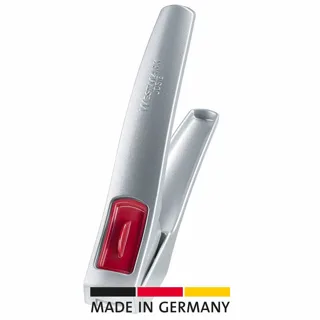
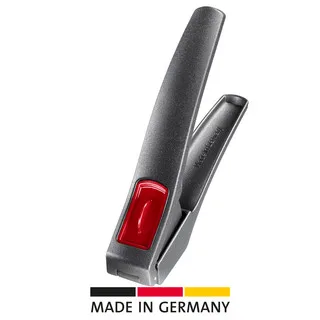
- Garlic press »Josie« Black Edition: Westmark Garlic Press »Josie« Black Edition brings a sleek, modern look to your kitchen while making quick work of fresh garlic. If your lardon mixture includes garlic, pressing it fresh avoids chunks that can burn; the black finish is a style choice, not a performance difference.