Quick answer
For a genuinely fragile, softened cork in an older bottle, a bilame corkscrew is the safer choice: its two thin blades slide down the sides of the cork and grip it without pushing it inward. A lever corkscrew is faster and easier on your wrist, and it works well on sound corks in bottles up to roughly ten years old, but it drives a spiral through the centre of the cork and can shove a weak cork into the wine. If you open aged bottles regularly, own both.
How each tool actually removes a cork
A lever corkscrew works on a rack-and-pinion action. You clamp the neck, lower the handle, and the spiral is driven down through the middle of the cork while the same lever motion lifts it out. It is a one-motion tool: little grip strength needed, consistent extraction angle, and no twisting. The trade-off is that the spiral occupies the centre of the cork, so a cork that has gone soft has nothing solid to hold onto.
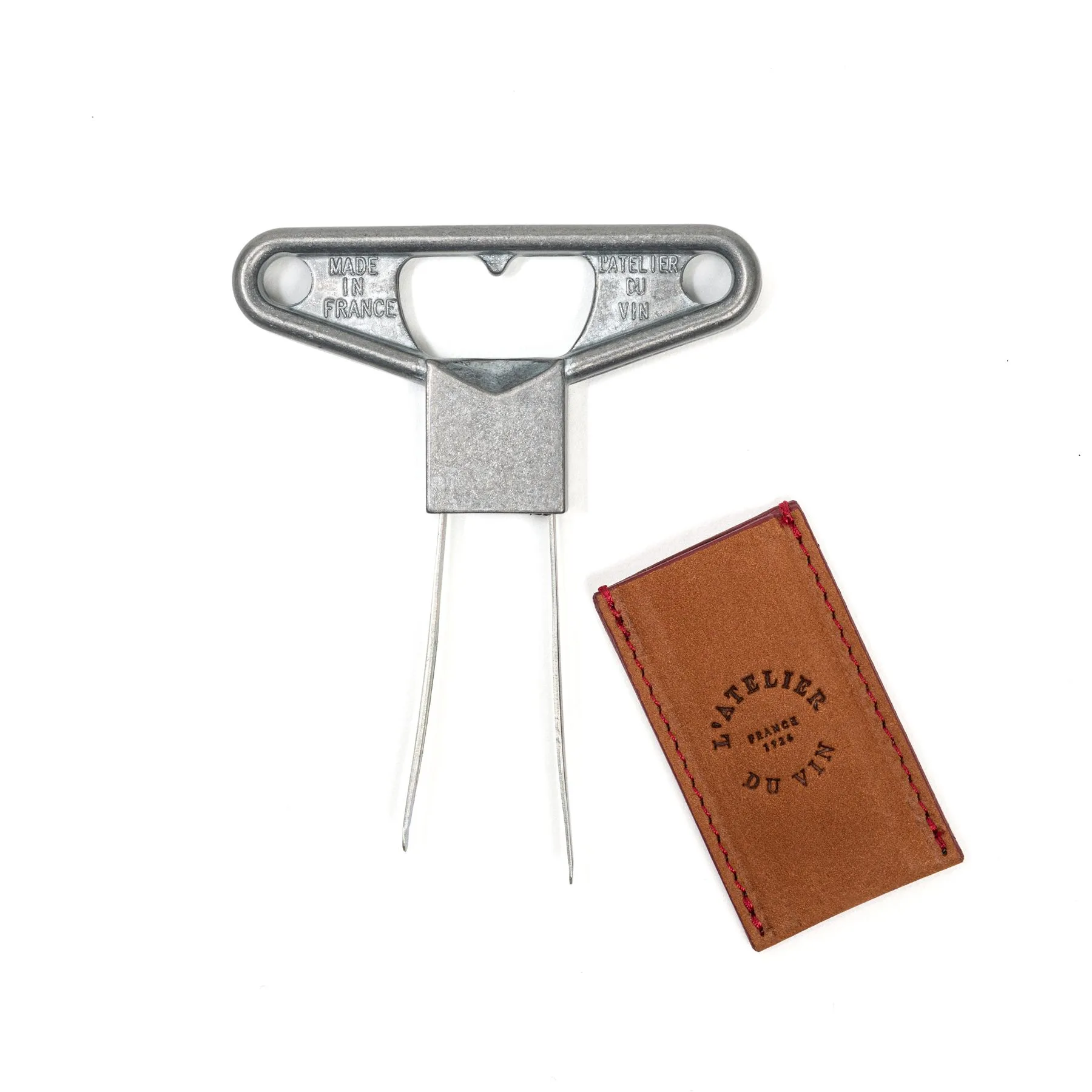
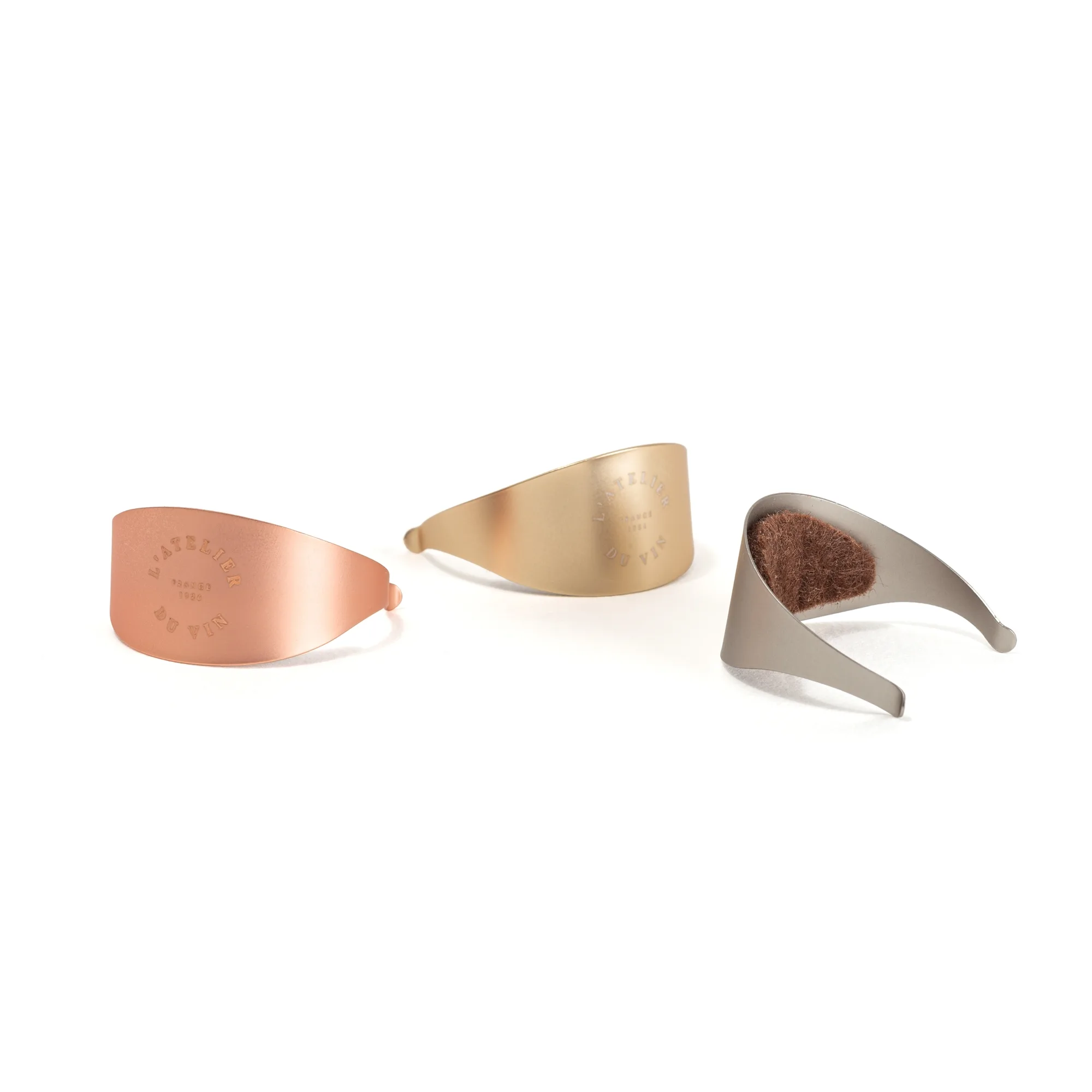
A bilame corkscrew works differently. Two flat, springy blades slide down between the cork and the glass, one on each side, then you pull and twist. Nothing pierces the centre, so a crumbling or spongy cork stays in one piece more often. It is slower and takes a little practice to seat the blades without catching the glass edge, which is why it is the tool many sommeliers reach for on an old bottle.
Where each one fails on aged wine
Lever corkscrews fail in one characteristic way on old bottles: the spiral pushes the cork inward instead of gripping it, and you end up with cork fragments in the wine and a messy decanting job. The failure is sudden and hard to reverse once it starts.
Bilame corkscrews fail more gently. If the cork is so degraded that it has lost its structure, the blades can tear through it rather than hold it, and you may need to work in stages or switch to a filter. The failure is slower and usually leaves the wine cleaner, because you are not driving debris down into the bottle.
Matching the tool to the bottle in front of you
Judge the cork, not the label. A bottle from 2018 with a firm, springy cork is a lever job. A bottle from 2005 with a cork that feels spongy when you press the top, or that has visibly crept up the neck, is a bilame job. If wine has seeped past the cork and stained the top, treat it as fragile regardless of the year.
For a mixed cellar, the practical answer is to keep a bilame corkscrew for the older or uncertain bottles and a lever set for everything else, including the sparkling bottles you want to reseal. That combination covers almost every situation without you having to think about it at the table.
The trade-offs, side by side
- Cork contact: A lever corkscrew's spiral passes through the centre of the cork; a bilame's two blades slide down the outside edges. Centre contact is faster but leaves a soft cork nothing to grip; edge contact is slower but holds a fragile cork intact.
- Effort and speed: The lever action does the pulling for you, while a bilame needs you to seat the blades and pull with a twist. If you open several bottles a week and your corks are sound, the lever wins on convenience.
- Failure mode: A lever can push a weak cork into the wine; a bilame can tear through a cork that has lost all structure. Both can fail, but the bilame's failure usually leaves less debris in the bottle.
- Best single purchase: Les Bons Amis covers a bilame and a winged corkscrew together, while Up & Down covers a lever corkscrew and a stopper. Pick the set whose second tool you will actually use, not just the opener.
Two sets that cover both jobs
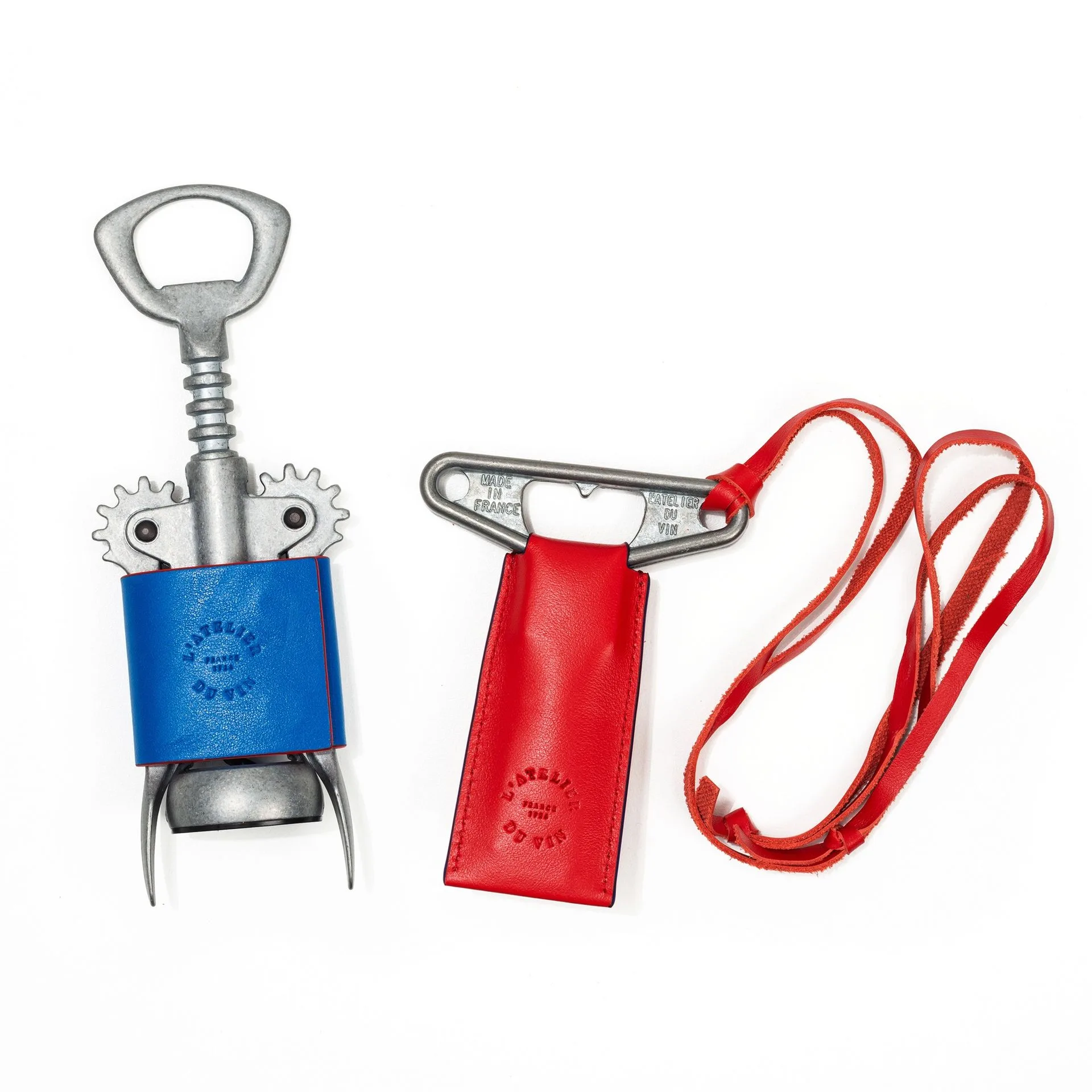
- Les Bons Amis, an iconic and stylish pair of corkscrews | L'Atelier du Vin: Les Bons Amis pairs a Bilame corkscrew with a winged corkscrew in a genuine leather case. You get the fragile-cork tool and a second option for sound corks in one case, which is a sensible starting point if you only want one purchase for a mixed collection.
- Bilame Craft Corkscrew Made in France with Leather Pouch | L'Atelier du Vin: The Bilame Craft Corkscrew is made in France with a zamak construction and comes with a handstitched genuine leather pouch. This is the single-tool route if aged bottles are your main concern; the pouch keeps the blades protected, which matters because nicked blades seat badly against the glass.
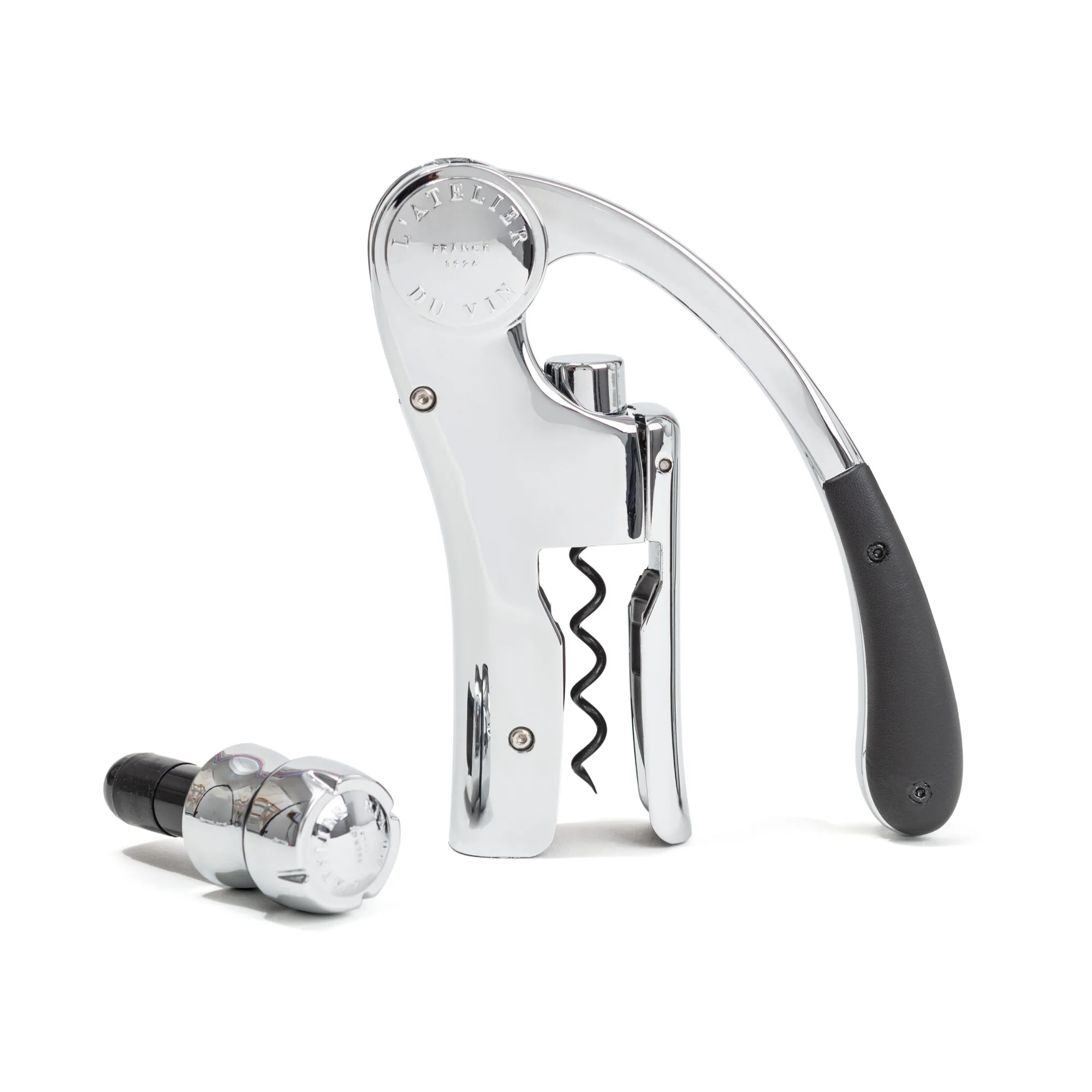
- Up & Down: A Lever Corkscrew and Stopper Set | L'Atelier du Vin: Up & Down combines a lever corkscrew with a champagne stopper in a sommelier-style box. A lever corkscrew plus a stopper suits everyday bottles and sparkling wine, but it gives you no centre-free option for a fragile cork.
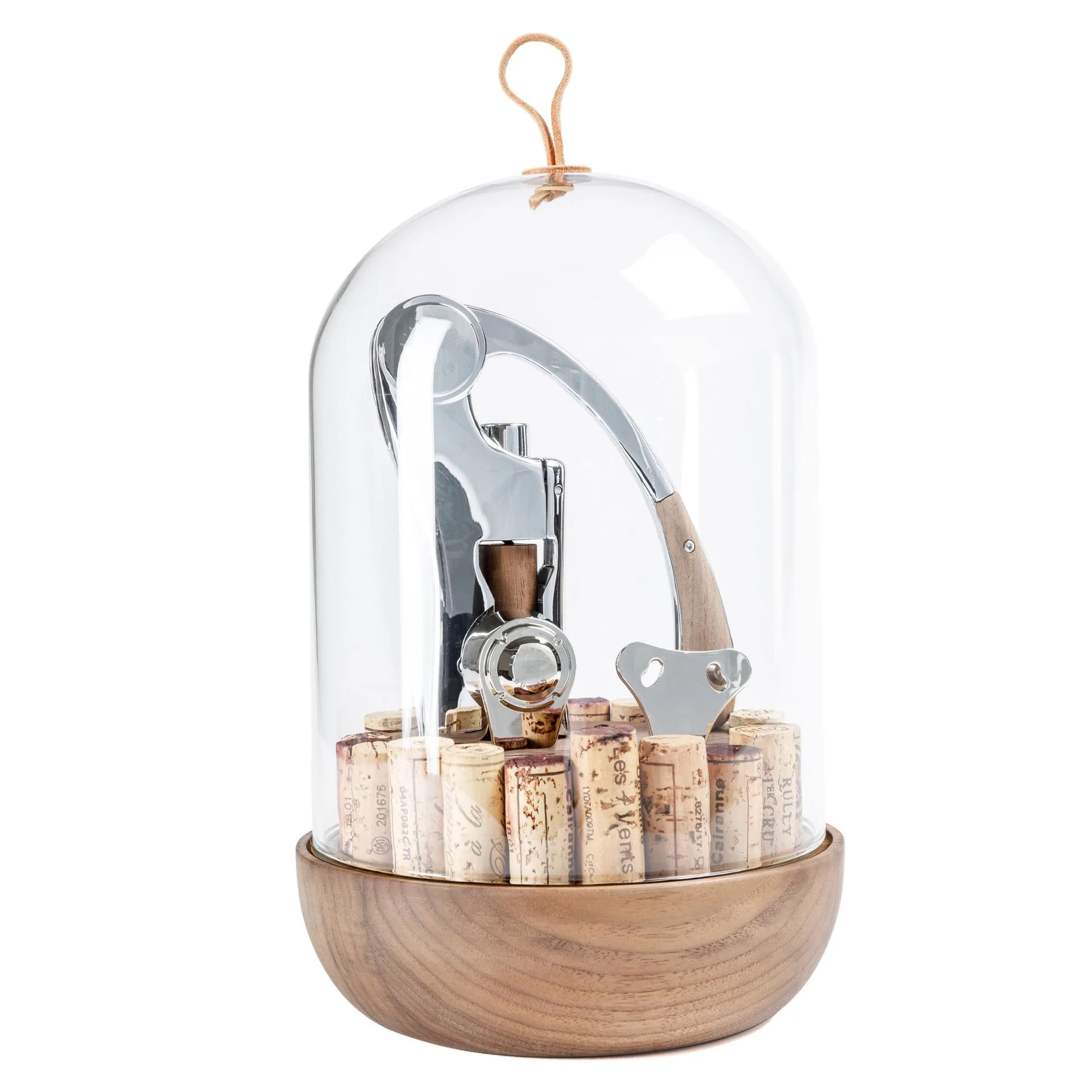
- Bell lever corkscrew set Oeno Motion Groom | L'Atelier du Vin: The Oeno Motion Groom lever corkscrew set is handmade, part of a numbered series, and designed to be moved between table, kitchen, and cellar. Worth considering if you want a lever tool that lives wherever you open wine, rather than being fixed to one spot.
Which should you buy?
Choose this if
- You regularly open bottles older than about ten years or with visibly softened corks: a bilame corkscrew such as the Bilame Craft or the Les Bons Amis set.
- You want one purchase that covers fragile corks and everyday bottles: Les Bons Amis, which adds a winged corkscrew.
- You open mostly young, sound corks and want speed plus a way to reseal sparkling wine: Up & Down.
- You want a lever tool that moves between table, kitchen, and cellar: the Oeno Motion Groom set.
Skip this if
- You only open young bottles and want the fastest possible tool: a lever set alone is enough, and a bilame will feel slow.
- You are buying for an aged-wine collector and only want a lever corkscrew: it gives you no centre-free option when a cork is failing.
- You want a single tool for both fragile and firm corks: no one corkscrew does both jobs well, so plan for two.