Quick answer
Clean your butcher block after each use with mild soap and warm water, then dry immediately. Oil it every 4–6 weeks or when the wood looks dry to keep it conditioned and protected.
Why regular oiling matters
Wood is porous and can absorb moisture, bacteria, and odors if left unprotected. A food-safe mineral oil or butcher block conditioner fills the pores and creates a barrier that makes cleaning easier and extends the board's life. Without oil, the wood may crack or warp over time.
Choosing the right oil
Use only food-grade mineral oil, beeswax-based conditioners, or specialized butcher block oils. Avoid vegetable oils like olive or coconut—they can go rancid and leave a sticky residue. Caraway recommends a simple mineral oil for the 12” Prep & Serve Butcher Block.
Steps for cleaning and oiling your butcher block
- 1. Wipe after each use: Scrape off food scraps with a bench scraper or spatula, then wash the board with mild dish soap and warm water using a soft sponge. Rinse thoroughly. Never soak the board or put it in the dishwasher—water can cause warping and cracking.
- 2. Sanitize when needed: For raw meat or poultry, spray the board with a 1:1 vinegar-water solution or a diluted hydrogen peroxide mix. Let it sit for 2 minutes, then rinse and dry. Bleach is too harsh and can damage the wood fibers; stick to gentle sanitizers.
- 3. Dry immediately: Pat the board dry with a clean cloth, then stand it upright or place it on a rack to air-dry completely. Do not store it flat while still damp. Moisture trapped against the counter promotes mold and mildew growth.
- 4. Apply oil when dry: Pour a small amount of food-grade mineral oil onto the board and spread it evenly with a clean cloth or paper towel. Let it soak in for at least 2 hours or overnight. Apply oil only to a clean, fully dry board—oil traps dirt if the board is still damp.
- 5. Buff and repeat: After the oil has absorbed, buff off any excess with a dry cloth. For a deeper treatment, apply a second coat and let it sit again. The board should feel smooth and look slightly darker. If the oil beads up or pools, the wood is saturated; wipe away the excess and wait until the next scheduled oiling.
- 6. Condition with beeswax (optional): For extra protection, rub a beeswax-based conditioner over the oiled board and buff to a shine. This adds a water-resistant layer and a subtle sheen. Beeswax is not a substitute for oil—use it only after the board has been properly oiled.
Product facts
-
12” Prep & Serve Butcher Block: Flip from the grooved Prep Side—perfect for mess-free carving—to the dished Serve Side for seamless slicing and serving. Regular oiling keeps both sides smooth and prevents the grooves from trapping residue, so the dual-purpose design stays functional.
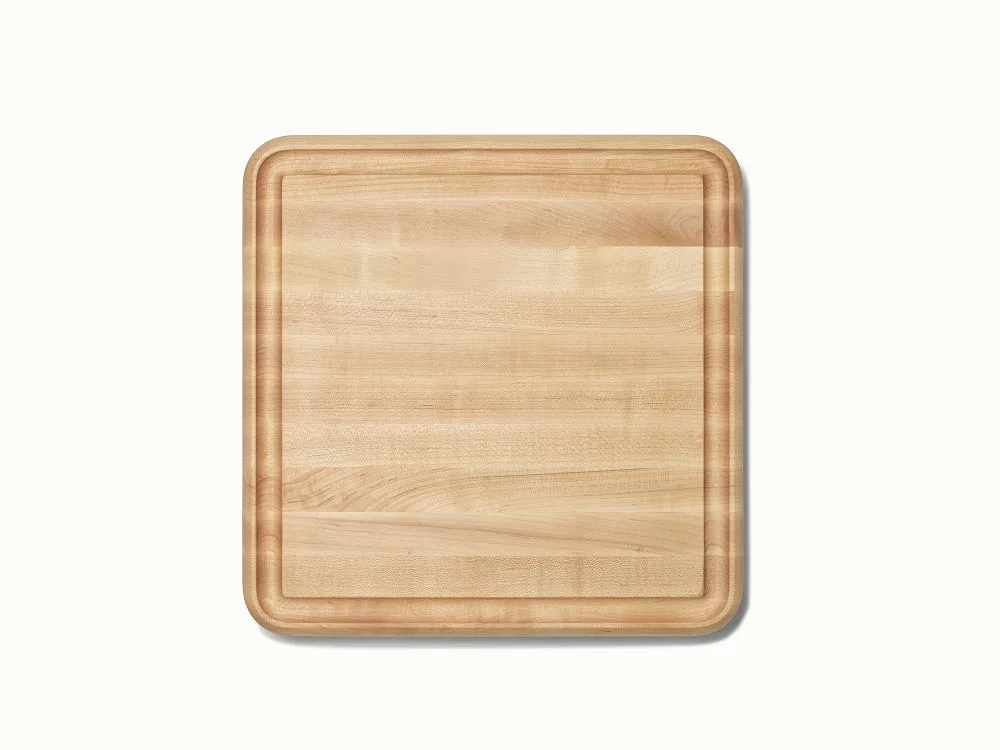
12” Prep & Serve Butcher Block