Quick answer
Brew raw puerh at 185°F and ripe puerh at 200°F, always with a quick rinse. Use 1 teaspoon per 8 ounces and steep in short increments, adjusting to taste.
Why raw and ripe puerh need different brewing
Raw puerh (sheng) is minimally oxidized, so lower water temperature and shorter steeps prevent bitterness. Ripe puerh (shou) undergoes accelerated aging, making it forgiving with near-boiling water and longer steeps. The Puerh Sampler includes both styles, so adjusting technique per tea is key.
A common mistake is treating all puerh the same. Raw puerh can become harsh if over-steeped or brewed too hot, while ripe puerh may taste flat if the water isn't hot enough.
Step-by-step brewing guide
- Rinse the leaves: Place 1 teaspoon of loose puerh in your brewing vessel. Pour hot water (185°F for raw, 200°F for ripe) over the leaves and immediately discard the water. This wakes up the tea and removes any dust. Always rinse puerh — even aged ripe puerh. Skipping this step can result in a muddy first infusion.
- First steep: short and watchful: Add fresh hot water at the correct temperature. Steep raw puerh for 20 seconds; steep ripe puerh for 30 seconds. Taste and decide if you want a stronger cup next time. If using a gaiwan or teapot, pour out all the liquid. Leaving leaves in water over-extracts and causes bitterness.
- Adjust subsequent steeps: Add 5–10 seconds to each successive steep. Raw puerh usually gives 4–6 flavorful infusions; ripe puerh can give 6–8. Stop when the flavor thins or becomes flat. Ripe puerh often improves after 2–3 steeps as the leaves fully open. Don't judge it by the first cup alone.
Product facts
-
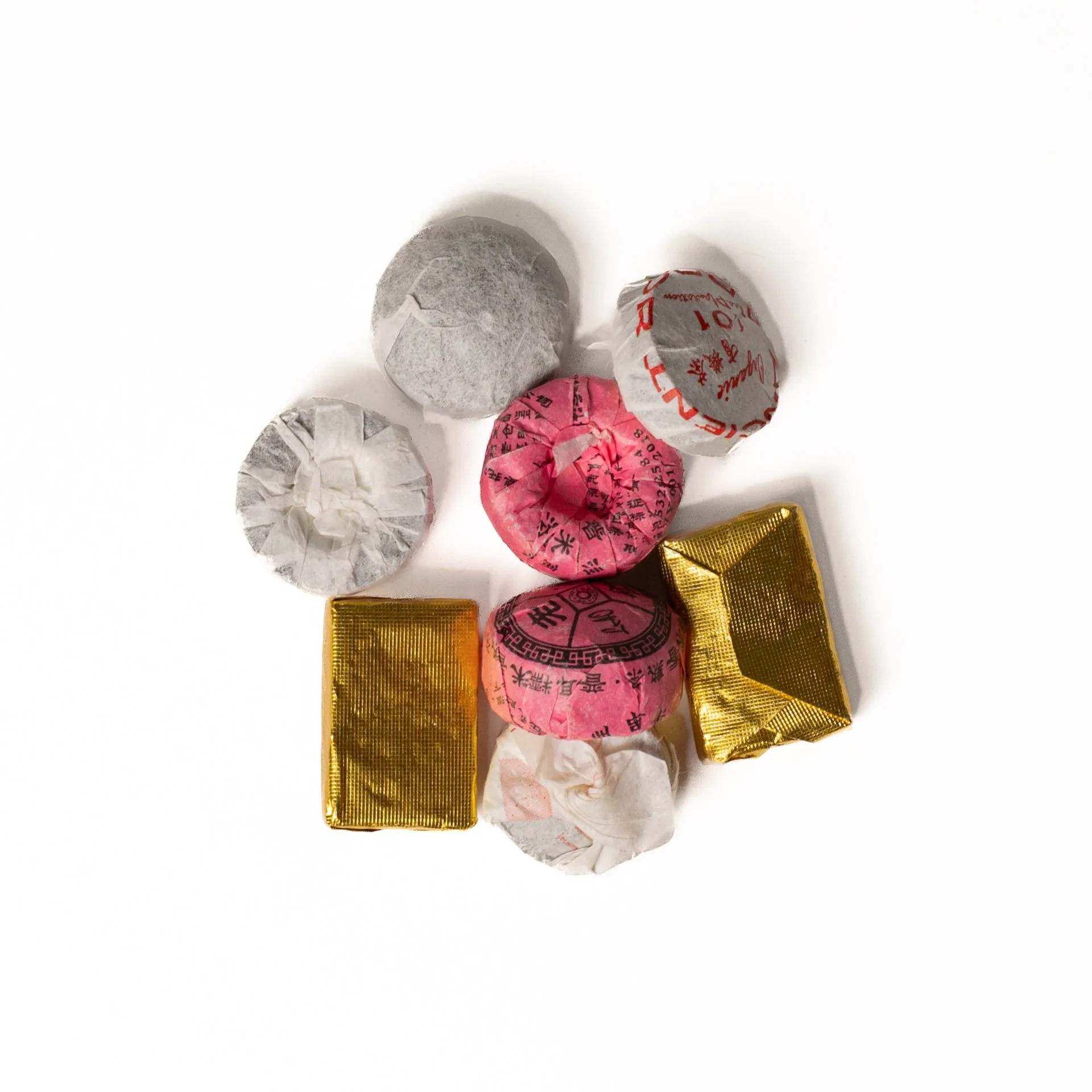
Puerh Sampler: The Puerh Sampler includes Sticky Rice Puerh (intensely aromatic, savory) and Bulang (exceptionally smooth), plus two more puerh teas with two servings each. You get a mix of raw and ripe styles, so mastering both brewing methods lets you enjoy each tea's unique character.
Puerh Sampler