Quick answer
Caring for seasoned cast iron bakeware is simple: clean it without soap after use, dry it thoroughly, and apply a light coat of oil to maintain the seasoning. This routine prevents rust and keeps the surface nonstick for years.
Why care matters for cast iron bakeware
Unlike bare steel or aluminum pans, cast iron bakeware comes pre-seasoned from the foundry. That natural seasoning layer is what makes it nonstick and rust-resistant. If you scrub it off or let it sit wet, you lose those benefits. Proper care preserves the seasoning so you can bake wreath-shaped cakes, cornbread, or brownies without sticking.
Cast iron also holds heat evenly, which is great for baking, but that same property means it can rust quickly if moisture lingers. A few minutes of after-use care saves you from having to re-season the pan later.
Common mistakes to avoid
Using dish soap is the top mistake. Modern cast iron can handle a tiny dab of mild soap, but soaking or scrubbing with abrasive pads strips the seasoning. Another common error is storing the pan without drying it first—even a few drops of water can cause rust spots.
Also, avoid cooking acidic foods like tomato sauce in a brand-new seasoned pan. The acid can react with the iron and leave a metallic taste. Stick to neutral or fatty recipes until the seasoning builds up.
How to care for cast iron bakeware step by step
- Clean while warm: After baking, let the pan cool slightly (but not completely). Rinse with hot water and scrub gently with a non-metallic brush or sponge. For stuck-on bits, boil a little water in the pan for 1-2 minutes, then scrape with a wooden spatula. Never use steel wool or harsh scrubbers—they remove the seasoning.
- Dry immediately and thoroughly: Wipe the pan dry with a clean towel, then place it on a stovetop burner over low heat for 2-3 minutes to evaporate any remaining moisture. Cast iron is porous; towel-drying alone can leave water in the pores. If you see rust spots, you didn’t dry it enough.
- Apply a thin oil layer: While the pan is still warm, add a drop of vegetable oil (or any neutral oil) and rub it over the entire surface—inside and out. Then wipe off the excess with a paper towel. The goal is a barely-there sheen, not a greasy film. Too much oil will become sticky or tacky; less is more.
- Store in a dry place: Put the pan away only when it’s completely cool and dry. Stack other pans on top only if you place a paper towel or cloth between them to absorb moisture. Avoid storing in a humid cabinet. A damp cabinet will undo all your drying work.
- Re-season when needed: If the pan looks dull, feels dry, or food starts sticking, it’s time to re-season. Wash and dry as usual, then coat it with oil and bake upside-down in a 350°F oven for one hour. Place a baking sheet on the rack below to catch drips. Re-seasoning once or twice a year is normal for heavily used bakeware.
Featured product
-
Seasoned Cast Iron Holiday Wreath Pan: Cast iron bakeware won’t dent, bend, or warp at high temperatures, and the naturally seasoned cooking surface is ready to use straight from the foundry. This means you can bake holiday wreath cakes without worrying about warping, and the pre-seasoned surface reduces the need for extra greasing before each use.
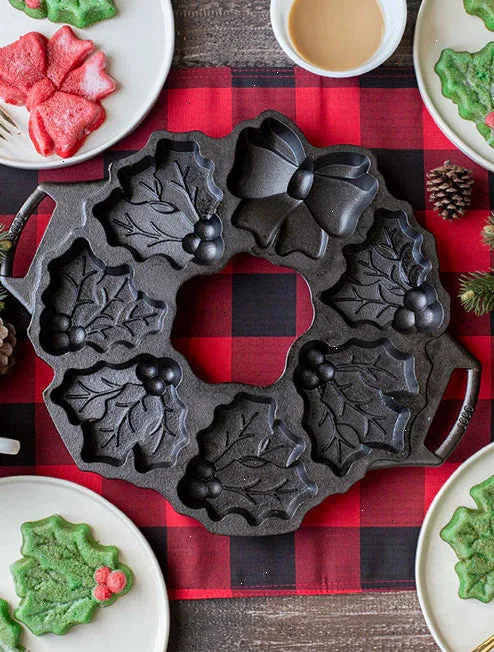
Seasoned Cast Iron Holiday Wreath Pan