Quick answer
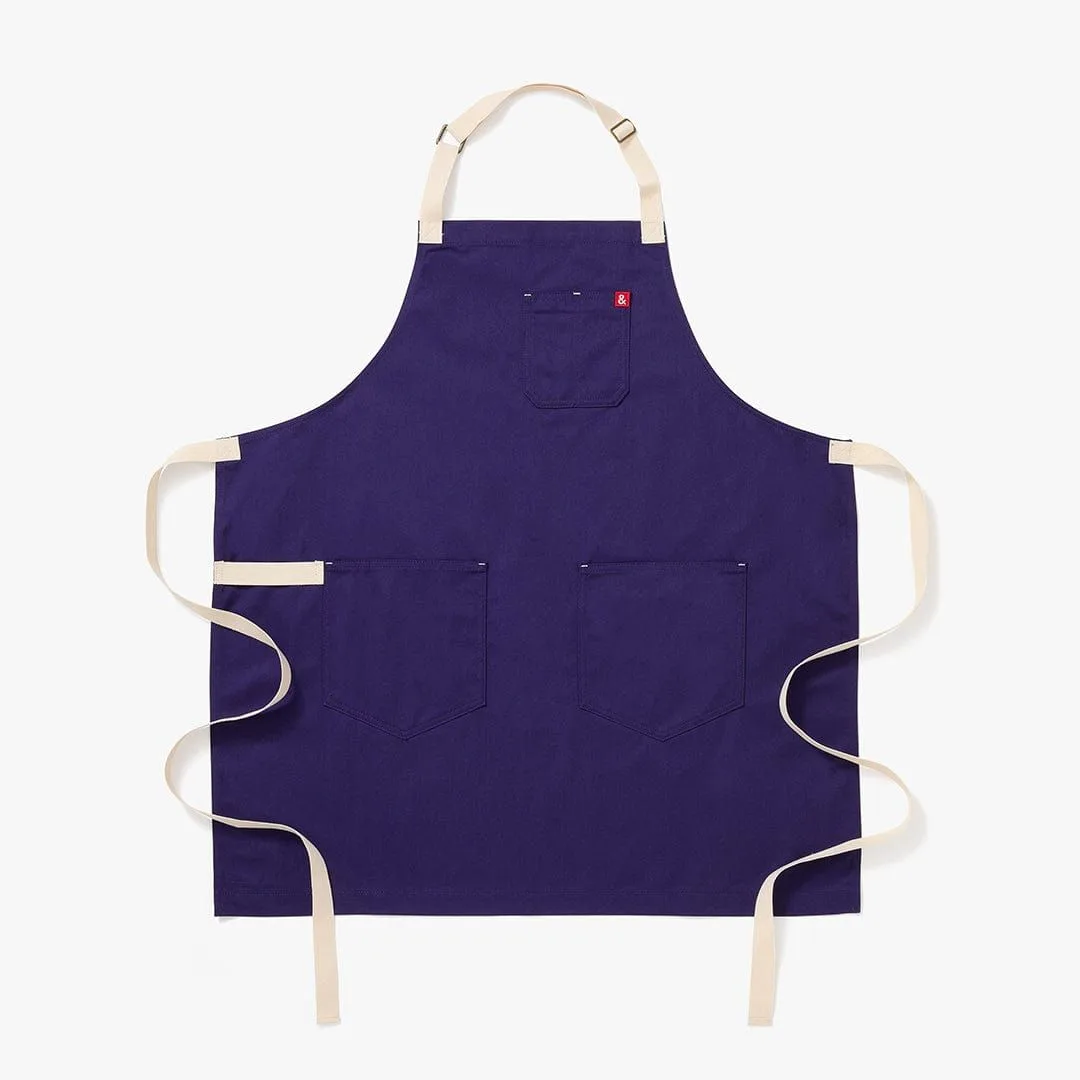
For most bakers, a full-coverage apron with a crossover or adjustable neck strap, a long tie, and at least one pocket is the best apron for baking because it protects the chest and lap from flour, butter, and chocolate. If you mostly decorate cakes and pastries, choose a smock-style apron for more coverage and less strap pressure. If you work in short, hot bursts, an Essential Apron with a lighter fabric and a tie waist is easier to put on and off.
Coverage: how much apron you actually need
Baking throws mess upward and outward: flour clouds when you mix, butter and chocolate flick when you fold, and icing sugar drifts when you finish. A waist apron covers your lap but leaves your chest exposed, so it suits quick cookie batches more than long pastry sessions. A bib apron covers the chest and torso but can feel heavy in a hot kitchen. A smock apron covers the chest, shoulders, and often the upper arms, which is why it is common in professional pastry kitchens where laminated dough and chocolate work create broad, sticky messes.
Match coverage to your tallest mess, not your average task. If you regularly work above waist height, choose a bib or smock. If you mostly roll dough at counter level, a waist apron is enough and easier to move in.
Fabric and flour resistance: what to look for
A flour resistant apron is less about a coating and more about weave density and how the fabric handles powder. Tightly woven cotton canvas sheds flour when you brush it off and holds up to repeated washing. Cotton denim behaves similarly and softens with age. Loosely woven or very lightweight cotton lets flour work into the fibers, which is fine for a home baker who washes after every session but frustrating in a busy kitchen.
There is no standard test for flour resistance, so treat it as a practical property rather than a certification. A closely woven cotton or cotton-blend apron with a smooth finish will release dry flour better than a fuzzy or heavily textured fabric. If you work with dark chocolate or buttercream, a mid-to-dark color hides stains better than white, but white shows flour dust less. Choose based on which mess bothers you more.
Straps, ties, and neck comfort
Neck straps take the weight of a bib apron, and that pressure adds up during a long bake. A crossover back, where the straps cross between your shoulder blades, distributes weight better than a single loop around the neck. Adjustable straps let you raise or lower the bib so it sits at your natural waist rather than pulling at your throat. Long waist ties let you tie in front or back and are more forgiving across body shapes than short ties.
If you have neck or shoulder sensitivity, a smock apron that hangs from the shoulders without a neck loop is often more comfortable for long sessions. If you need to remove your apron quickly between tasks, a tie waist with a simple neck loop is faster to get on and off.
Pockets, loops, and tool placement
Bakers reach for the same few tools constantly: a bench scraper, a thermometer, a piping tip, a small offset spatula, a phone timer. A single deep pocket keeps a scraper and thermometer upright and accessible. Two pockets let you separate clean tools from messy ones. A small chest pocket or towel loop is useful for a side towel, which you will use more than you expect when working with dough.
Avoid deep, floppy pockets that collect flour and crumbs. A pocket with a reinforced top edge and a flat shape is easier to wipe out. If you decorate cakes, a pocket that sits at hip level keeps piping tips from pressing into your stomach when you lean over the turntable.
Fit guidance for baking and pastry work
Fit matters more in baking than in many kitchen tasks because you lean over a counter, reach into a low oven, and stand for hours. The apron should sit at your natural waist, not your hips, so the bib does not gap when you bend. The bib top should cover your chest without riding up into your neck. The waist tie should be snug but allow two fingers of slack so you can breathe and bend.
Check three movements before you commit: reach forward as if pulling a sheet pan from an oven, bend down as if checking a lower rack, and cross your arms as if folding dough. If the apron pulls at your neck, gaps at the chest, or bunches at the waist, size up or switch to a different style. If you are between sizes, choose the larger size and adjust the straps rather than sizing down and fighting the fit.
Decision rules for buying a baking apron
- If you bake bread or laminate dough: Choose a smock or full bib apron in a tightly woven cotton or canvas. You need chest and lap coverage, and a fabric that releases dry flour when you brush it off. Prioritize coverage over pockets; you can add a towel loop later.
- If you decorate cakes and pastries: Choose a bib apron with a crossover back and at least one flat hip pocket. You will lean over a turntable for long stretches, so neck comfort and tool access matter more than maximum coverage. Check that the pocket sits below your waistline so it does not press into your stomach when you lean.
- If you bake in short, hot bursts: Choose a lighter Essential Apron with a simple tie waist and a neck loop. Fast on and off beats heavy coverage when you are in and out of the kitchen. Keep the apron slightly loose so you can slip it over your head without untying.
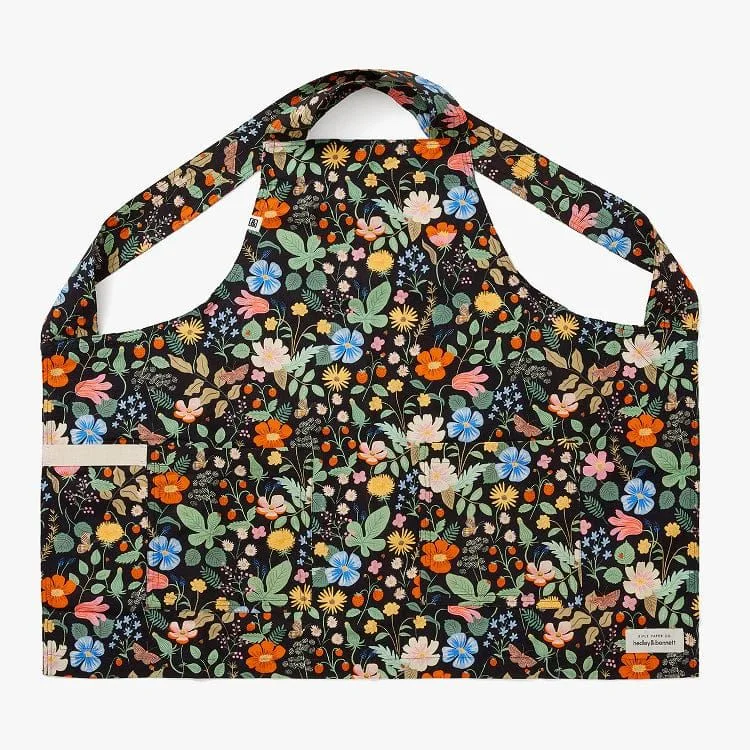
- If you work with dark chocolate or buttercream: Choose a mid-to-dark color or a busy print. Stains show less, and you will not feel pressured to wash after every small session. A print also hides flour dust better than a solid dark fabric.
Aprons that fit these baking needs
- Rifle Paper Co. Artichoke Forest Smock: The Rifle Paper Co. Artichoke Forest Smock is a smock-style apron with full coverage and a botanical print from the Rifle Paper Co. collaboration. Smock coverage protects the chest and shoulders during flour-heavy and chocolate work, and the print hides small smudges better than a plain light fabric.
- Made with Liberty Fabric Emma & Georgina Essential Apron: The Made with Liberty Fabric Emma & Georgina Essential Apron is made with Liberty of London Emma & Georgina cotton canvas and comes in a blue colorway in Regular size. Cotton canvas is a practical choice for a flour resistant apron because it is tightly woven and washes well, and the Regular size suits most home bakers without custom adjustment.
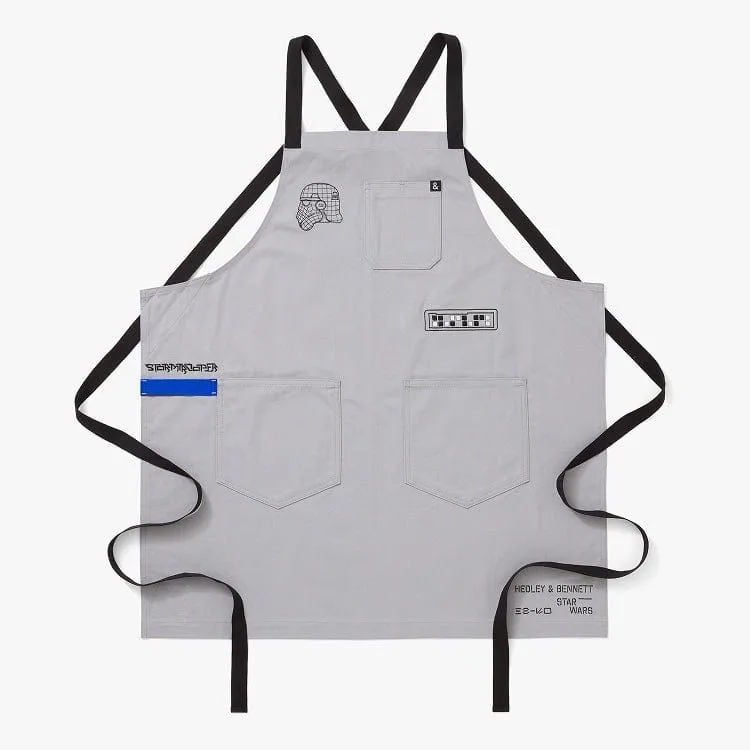
- Natasha Greene x H&B Essential Apron: The Natasha Greene x H&B Essential Apron is made from cotton denim in the Essential Apron style. Cotton denim is durable and comfortable for everyday baking, and the Essential Apron cut is easy to tie and adjust for long decorating sessions.
Who this apron advice is for
Best for
- Home bakers who bake bread, cookies, or pastries several times a week
- Cake decorators who stand and lean over a turntable for long sessions
- Pastry cooks who need chest and lap coverage for flour, butter, and chocolate
Not for
- Cooks who only need light splatter protection for quick stovetop tasks
- Anyone who prefers a waist apron for maximum freedom of movement
- Buyers who want a disposable or single-use apron