Quick answer
To bake with matcha powder, sift it with your dry ingredients to prevent clumps, whisk it into wet ingredients for an even color, and balance its grassy bitterness with enough fat and sugar. Start with 1 to 2 teaspoons per cup of flour for a clear matcha flavor, and avoid overheating, which turns it dull and bitter.
Why matcha behaves differently in baked goods
Matcha is finely ground green tea, so it disperses differently than cocoa powder or espresso powder. It absorbs liquid quickly and can clump if added straight to a batter. Its flavor is grassy and slightly bitter, and it fades when baked at high heat for a long time. That means you need to treat it more like a delicate spice than a bulk ingredient. For consistent results, always sift matcha with your flour or other dry ingredients, and keep oven temperatures moderate (around 350°F / 175°C) for cakes and cookies. If you are new to cooking with matcha, start with a small amount and adjust next time—2 teaspoons per cup of flour is a good baseline for a noticeable but not overwhelming flavor.
Choosing the right matcha for baking
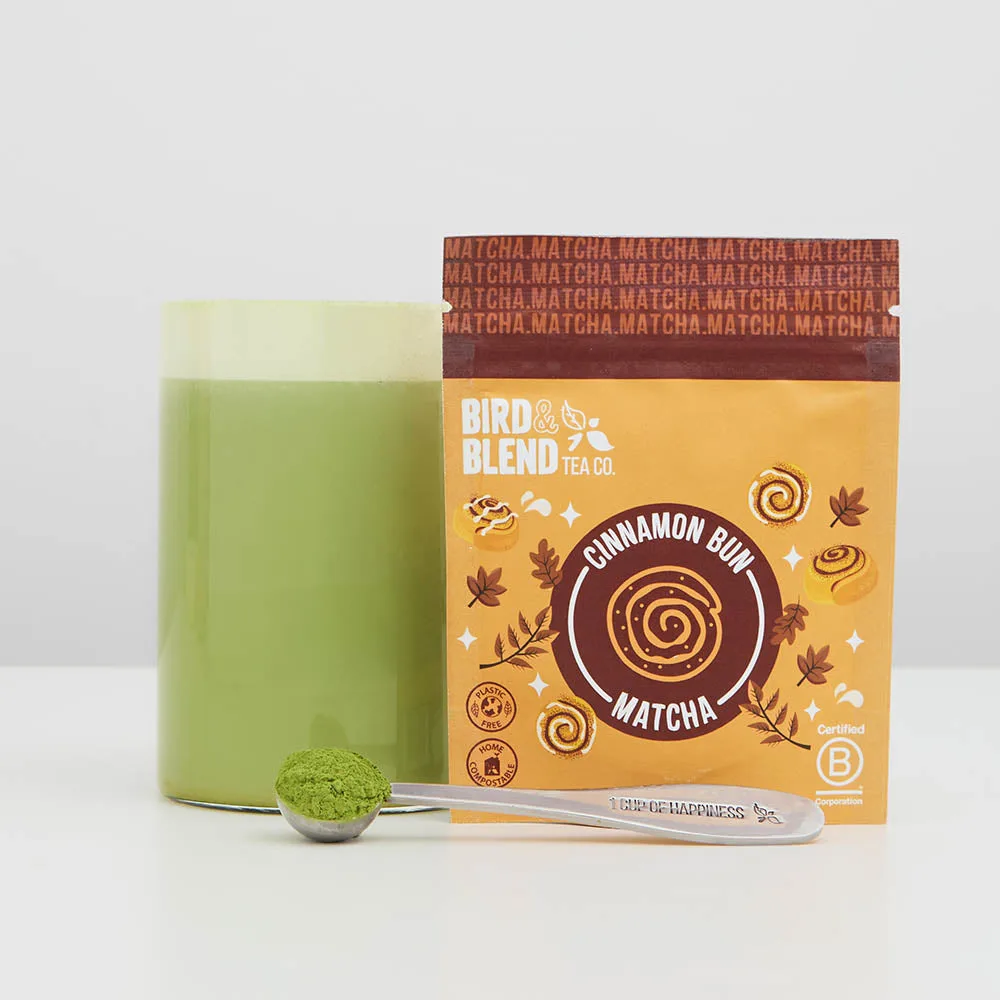
Not all matcha is the same. Culinary-grade matcha is designed for mixing into foods and drinks, and it is usually more affordable than ceremonial grade. Ceremonial matcha has a smoother, sweeter flavor and is best for drinking, but you can use it in baking if you want a more delicate result. For everyday baking, culinary grade is the practical choice. If you are using a flavored matcha, like Cinnamon Bun Matcha, note that it already contains spices and ashwagandha, so you may not need to add extra cinnamon or sweetener. Always check the ingredients list for added sugar or flavors that could affect your recipe.
How to incorporate matcha into cakes, cookies, and more
The method depends on the recipe. For cakes and muffins, sift the matcha with the dry ingredients, then proceed as usual. For cookies, cream the matcha with butter and sugar to distribute it evenly. For no-bake desserts like matcha cheesecake or truffles, whisk the matcha into a small amount of warm liquid first to make a paste, then blend it into the main mixture. When adding matcha to frostings or glazes, sift it onto a sheet of parchment and whisk it in gradually to avoid lumps. A common mistake is adding matcha directly to a thick batter without sifting—you will get green specks and bitter pockets. Another checkpoint: taste the raw batter (if safe) to see if the matcha level is right before baking.
Balancing flavor: sweetness, fat, and salt
Matcha's bitterness can be tamed with fat and sugar. Recipes with butter, cream, coconut milk, or white chocolate tend to work well because they round out the grassy notes. A pinch of salt also helps. If you are reducing sugar in a recipe, expect the matcha flavor to become more prominent and potentially more bitter. For a balanced matcha cake, pair it with a complementary flavor like vanilla, almond, or citrus. Avoid strong spices like cloves or chili, which can clash. When using a flavored matcha blend that already contains spices, reduce or omit added spices in your recipe to avoid overpowering the matcha.
Storing matcha for baking
Matcha is sensitive to light, heat, and air. Store it in an airtight container in a cool, dark place, or in the refrigerator for longer storage. If refrigerated, let it come to room temperature before opening to prevent condensation. Properly stored, matcha retains its color and flavor for several months. If your matcha has turned dull or lost its aroma, it will not perform as well in baking. For a fun way to explore different teas, including matcha, consider a Mystery Tea Box, which includes a selection of teas to experiment with.
Step-by-step: baking with matcha
- Sift matcha with dry ingredients: Measure your matcha and sift it together with flour, baking powder, and any other dry ingredients. This breaks up clumps and ensures even distribution. Checkpoint: If you see green clumps after sifting, press them through the sieve with a spoon.
- Whisk matcha into wet ingredients for no-bake recipes: For no-bake desserts, whisk matcha into a small amount of warm water, milk, or melted butter to form a smooth paste before adding it to the main mixture. Common mistake: Adding dry matcha directly to a thick mixture leads to lumps. Always make a paste first.
- Adjust matcha amount to taste: Start with 1 teaspoon per cup of flour for a subtle flavor, or 2 teaspoons for a pronounced matcha taste. For flavored blends like Cinnamon Bun Matcha, use the same amount but reduce other spices. Checkpoint: Taste the batter or a small test piece before baking the full batch.
- Bake at moderate heat: Use a moderate oven temperature (around 350°F / 175°C) and avoid overbaking. High heat for a long time dulls the color and increases bitterness. Checkpoint: Start checking for doneness a few minutes before the recipe's stated time.
- Cool and store properly: Let baked goods cool completely before storing. Keep matcha baked goods in an airtight container at room temperature for up to 3 days, or freeze for longer. Next step: If the matcha flavor fades after a day, add a little more matcha next time or serve with a matcha glaze.
Product facts
- Cinnamon Bun Matcha: Cinnamon Bun Matcha is a limited edition matcha blend with high caffeine, containing ashwagandha and cinnamon bun flavor. Each pouch contains 30g of matcha. This flavored matcha can be used directly in baking for a spiced, autumnal twist. Since it already includes cinnamon and ashwagandha, you can skip adding extra spices, and the high caffeine content means it is best for adults.
- Mystery Tea Box: Mystery Tea Box includes a selection of teas in three sizes: Classic (contents worth at least £20), Bumper (worth at least £54), and Mega (worth at least £65). Contents are a secret. If you want to experiment with different teas for baking beyond matcha, this box offers a surprise assortment. It is a cost-effective way to build a tea collection, though you cannot choose specific flavors.