Quick Answer
The best time for a protein shake depends on your last meal and workout schedule. For most people, hitting your total daily protein target matters more than a specific window, but a shake within two hours after training helps recovery and muscle gain.
Why Total Daily Protein Matters More Than Timing
Research consistently shows that muscle gain is driven by total daily protein intake and consistent distribution across meals. A shake before or after a workout only helps if you're already meeting your overall protein needs.
If you're short on time or appetite, a ready-to-drink shake can fill gaps between meals, making it easier to hit your daily target without cooking extra chicken or eggs.
Pre-Workout vs. Post-Workout: What the Evidence Says
The 'anabolic window' is often overstated. While consuming protein after training supports muscle repair, the key is that you have protein available when your body needs it—not necessarily within 30 minutes.
If you train fasted or haven't eaten in hours, a pre-workout shake can prevent muscle breakdown and fuel your session. If you've eaten a protein-rich meal 2–3 hours before, a post-workout shake is more practical.
Choose a timing that fits your schedule and digestion comfort. Some people feel heavy training after a shake; others need the energy boost.
Practical Trade-Offs of Ready-to-Drink Shakes
Ready-to-drink shakes offer convenience and portability, but they cost more per serving than powder. They also have a fixed protein amount, which may be more than you need in one sitting.
If you're using a 40g shake, consider splitting it or adjusting your other meals to avoid excessive protein in a single dose. Your body can only use so much at once for muscle synthesis.
On the other hand, an RTD shake is ideal when you're traveling, at work, or immediately post-workout and don't want to mix powder.
Decision Rules for Protein Shake Timing
- If you train fasted: Have a protein shake 30–60 minutes before your workout to provide amino acids during training and prevent muscle breakdown. If a full shake feels heavy, try half before and half after.
- If you ate a protein-rich meal within 3 hours: You can skip the pre-workout shake and focus on a post-workout shake within 2 hours after training to support recovery. If you're not hungry right after, it's fine to wait until your next meal.
- If you struggle to meet daily protein goals: Use a protein shake as a convenient snack between meals, not just around workouts, to help reach your total daily intake. Consider a shake with 40g protein to cover a large gap, but adjust other meals accordingly.
Product Fact
-
Optimum Nutrition 40g Protein Shake, 40g of Protein, Naturally Flavored, Complete Protein Drink, Chocolate, 14 Fl Oz, 12 Count (Pack of 1) (Packaging May Vary): Optimum Nutrition 40g Protein Shake provides 40 grams of protein per 14 Fl Oz bottle and is naturally flavored for a chocolate taste. This makes it a convenient option to hit a large portion of your post-workout protein needs without mixing or measuring.
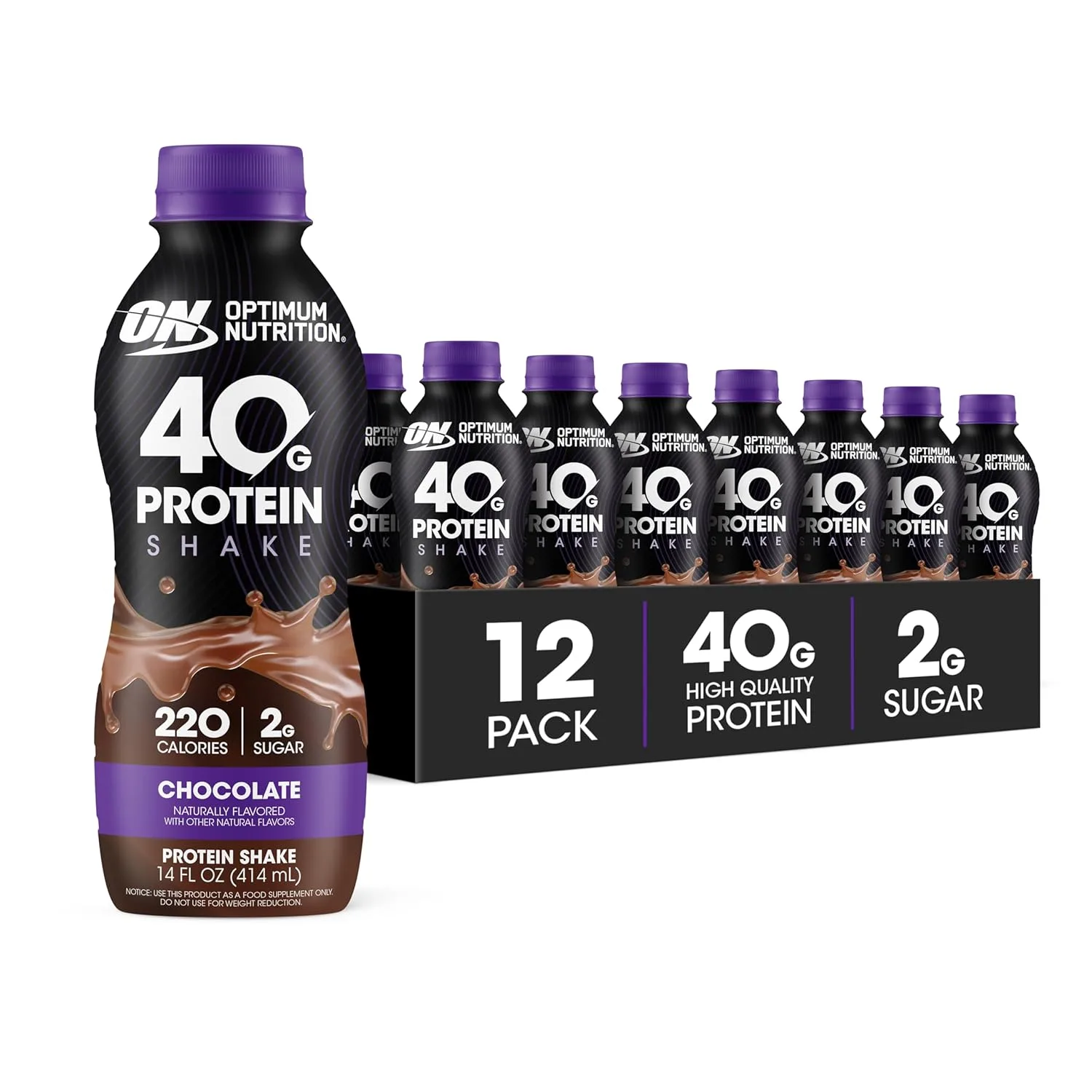
Optimum Nutrition 40g Protein Shake, 40g of Protein, Naturally Flavored, Complete Protein Drink, Chocolate, 14 Fl Oz, 12 Count (Pack of 1) (Packaging May Vary)
Who Should Use This Timing Strategy
Best for
- People with busy schedules who need a convenient protein source around workouts
- Those who train fasted and need pre-workout amino acids
- Anyone who struggles to meet daily protein targets and needs a portable supplement
Not for
- People who already meet protein needs through whole foods and prefer not to use supplements
- Those on a tight budget, as ready-to-drink shakes cost more per gram of protein than powder