Quick Answer
Measure the outer rim diameter of your frying pan, not the bottom, and add about 1/4 inch for a proper seal. For a 12-inch pan, that usually means a lid labeled 12 inches or slightly larger, but always check handle clearance and lid shape first.
Why Outer Rim Diameter Matters More Than the Label
Pan sizes like '12-inch' refer to the top diameter, but lids are designed to sit on the outer rim. If your pan flares outward or has a thick rolled edge, the actual rim measurement can be slightly larger than the nominal size. A lid that fits snugly on one brand's 12-inch pan may rattle on another's.
Measure across the top of the pan from outside edge to outside edge. That number is your target lid size. If it falls between standard sizes, choose the next size up for better coverage and less steam escape.
Handle Clearance and Lid Shape: The Overlooked Fit Factors
A lid can have the right diameter and still not sit flat if the pan's handles are long, riveted high, or angled upward. Before buying, place the lid on the pan in the store or check the product photos for handle placement. For frying pans with long handles, a lid with a low-profile design often clears the handle better than a domed one.
Domed lids add vertical space, which is helpful for basting or cooking taller foods, but they may not fit under overhead cabinets. Flat or low-dome lids are more versatile for everyday frying and easier to store.
Material and Compatibility: Glass, Stainless, or Ceramic
Glass lids let you monitor cooking without lifting the lid, but they are heavier and can chip if dropped. Stainless steel lids are durable and oven-safe, but you cannot see inside. For ceramic nonstick pans, choose a lid that won't scratch the coating — glass or stainless with a smooth rim is safer than a lid with exposed metal edges.
Some lids are marketed as universal fit, but universal does not mean perfect. Always verify the rim measurement and handle clearance, even for 'universal' lids.
Decision Rules for Choosing a Frying Pan Lid
- Measure the outer rim: Use a tape measure across the top of the pan from outside edge to outside edge. Write down that number in inches. If your measurement is 12.25 inches, a 12-inch lid may be too small — look for a 12.5-inch or 'fits 12-inch' lid.
- Check handle clearance: Place the lid on the pan (if possible) or compare the handle height and angle in product photos. The lid must rest flat on the rim without tilting or catching on the handle. Low-profile lids are safer for pans with long or angled handles.
- Match material to your cookware: For ceramic nonstick pans, choose a glass or stainless steel lid with a smooth rim to avoid scratching the coating. Glass lets you watch cooking; stainless is more durable. If you need oven-safe, stainless steel is the better choice; if you want to monitor moisture, glass wins.
- Consider lid shape: Flat or low-dome lids store easily and work for most frying tasks. Deep-dome lids add space for basting but may not fit under cabinets. If you cook roasts or braises, a dome lid is worth the storage trade-off.
- Buy a matched set when possible: If you're purchasing a new pan, consider one that includes a lid designed for that exact pan. This eliminates fit guesswork. A pan with a matching lid saves you time and ensures a proper seal.
Product Spotlight
-
Cardamom™ 12" Nonstick Frying Pan with Lid | Ceramic Coated Cookware: This 12-inch nonstick frying pan with lid uses a ceramic coating and is designed for everyday cooking. If you're buying a 12-inch pan, the included lid is matched to the pan's rim, so you don't have to measure or guess — but if you need a replacement, use the outer rim measurement to find a compatible one.
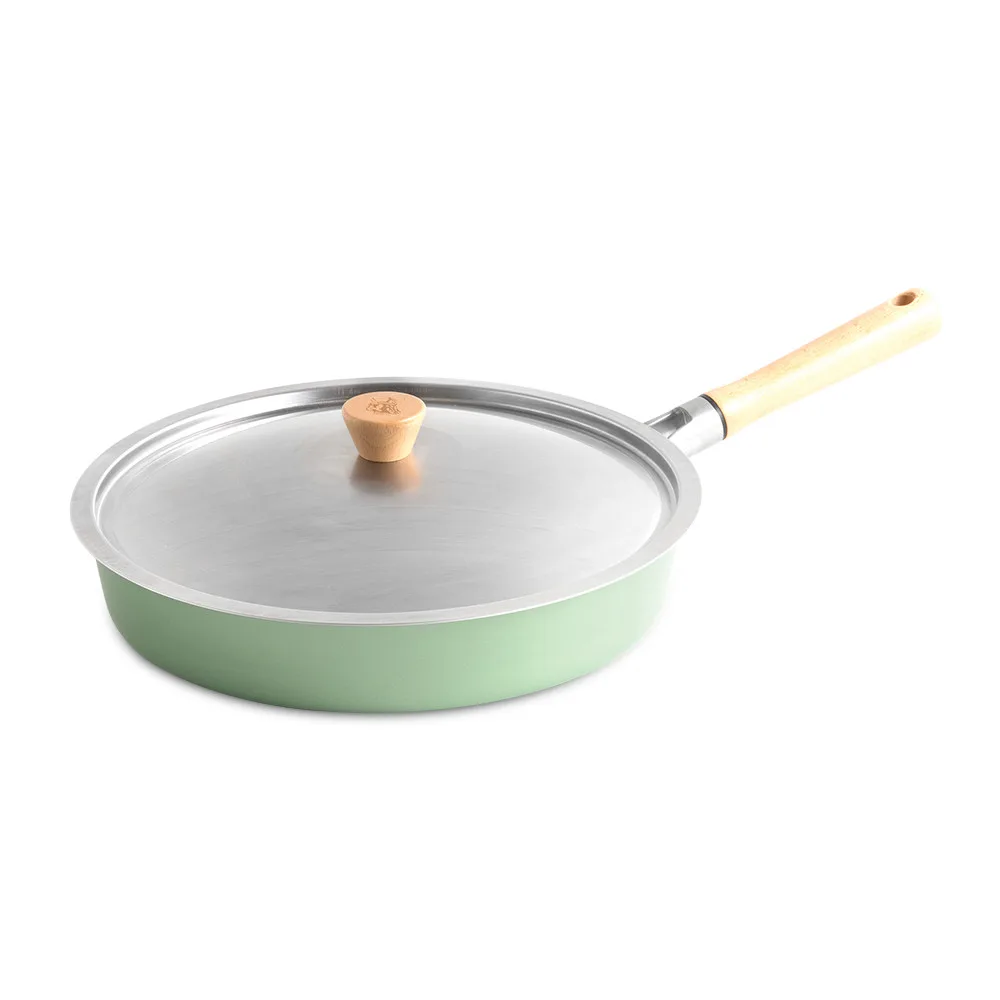
Cardamom™ 12" Nonstick Frying Pan with Lid | Ceramic Coated Cookware
Who Should Use This Guide
Best for
- Home cooks replacing a lost or broken lid for an existing frying pan
- Buyers of a new frying pan who want to confirm the lid size before purchase
Not for
- Chefs using exclusively flat-bottomed woks or sauté pans with very different rim shapes
- Anyone needing a lid for a pan with a non-standard shape, such as square or oval