Quick answer
A birthing ball helps you stay upright and mobile during labor, which can reduce pain, open your pelvis, and encourage your baby to descend. Use it for gentle rocking, circling, or leaning during contractions.
Why a birthing ball works for labor
Sitting or leaning on a birthing ball keeps your pelvis in a neutral, open position, which can help your baby rotate and descend more easily. The gentle movement also eases pressure on your lower back and hips, common pain points during labor.
A standard gym ball may not be strong or stable enough for labor use. A dedicated birthing ball like the BABYGO® Birthing Ball is tested to hold up to 1000 kg, so you can lean, rock, and shift weight safely without worrying about a burst.
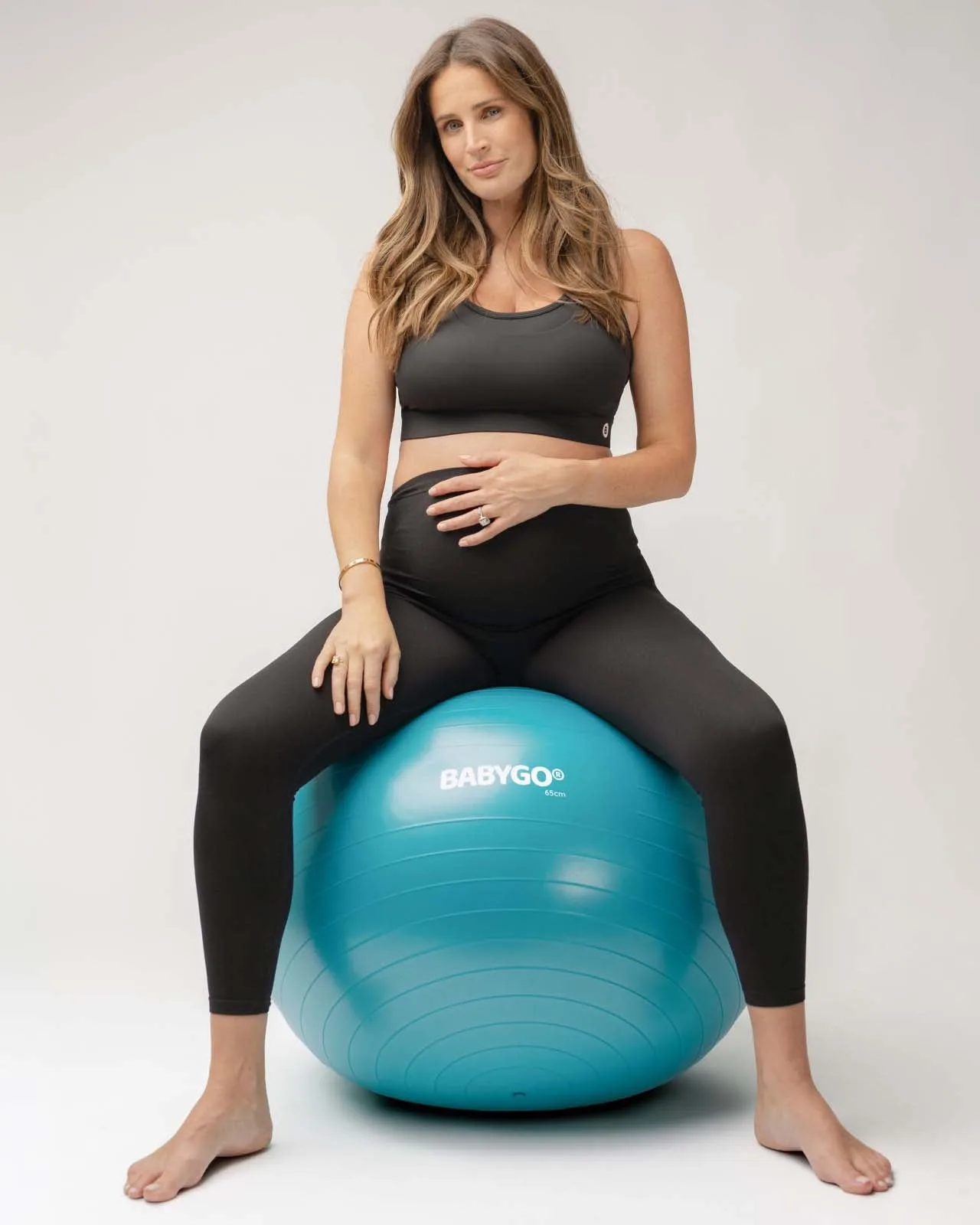
BABYGO® Birthing Ball
How to use a birthing ball during labor: step by step
- 1. Inflate the ball to the right height: Sit on the ball with your feet flat on the floor and knees at a 90-degree angle. Your hips should be slightly higher than your knees. If the ball is too soft, add air; if you sink too low, let some out. A properly inflated ball gives you stability and control. Check the ball height before labor starts—once contractions are strong, adjusting it is harder.
- 2. Use gentle rocking during contractions: Sit upright on the ball and rock your hips side to side or in a gentle figure-eight motion. This movement can distract from the pain and helps your baby move down the birth canal. Keep your back straight and shoulders relaxed. Rocking too fast can make you dizzy. Keep the pace slow and rhythmic.
- 3. Lean forward over the ball for back pain: Kneel on the floor or a mat and place the ball in front of you. Drape your upper body over the ball, resting your head on your arms. This position takes pressure off your lower back and allows you to sway your hips during contractions. Place a towel or pad under your knees for comfort—hard floors can be painful after a while.
- 4. Try sitting and circling your hips: Sit tall on the ball and make slow, wide circles with your hips in one direction, then the other. This opens the pelvic outlet and can help your baby find the best position for birth. Breathe deeply and let your body move naturally. If you feel off-balance, keep one hand on a bed, table, or your partner for support.
- 5. Use the ball between contractions to rest: When a contraction ends, stop moving and sit still on the ball, leaning forward slightly. Let your arms and shoulders relax. The ball supports your weight so you can conserve energy for the next contraction. Don't stay on the ball for more than 30–40 minutes at a time—switch positions to avoid fatigue.
Product facts
-
BABYGO® Birthing Ball: Tried and tested to hold a weight of up to 1000 kg. This means you can lean your full weight on the ball during contractions without risk of it popping, unlike a standard exercise ball.
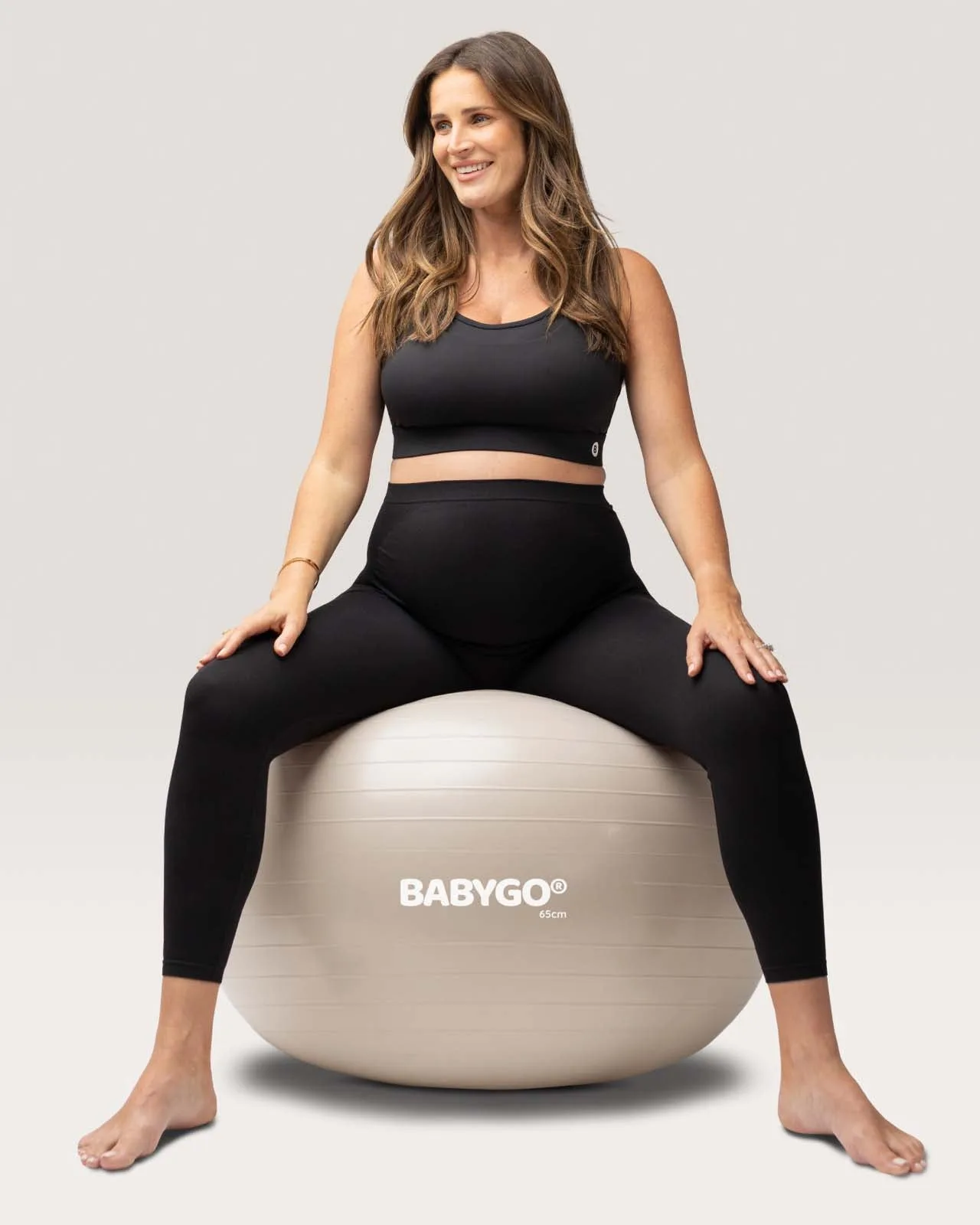
BABYGO® Birthing Ball