Quick answer
Cast iron sticks when the seasoning layer is uneven, too thin, or coated with burnt residue, or when the pan is not hot enough before food goes in. Scrub the cooking surface smooth, dry it thoroughly, apply a thin layer of oil, and heat it until it just smokes. If the surface still feels tacky or patchy after that, strip and reseason the pan.
Rule out technique before you blame the seasoning
Many sticking problems start before the pan is the issue. Cast iron needs to be preheated gradually over medium heat for 3 to 5 minutes, and the cooking surface should be lightly oiled before food goes in. Cold pans and cold food are the most common pair behind a stuck egg or fish fillet. Pat proteins dry, let them come closer to room temperature, and wait for a faint shimmer across the oil before adding food. If the pan is hot but the surface looks dull or patchy, move on to the seasoning checks below.
Clean the surface back to smooth before adding oil
Burnt-on residue from previous cooks creates high spots that grab food. While the pan is still warm, scrape it with a flat metal spatula or a pan scraper, then rinse with hot water and a stiff brush. Skip harsh detergents only if your seasoning is fragile; modern dish soap is fine on a well-seasoned pan. Dry the pan on the stove over low heat for a minute or two so no moisture hides in the pores. A surface that feels rough or sticky after cleaning is the signal to reseason rather than cook through it.
Reseason in thin layers, not thick ones
Thick oil layers turn gummy and cause the sticky, tacky feel that makes food cling. Wipe on a very thin coat of a high-smoke-point oil, then wipe most of it back off with a clean cloth as if you made a mistake. Heat the pan upside down at 450 to 500 degrees Fahrenheit for about an hour, or on the stovetop until the oil just begins to smoke. Repeat two or three times for a stronger layer. If the pan has flaking or chipped seasoning that will not smooth out, stripping it with an oven cleaner or a lye bath and starting over is faster than patching.
Sticking diagnosis chart
- Food sticks only in one spot: That spot likely has burnt residue or a thin patch of seasoning. Scrub it smooth with a scraper and coarse salt, then reseason just that area with a thin oil layer on the stovetop. If the spot still grabs after two reseasoning rounds, strip the whole pan and start fresh.
- Surface feels tacky or gummy: This is usually too much oil applied at once during seasoning. Heat the pan to 450 to 500 degrees Fahrenheit until the tackiness bakes off, or scrub and reseason with a thinner coat. A properly seasoned pan feels dry and smooth, not sticky.
- Food sticks even with good technique: The seasoning may be too thin from years of cooking acidic foods or harsh scrubbing. Apply two or three thin layers of oil and bake each one, then test with a fried egg. If sticking continues after three full seasoning cycles, the pan may need stripping or replacement.
A note on pre-seasoned pans
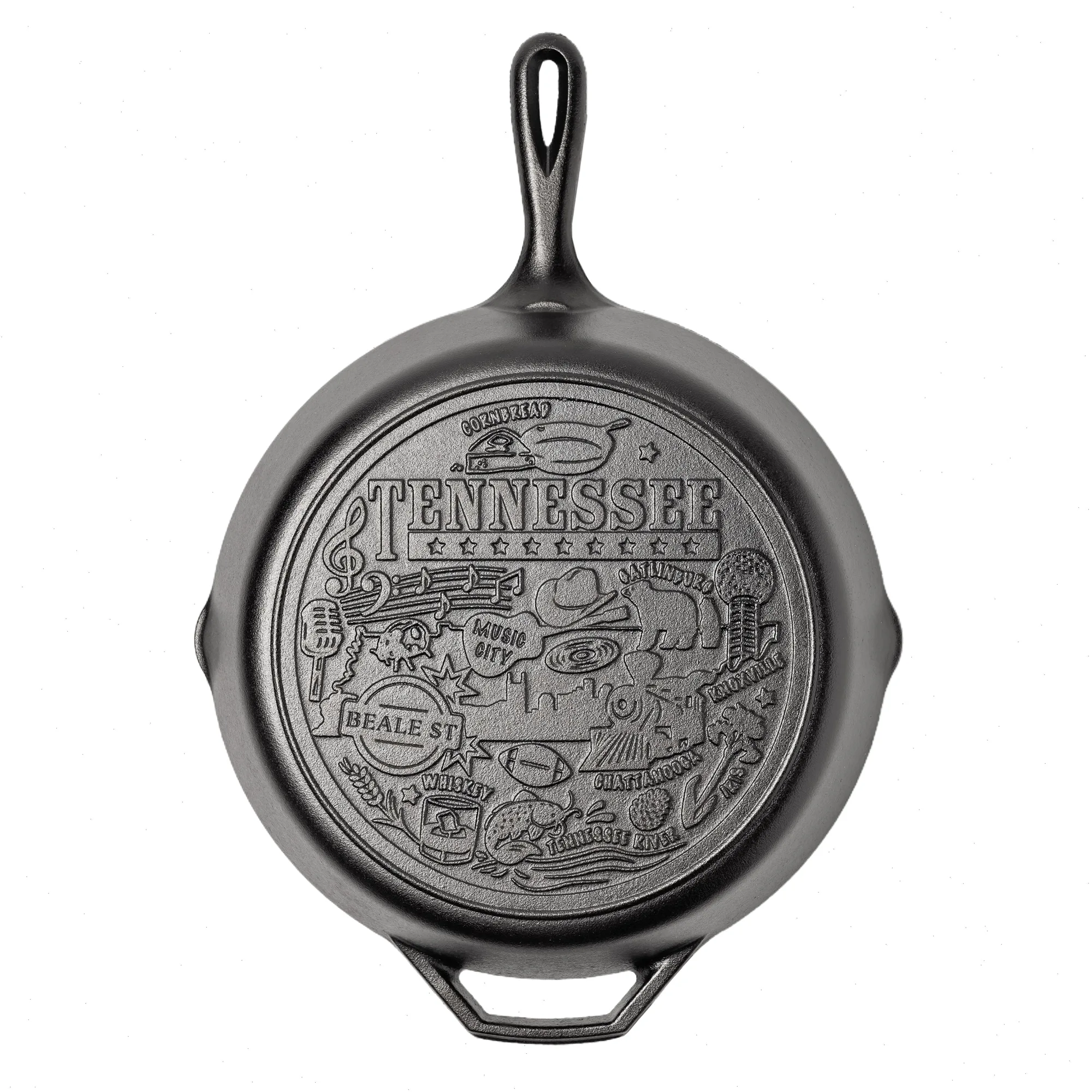
- American Road Trip: 12 Inch Seasoned Cast Iron Skillet, New York: The American Road Trip 12 Inch Seasoned Cast Iron Skillet, New York comes pre-seasoned. A pre-seasoned pan still benefits from a thin oil layer and a full preheat before the first cook, which prevents the early sticking that makes people think the seasoning failed.
- American Road Trip: 12 Inch Seasoned Cast Iron Skillet, New Hampshire: The American Road Trip 12 Inch Seasoned Cast Iron Skillet, New Hampshire is a 12-inch seasoned skillet. A 12-inch surface gives you room to spread food out, so pieces are less likely to crowd and steam, which is a common cause of sticking during searing.