Quick answer
Bloating after a protein shake often comes from lactose intolerance, artificial sweeteners, or rapid drinking. Switch to a hydrolyzed collagen or isolate-based whey, and sip slowly.
Why protein shakes cause bloating
Most protein powders contain lactose, a milk sugar that many adults struggle to digest. If your body lacks enough lactase enzyme, undigested lactose ferments in the gut, producing gas and water retention. This is the leading cause of protein shake bloating.
Artificial sweeteners like sugar alcohols (e.g., sorbitol, xylitol) also draw water into the intestine and ferment, adding to discomfort. Even if you tolerate lactose, these additives can trigger bloating.
Lactose intolerance vs. whey protein sensitivity
True lactose intolerance is a lactase deficiency. Whey protein concentrate has more lactose (~4-5%) than whey isolate (~0.5%). If you react to concentrate but not isolate, lactose is likely the culprit. If both cause bloating, you may be sensitive to whey proteins themselves or to additives.
Diagnosis and solutions
- Symptom: You feel bloated, gassy, or have stomach discomfort within 30 minutes to 2 hours after drinking a whey protein shake.
- Likely cause: Lactose in the protein powder (especially if using whey concentrate) or artificial sweeteners such as sugar alcohols. Check the ingredient list: if it contains 'whey protein concentrate' or sugar alcohols (sorbitol, xylitol, maltitol), these are common triggers.
- Corrective action: Switch to a lactose-free protein source like hydrolyzed collagen peptides (e.g., Ancient Nutrition Collagen Powder Protein) or a whey protein isolate. Also try drinking your shake slowly over 15-20 minutes and mixing with water instead of milk. If symptoms persist after switching to a lactose-free option, consider a digestive enzyme supplement with lactase or a plant-based protein.
- Stop or choose another option: If you still bloat after trying a hydrolyzed collagen or isolate, you may be sensitive to all dairy proteins or to specific additives. In that case, choose a plant-based protein powder (pea, rice, or hemp) or a single-ingredient collagen peptide product.
Product facts
-
Ancient Nutrition Collagen Powder Protein, Multi Collagen Protein, Cucumber Lime, Hydrolyzed Collagen Peptides Supports Skin and Nails, Joint Supplement, 18.6oz: Ancient Nutrition Collagen Powder Protein in Cucumber Lime flavor is a multi-collagen peptide supplement designed to support skin, nails, and joints. It contains hydrolyzed collagen peptides for easy mixing and absorption. Collagen peptides are naturally lactose-free and gentle on the stomach, making them a smart alternative for anyone who experiences bloating from dairy-based proteins.
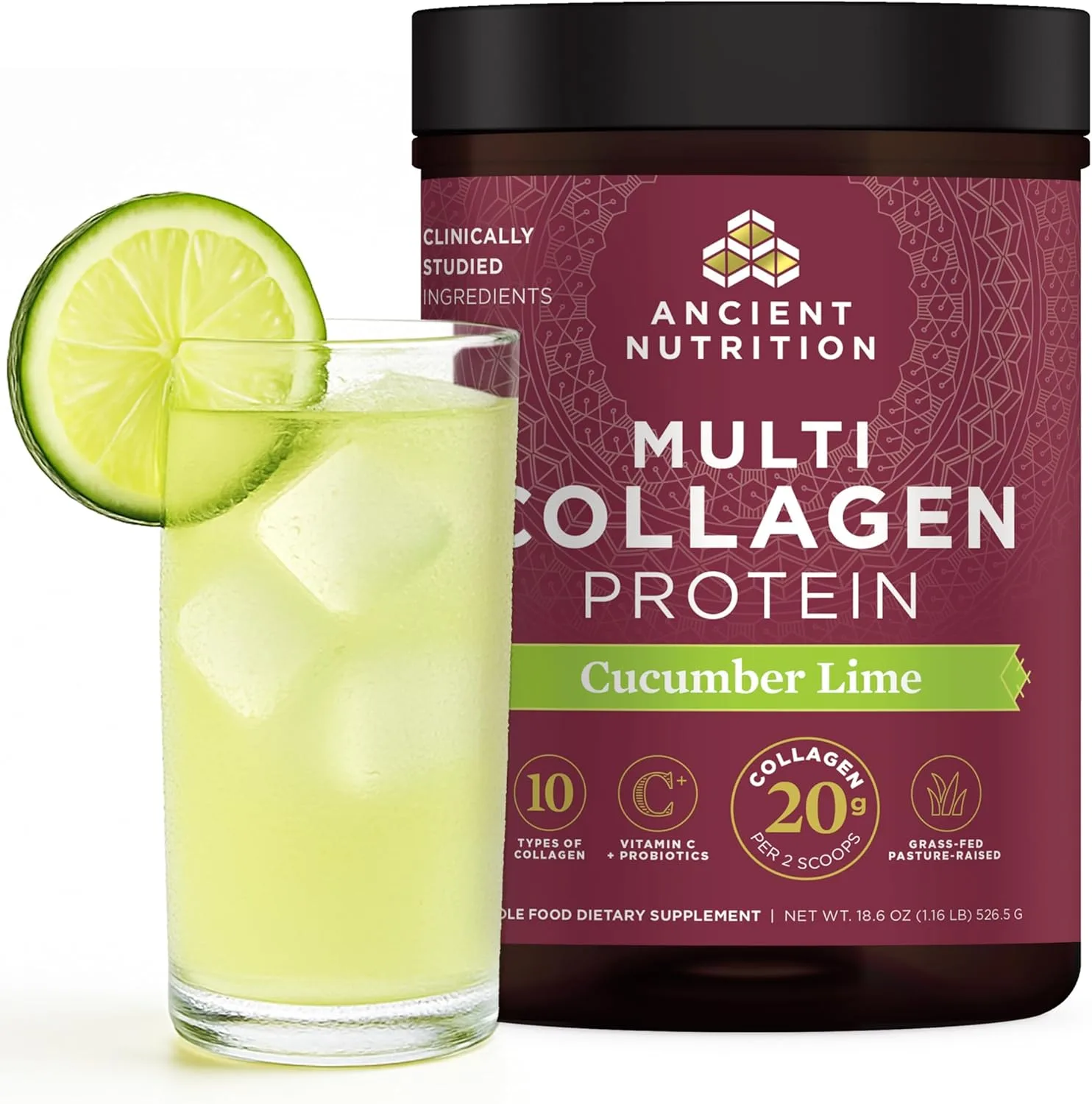
Ancient Nutrition Collagen Powder Protein, Multi Collagen Protein, Cucumber Lime, Hydrolyzed Collagen Peptides Supports Skin and Nails, Joint Supplement, 18.6oz