Quick Answer
If your priority is getting dinner on the table fast, pressure cooking wins. But if you value hands-off precision and can plan ahead, sous vide offers unmatched consistency—and the Fast Slow GO™ lets you do both in one appliance.
The Core Trade-Off: Speed vs. Precision
Pressure cooking uses high heat and steam to cook food in a fraction of the time of traditional methods. A pot roast that might take hours in the oven can be ready in about an hour. This makes it ideal for weeknight dinners when you're short on time.
Sous vide, on the other hand, cooks food slowly in a temperature-controlled water bath. It requires more time—often 1 to 4 hours—but delivers perfectly even doneness every time. The trade-off is that you need to plan ahead, but the result is consistently juicy and tender meat.
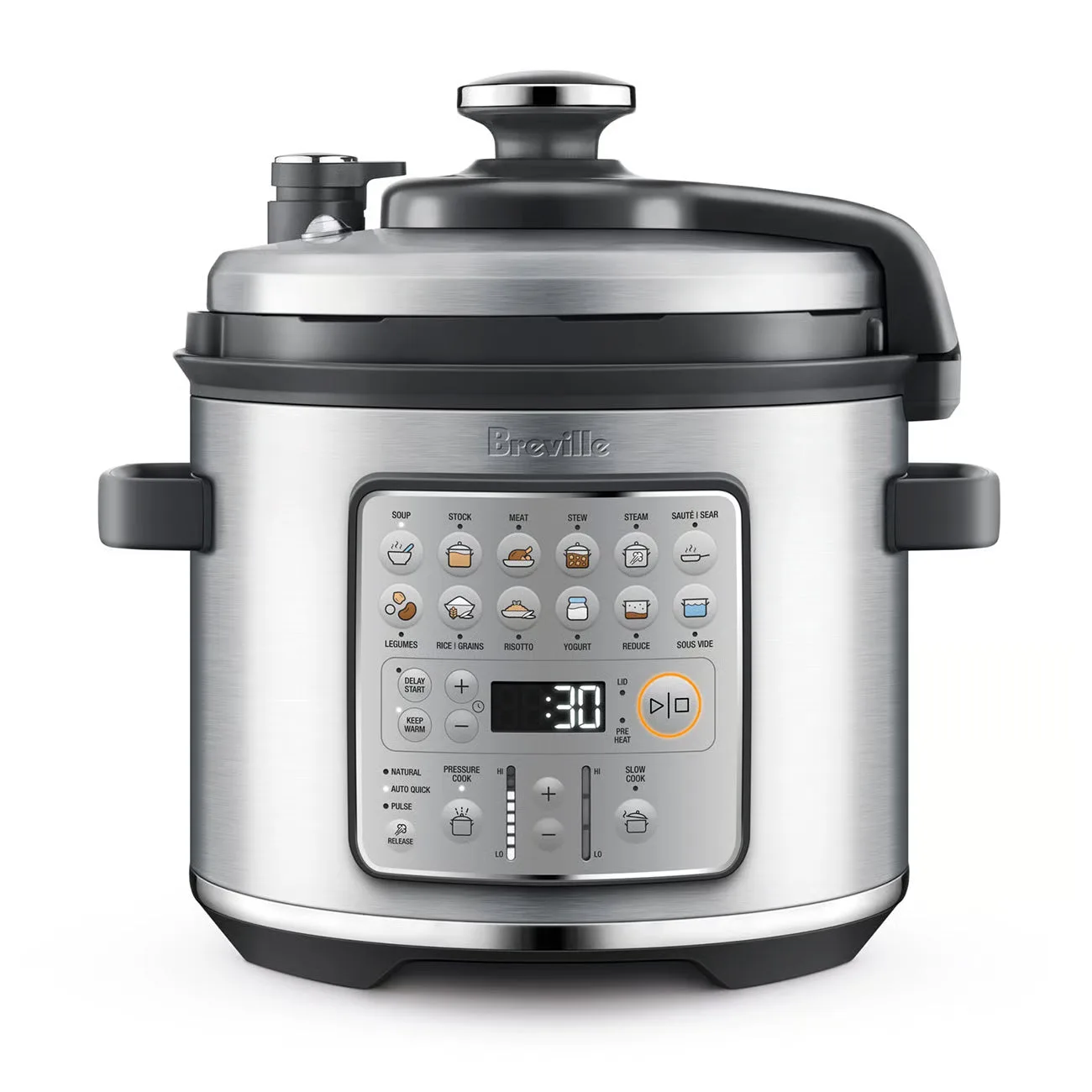
The Breville Fast Slow GO™ combines both functions in one appliance, so you can choose the method that fits your schedule and your meal. It also includes 14 preset shortcuts, including dedicated sous vide and pressure cooking modes, making it easy to switch between them.
Meal Prep and Convenience
Pressure cooking is great for batch cooking: beans, stews, and tough cuts of meat become tender quickly, and you can often cook and store in the same pot. Sous vide, meanwhile, excels at meal prep because you can cook proteins in advance, chill them, and reheat them later without overcooking.
Both methods are hands-off once started, but pressure cooking requires less total time. If you're cooking for a crowd or need to prepare multiple components, pressure cooking often wins on speed. If you're prepping individual portions for the week, sous vide gives you more control over doneness.
The Fast Slow GO™ also lets you sauté, steam, and make yogurt, so you can brown meat before pressure cooking or finish sous vide dishes with a quick sear—all in one countertop appliance.
How to Choose: Sous Vide or Pressure Cooking?
- Time Available: If you need dinner in under an hour, choose pressure cooking. If you can start cooking hours before you eat, sous vide gives you more control. Plan your meals based on your schedule, not just the recipe.
- Meal Prep: Pressure cooking is ideal for batch-cooking beans and stews. Sous vide is better for cooking proteins ahead that you'll reheat later without losing moisture. Use sous vide for proteins, pressure cooking for everything else.
- Flavor Development: Pressure cooking develops deep flavors quickly, especially with browned meat and aromatics. Sous vide preserves delicate flavors but doesn't create browning—finish with a quick sear. Sear after sous vide for the best of both worlds.
- Hands-On Time: Both methods are mostly hands-off, but pressure cooking requires less total time. Sous vide requires you to monitor the water bath, though many units have timers. If you want to 'set and forget,' pressure cooking is more forgiving.
Product Facts
-
the Fast Slow GO™: The Breville Fast Slow GO™ includes 14 shortcuts, including pressure cooking, slow cooking, sautéing, steaming, and two new shortcuts for yogurt and sous vide. This means you can pressure cook a quick stew or sous vide a steak to precise doneness without needing a separate appliance—saving counter space and time.
the Fast Slow GO™
Who Should Choose Which?
Best for
- Busy home cooks who need quick weeknight meals
- Batch cookers who want to prepare beans, stews, and tough cuts fast
- Anyone who wants one appliance that does both sous vide and pressure cooking
Not for
- Purists who want a dedicated sous vide circulator for large batches
- Those who rarely plan ahead and prefer the speed of pressure cooking only