Quick answer
Start by deciding whether you want fluoride or a fluoride-free formula, then scan for SLS if your mouth is sensitive, and check the abrasive and flavor ingredients. The front of the tube is marketing; the back label tells you what you are actually brushing with. Use the steps below to compare any two toothpastes in under a minute.
Why the back of the tube matters more than the front
The front label sells a feeling: whitening, fresh, natural. The ingredient panel and the drug facts panel tell you what the paste does and what is inside it. In the U.S., toothpastes with fluoride are regulated as over-the-counter drugs, so they carry an active ingredient list and a warning about swallowing. Fluoride-free toothpastes are usually cosmetics, so they may not have that drug facts box. That single difference is the fastest way to tell which type you are holding.
Once you know which panel you are reading, the rest is a short checklist. You do not need to memorize every chemical name. You need to answer four questions: Is there fluoride? Is there SLS? What does the abrasive do? And does the flavor or sweetener bother your mouth?
The four label areas that change your choice
First, the active ingredient. Sodium fluoride, stannous fluoride, and sodium monofluorophosphate are the common fluoride sources. If the label lists one of these, the paste is anticavity. If it does not, the paste is fluoride free and relies on other ingredients for cleaning and freshening. Neither choice is automatically better; it depends on your cavity risk and what your dentist has told you.
Second, the surfactant. Sodium lauryl sulfate, usually shortened to SLS, creates foam. Some people with canker sores or a sensitive mouth prefer to avoid it. An SLS free toothpaste may foam less, which can feel strange for the first few brushes, but it still cleans.
Third, the abrasive and thickener. Silica, calcium carbonate, and baking soda are common abrasives that help remove surface stains. Glycerin and sorbitol keep the paste from drying out. If a paste feels gritty, the abrasive is doing more work; if it feels smooth, it is gentler on enamel.
Fourth, flavor and sweetener. Natural toothpastes often use spearmint, peppermint, or mild mint oils instead of artificial flavor. Sorbitol, xylitol, and stevia are common sweeteners. If you react to strong mint, a mild mint or fruit flavor is easier to tolerate.
How to compare a kids toothpaste with an adult one
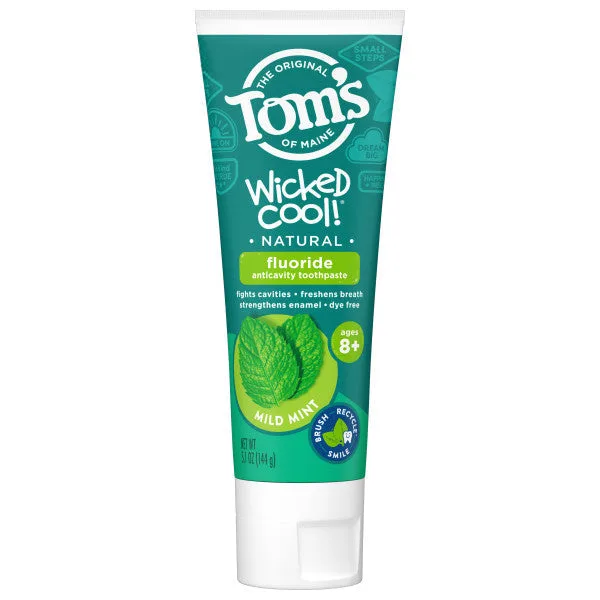
Children's toothpastes are not just smaller tubes. They usually have a milder flavor and a lower abrasive level because kids may swallow more paste and brush less thoroughly. That is why a kids formula like Wicked Cool! Natural Toothpaste in Mild Mint is designed to be gentle while still helping strengthen enamel. If your child rejects strong mint, switching to a mild mint kids paste can remove the main reason they fight the brush.
For adults, the same logic applies in reverse. If you drink coffee or tea and want to lift surface stains, look for a paste that mentions whitening by removing surface stains. If your main concern is cavities, look for an anticavity fluoride paste. You can keep both on the shelf and use them at different times of day, but most people do fine with one paste that matches their top priority.
Your 5-step label reading routine
- Check for fluoride first: Look at the active ingredient panel or the drug facts box. Sodium fluoride, stannous fluoride, or sodium monofluorophosphate means the paste is anticavity. No fluoride source means it is fluoride free. Common mistake: assuming 'natural' always means fluoride free. Some natural toothpastes do contain fluoride.
- Look for SLS if your mouth is sensitive: Scan the inactive ingredients for sodium lauryl sulfate. If you get canker sores or dry mouth, try an SLS free toothpaste and give it a full week before judging the foam. Checkpoint: less foam is normal with SLS free pastes; it does not mean the paste is not working.
- Identify the abrasive: Silica, calcium carbonate, and baking soda are the usual stain-removing abrasives. A paste marketed for whitening should list one of these and explain that it removes surface stains. Common mistake: expecting a whitening paste to change the natural color of your teeth. It removes surface stains, not deep color.
- Read the flavor and sweetener: Spearmint, peppermint, and mild mint are common natural flavors. Sorbitol, xylitol, and stevia are common sweeteners. If strong mint makes you gag, choose a mild mint or kids formula. Checkpoint: if your child spits out the paste, the flavor is often the reason, not the brushing itself.
- Match the paste to your main goal: Cavity protection points to an anticavity fluoride paste. Surface stain removal points to a whitening paste. Sensitivity or canker sores point to an SLS free option. Pick one priority per tube. Next step: write your top priority on a sticky note and compare two tubes against it before buying.
Label examples from our shelf
- Wicked Cool! Natural Toothpaste in Mild Mint: Wicked Cool! Natural Toothpaste in Mild Mint is a gentle kids toothpaste that helps strengthen enamel and uses a mild mint flavor; it is vegan and cruelty-free. If your child avoids brushing because mint burns, a mild mint kids formula removes that barrier while still supporting enamel.
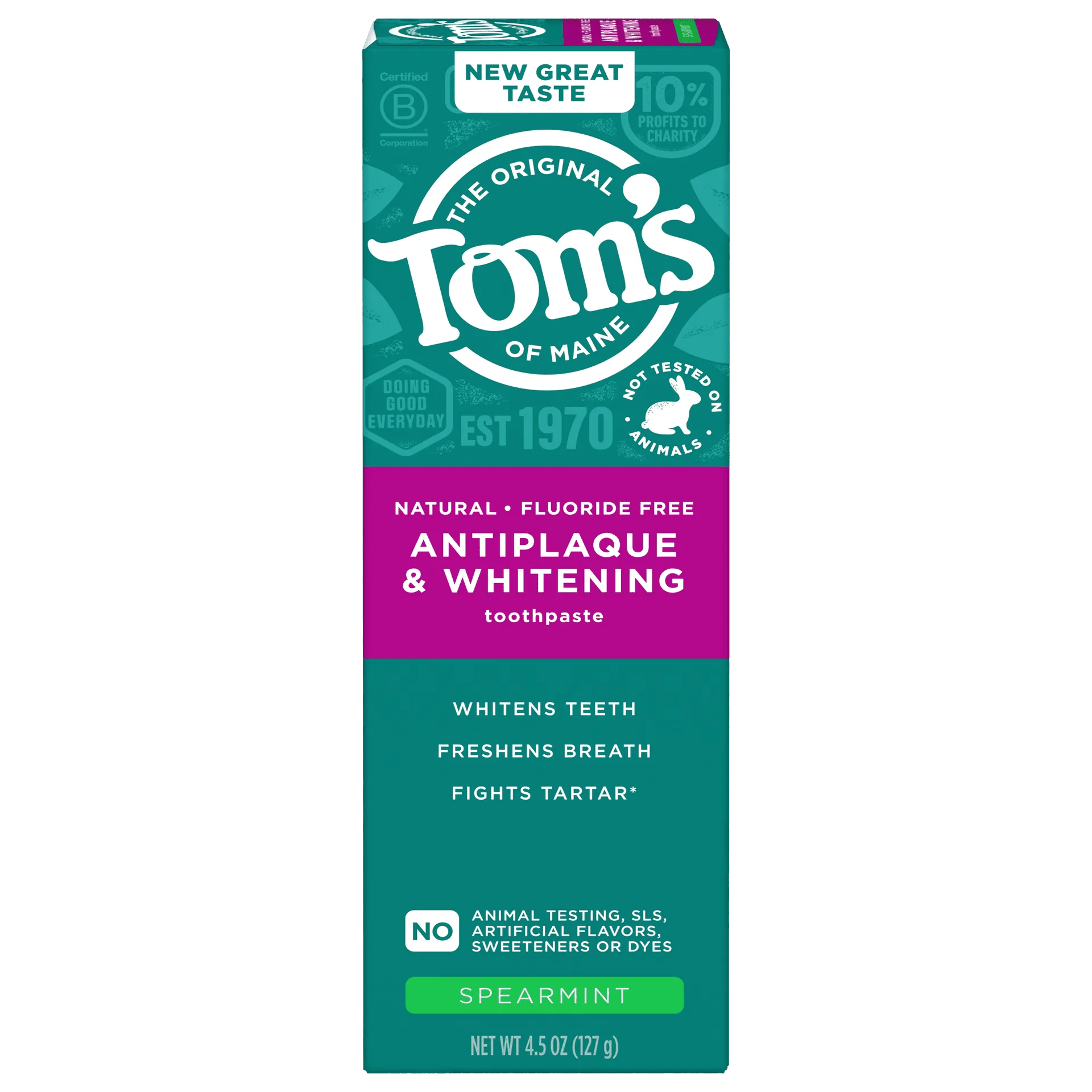
- Fluoride-Free Antiplaque & Whitening Spearmint Natural Toothpaste: Fluoride-Free Antiplaque & Whitening Spearmint Natural Toothpaste is an SLS free toothpaste that gently whitens by removing surface stains with regular brushing. This is a practical option if you want no fluoride and no SLS but still want help with surface stains from coffee or tea.
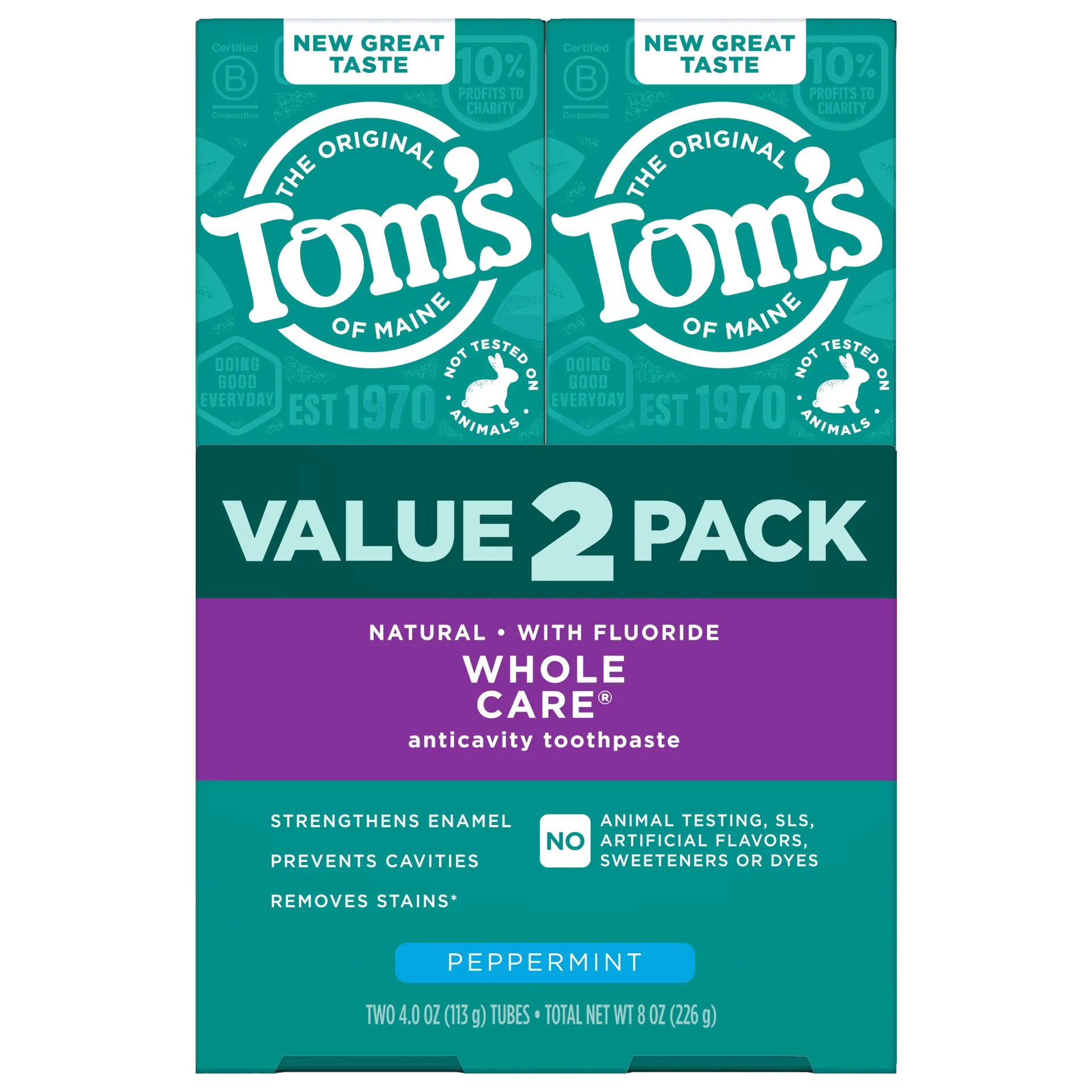
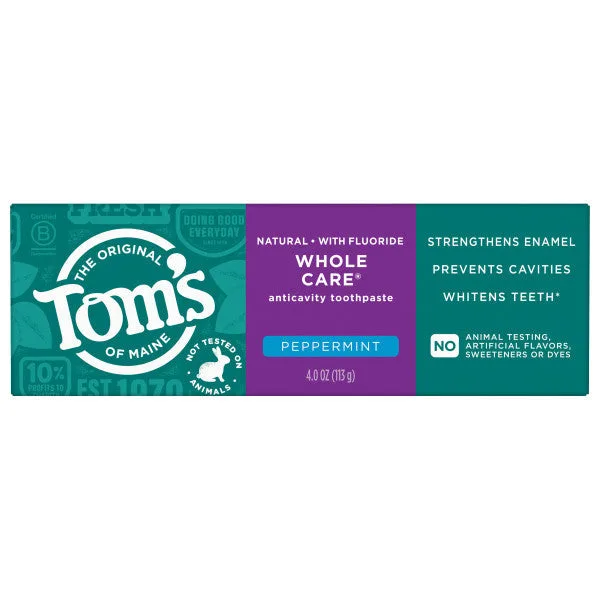
- Whole Care Peppermint Anticavity Toothpaste (2-pack): Whole Care Peppermint Anticavity Toothpaste (2-pack) is an anticavity fluoride toothpaste with enamel repair and strengthening benefits in a peppermint flavor. Choose this if cavity protection is your main goal and you prefer a classic peppermint taste.