Quick Answer
Most ceramic plates chip at the rim because that thin edge takes the first hit, whether from another plate, a sink faucet, or a fast temperature change. Stop the damage by stacking with a soft barrier between plates, loading the dishwasher so rims never touch, and hand-washing any plate that already has a nick. If a chip is deep, sharp, or spreading, retire that plate from food use rather than trying to repair it.
Find the Contact Point Before You Change Anything
Chipping is rarely random. Before buying felt pads or a new rack, look at where the chips cluster. Chips on the outer rim of one side usually mean the plate is sliding against a neighbor in the cabinet or rack. Chips on the foot ring suggest the plate is being dragged across a hard shelf or stacked on a rough surface. Chips near the top edge of a rimmed plate often come from the dishwasher, where a plate can shift and knock against the tines or another dish during the cycle.
Photograph the chipped area with your phone and note the size in millimeters. Check the same spot in two weeks. If the chip has grown, the cause is still active and a repair will not hold. If it has not changed, you have already removed the source of the impact and only need to protect the edge from here on.
Why the Rim Is the Weak Point
A plate's rim is thin by design. The glaze covers the clay, but the fired edge is still the part with the least material behind it, so a small impact concentrates stress in a tiny area. That is why a plate can survive years of forks and knives and then chip from a light tap against a mixing bowl. Glaze is glass-like and can craze or flake at the edge, exposing the clay body underneath. Once the body is exposed, the chip can look darker over time as it absorbs oils and pigments from food.
This also explains why two identical plates can age differently. The one that gets stacked on top, or sits closest to the dishwasher door, takes more contact over its life. Rotating which plate sits on top of the stack spreads that wear instead of concentrating it on one piece.
Stacking Ceramic Plates Safely
The most common cause of rim chips at home is plate-on-plate contact during storage. A stack of six plates means five pairs of rims are touching, and every time you lift the stack, those rims grind against each other. A felt pad, paper plate, or thin linen between each plate absorbs that movement. If you use a cabinet rack, leave a finger-width of space between plates so they cannot knock together when the door closes.
Heavy plates need more care than light ones. A larger plate with more mass carries more momentum when it slides, so the impact on the rim below is harder. Put the heaviest plates at the bottom of the stack and never stack small plates under large ones, which creates an unstable tower that shifts when you reach for the top piece.
Dishwasher Habits That Chip Plates
Dishwasher chipping ceramic usually happens in one of three ways: plates touch each other during the wash, a plate tips and hits the rack, or a plate is loaded while still hot from the oven and meets cooler water. Load plates so each one sits in its own slot with the rim clear of the tines and no contact with the next plate. Do not overload a row just to finish the load.
Skip the heated dry cycle if your machine runs hot, and let plates cool before unloading. A plate that is still warm is more brittle than one at room temperature. If a plate already has a small chip, hand-wash it. The chip creates a weak point, and one more dishwasher cycle can turn a nick into a crack.
Temperature Changes and Thermal Shock
Ceramic expands and contracts with heat. A rapid change, such as moving a plate from a hot oven to a cool counter or running cold water over a warm plate, puts stress on the glaze and the body at different rates. That mismatch can start a hairline crack at the rim, which later becomes a chip when the plate is handled. Let plates cool on a dry towel or trivet before washing or stacking them.
The same applies in reverse. A plate that has been in a cold garage or a chilly cabinet should come to room temperature before it goes into a hot oven. Slow transitions are the goal, not a specific temperature.
When to Repair, Retire, or Replace
A shallow glaze chip on the rim, one that does not catch a fingernail and does not expose a sharp edge, can often stay in service for dry foods or as a serving piece if you sand the area smooth with fine wet sandpaper. A deep chip that exposes rough clay, or any chip on a surface that touches food directly, should be retired from dining use. Ceramic plate repair with food-safe epoxy is possible for decorative pieces, but it is not a reliable fix for a plate that will be washed and used daily.
If you are replacing plates, consider how the new ones will be stored and washed. A plate with a reinforced rim or a heavier body tolerates stacking better than a thin one. If chips keep appearing in the same spot on every plate, the problem is your storage or loading routine, not the plates.
Chip Diagnosis: Match the Symptom to the Fix
- Chip on the outer rim, one side only: The plate is hitting a neighbor during storage or washing. Add a felt pad or linen between plates, leave space in the cabinet, and check that dishwasher tines are not touching the rim. If new chips stop appearing within two weeks, the contact point is fixed.
- Chip on the foot ring or underside: The plate is being dragged across a hard shelf or stacked on a rough surface. Line the shelf with a non-slip mat and lift plates instead of sliding them. Foot-ring chips do not affect food contact, but they can worsen if the dragging continues.
- Hairline crack starting at the rim: This usually follows a fast temperature change, such as hot plate to cool water or cold plate to hot oven. Let plates reach room temperature before washing or baking. A crack that grows or catches a fingernail means the plate should be retired from daily use.
- Small glaze nick that does not catch a fingernail: Smooth the area with fine wet sandpaper and move the plate to dry or serving use. Do not put it back into the dishwasher. If the nick deepens or exposes rough clay, stop using it for food.
What to Look for in a Replacement Plate
- Pro Shop 3.75" Rimmed Butter Plates: Pro Shop 3.75" Rimmed Butter Plates measure 4" W x 0.75" H and weigh about 0.25 lbs, with Pro Shop orders often made or glazed to order and a minimum of 24 pieces in lots of 6. A small, light rimmed plate is easy to stack and less likely to damage larger plates below it, but the order minimum means this is a commitment for a restaurant or a large household rather than a single replacement.
- Pro Shop 11" Rimmed Entree Plates: Pro Shop 11" Rimmed Entree Plates measure 11.25" W x 1" H and weigh about 2.75 lbs, with custom back-stamping available and the same made-to-order lead time and order minimum. The heavier weight means more momentum in the stack, so these plates benefit most from felt pads or a rack, and the custom back-stamping option helps you identify your plates if they are used in a shared kitchen.
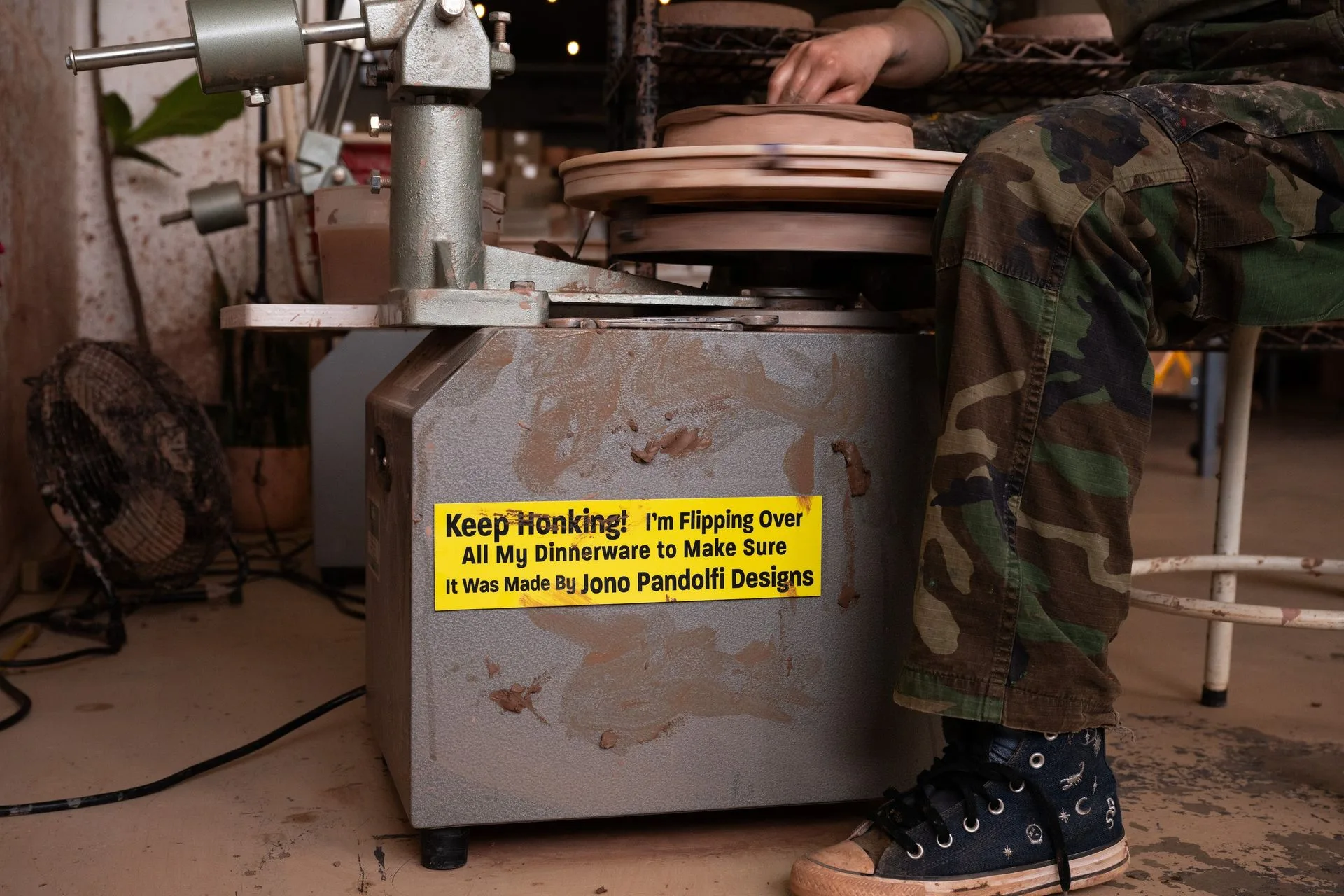
- Plate Flippers Sticker Pack: The Plate Flippers Sticker Pack includes a Keep Honking bumper sticker, a 4-piece coupe place setting sticker, and a JPD logo sticker, with colors that vary, and ships within 5 to 10 business days. A low-cost way to mark your plates or storage bins so everyone in the kitchen knows which pieces are hand-wash only, which reduces the handling that causes chips.