Quick answer
Toddler food throwing is a normal developmental behavior, not a sign you are failing. Respond calmly, set a clear boundary, and give your toddler a safe way to explore cause and effect. If throwing continues, try a suction bowl or placemat to reduce the mess, and end the meal without a power struggle. If your child seems distressed, gagging, or losing weight, talk to your pediatrician.
What food throwing usually means at this age
Between roughly 12 and 24 months, toddlers are learning that their actions make things happen. Dropping a spoon or squeezing a banana is a science experiment, not a personal attack. They are also testing boundaries and may throw when they are full, tired, bored, or overwhelmed by too many choices. The behavior often peaks when language is still limited, so throwing becomes a fast way to say 'done' or 'I need a break.'
A calm response that actually works
Keep your reaction neutral and consistent. Say 'Food stays on the tray' in a matter-of-fact voice, then remove the thrown food or the item they are throwing. Do not laugh, yell, or chase the food. If throwing continues, calmly end the meal and try again at the next snack or meal. This teaches cause and effect without giving the behavior extra attention. Offer one or two foods at a time rather than a full plate, which can feel overwhelming.
Set up the meal to make throwing less rewarding
A stable base helps toddlers feel in control without tipping everything over. Suction bowls and placemats stay put, so your child can practice scooping and self-feeding without the bowl sliding away. That reduces the frustration that often triggers a throw. Keep the meal short, 10 to 15 minutes is plenty at this age, and watch for signs of fullness like turning away, pushing food, or slowing down. If your toddler is done, let them leave the table instead of waiting for a meltdown.
When to stop and try a different approach
If you have tried calm boundaries and a stable setup for two to three weeks and throwing is still happening at every meal, stop focusing on the throwing itself. Look at the bigger picture: Is your child hungry at meal times? Are they overtired? Are they getting too many snacks right before meals? Sometimes the fix is a schedule change, not a mealtime rule. If your child is throwing food while also coughing, gagging, or losing weight, or if you feel overwhelmed or angry, step away and talk to your pediatrician or a feeding specialist. You do not have to solve this alone.
Diagnosis: why your toddler throws food and what to do
- Symptom: Throwing happens right after you set the plate down: Your toddler may be overwhelmed by too much food or not hungry yet. Try offering one or two items at a time and check whether a recent snack is still filling them up. If this happens most meals, simplify the plate before you change anything else.
- Symptom: Throwing starts when the bowl or plate slides: A sliding dish feels unstable, and toddlers often push or throw it out of frustration. A suction base keeps the dish in place so your child can focus on scooping. Use a suction bowl or placemat to remove the tipping trigger before you correct the throwing.
- Symptom: Throwing happens near the end of the meal: This is often a sign of fullness or boredom. End the meal calmly when you see turning away, pushing food, or slowing down. If throwing only happens at the end, your child is likely done. Let them leave the table without a fight.
- Symptom: Throwing continues for weeks despite calm boundaries: Stop the mealtime power struggle and look at schedule, sleep, and hunger cues. If your child is distressed, gagging, or losing weight, talk to a pediatrician or feeding specialist. If you have tried for two to three weeks with no change, get professional guidance rather than pushing harder.
Products that can help with throwing
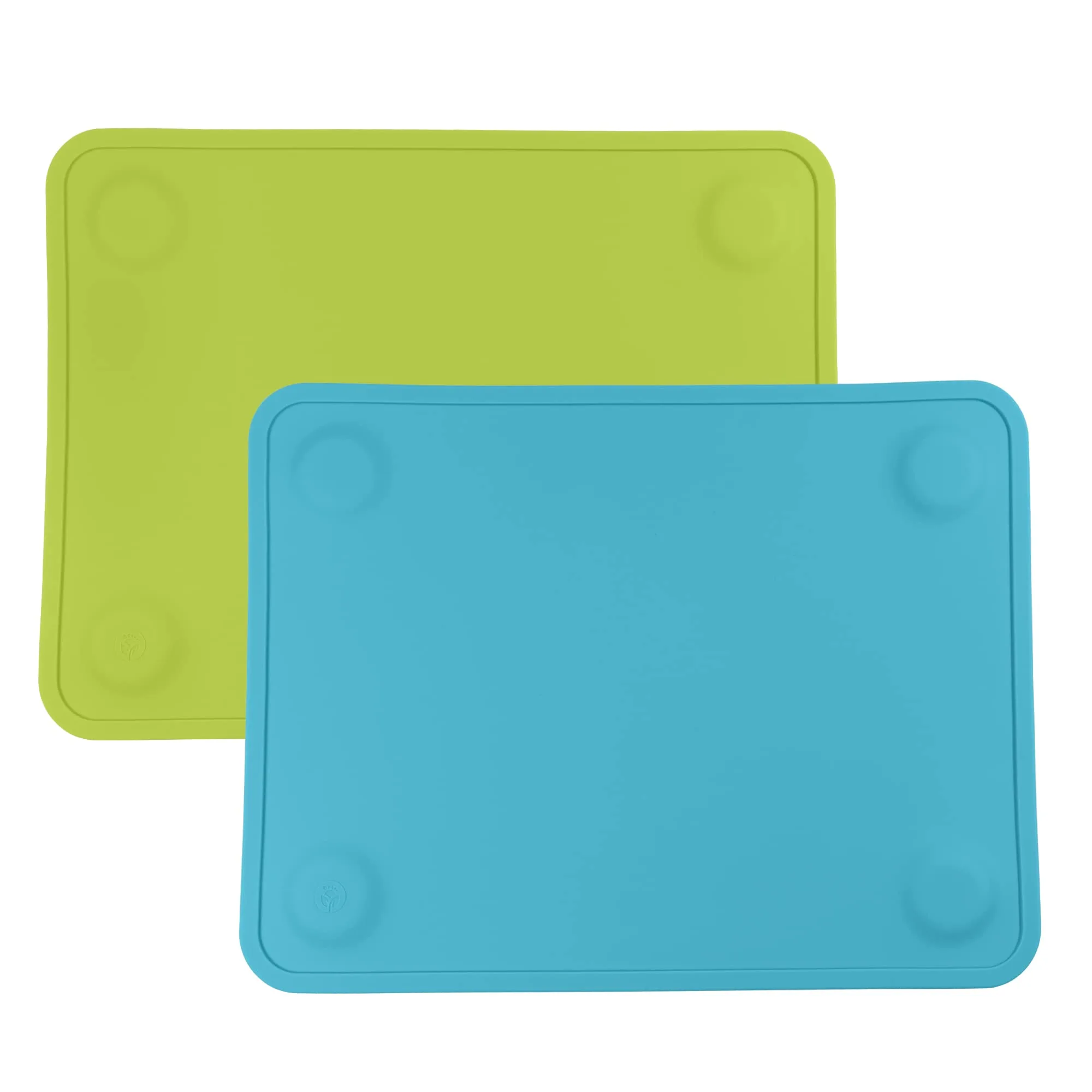
- Silicone Suction Placemats – Set of 2 (Small or Large): Silicone Suction Placemats – Set of 2 (Small or Large) have four built-in suction cups and raised edges that catch spills and crumbs. A placemat that stays flat and grips the table keeps the eating surface predictable, so your toddler is less likely to swipe a curling mat or chase crumbs.
- Silicone Suction Bowls with Lids – 12 oz (Set of 2): Silicone Suction Bowls with Lids – 12 oz (Set of 2) have a strong suction base with a quick-release tab for adults and measurement markings from 2 oz to 10 oz. The bowl stays put during scooping practice, which reduces the tipping that often leads to throwing. The markings help you serve a portion that matches your toddler's appetite.