Quick answer
For most small kitchens, choose a 6-piece frying pan set with lids rather than a 10-piece set. The smaller set covers everyday frying, searing, and simmering without crowding your cabinets. Add a single 3-quart saucepan only if you regularly make sauces, soups, or side dishes.
Start with how many pans you actually use
The honest answer to how many pans do you need is: fewer than most sets contain. In a small kitchen, every pan competes for the same burner and the same cabinet shelf. Count the pans you reached for in the last week. Most cooks use one 8-inch skillet, one larger skillet, and one saucepan. Anything beyond that is occasional-use cookware that still takes up daily space.
- If you cook for one or two: a 6-piece frying pan set with lids is usually enough.
- If you batch-cook or host: a 10-piece set gives you more sizes, but you need a dedicated storage spot.
- If you bake or roast often: put your budget into a few pans you love rather than a large set with pieces you never touch.
Measure your storage before you buy
A set that fits your cabinet is worth more than a set with extra pieces. Measure the widest shelf, the cabinet depth, and the height between shelves. Then check the largest pan in any set you are considering. Lids add height, so stack them flat or store them upright in a lid rack if your shelves are tight.
- Nesting sets save space only if the handles do not block the stack.
- Lids are the most common storage problem. Count them before you commit.
- If you hang pans, check handle weight and whether the handles have hanging holes.
Choose the coating based on how you cook
Ceramic nonstick pan sets release food easily and clean up with a quick wipe, which matters in a small kitchen where the sink is often steps away from the stove. The trade-off is that ceramic coatings generally reward gentler heat and soft utensils. If you routinely sear at very high heat or use metal tools, a ceramic set may not stay pristine as long. For low-to-medium heat eggs, fish, and vegetables, ceramic is a strong fit.
- Use low to medium heat for ceramic nonstick to protect the coating.
- Silicone, wood, or plastic utensils reduce scratching.
- Wait for pans to cool before washing to avoid thermal shock.
Decide whether you need lids at all
A cookware set with lids sounds like a bonus, but lids are only useful if they match the pans you actually use. A lid turns a skillet into a steamer, a simmering vessel, and a splatter guard. If you rarely cover food, you can save space and money by choosing a set with fewer lids. If you make sauces, rice, or one-pan meals, prioritize lids that fit the pans you reach for most.
- Match lid diameter to pan diameter before buying.
- Glass lids let you check progress without lifting, which saves heat and time.
- If storage is very tight, choose a set where lids nest inside the pans.
Plan for the pans you will add later
A small kitchen does not mean you must buy everything at once. Start with a frying pan set, then add one saucepan or one larger skillet when a specific need appears. This keeps your storage honest and your spending focused. It also lets you test whether you prefer a ceramic coating before committing to a larger collection.
- Buy the set that covers 80 percent of your cooking.
- Add specialty pieces only when you have a repeat use for them.
- Keep a single empty shelf for the next pan so storage does not creep onto the counter.
Decision rules for a small-kitchen nonstick set
- Rule 1: Match piece count to shelf space: Measure your cabinet, then choose the largest set that fits with lids stored. A 6-piece set is the safer default for tight kitchens. If the set does not fit in a closed cabinet, it will live on your counter.
- Rule 2: Prioritize lids that fit your most-used pans: Count how often you cover food. If you simmer or steam weekly, choose a set with matching lids. If not, fewer lids mean less storage friction. Lids are only useful when they match the pans you actually use.
- Rule 3: Choose ceramic for gentle, everyday cooking: Ceramic nonstick releases food easily and cleans up fast. Use low to medium heat and soft utensils to keep the coating in good shape. If you sear at very high heat with metal tools, ceramic may not be your best match.
- Rule 4: Add single pans instead of upsizing the set: Start with a frying pan set, then add one saucepan or one skillet when a specific need repeats. This keeps storage and spending honest. Buy for the cooking you do most, not the cooking you imagine.
Nordic Ware options that fit small kitchens
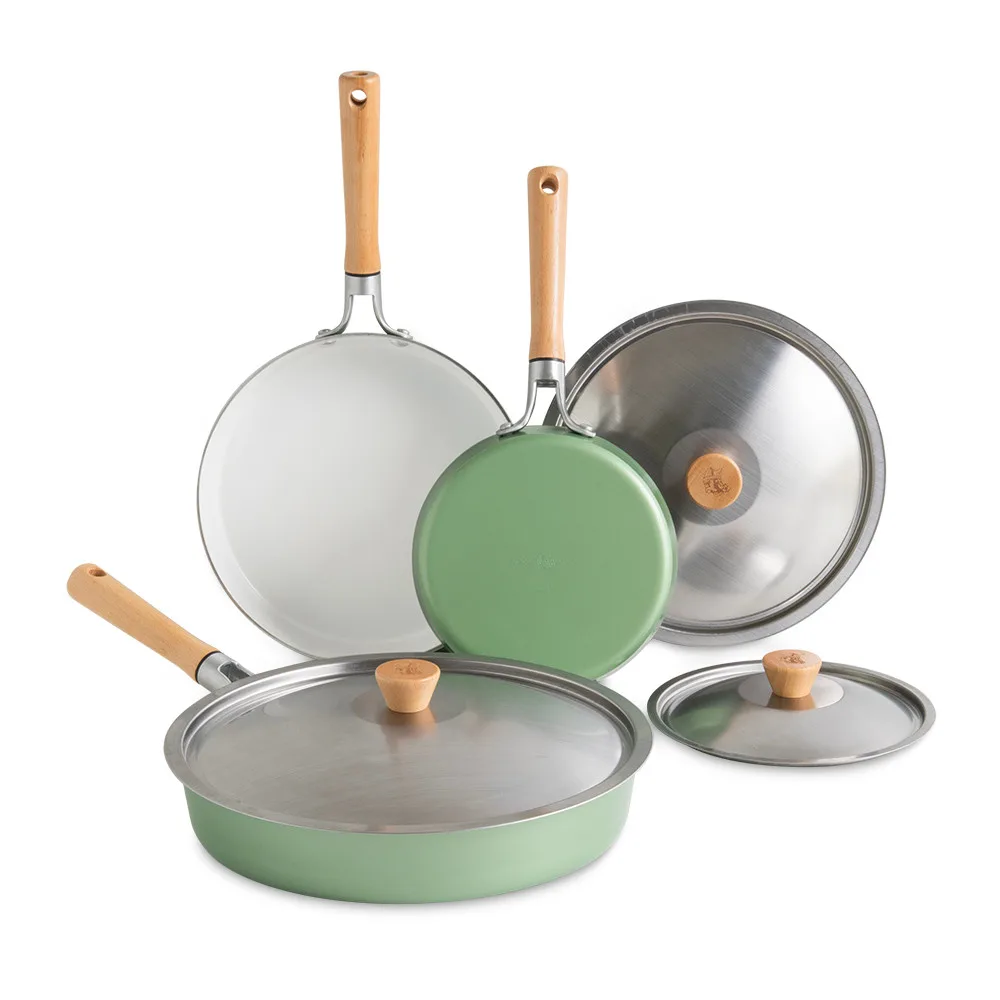
- Cardamom™ 6 Piece Nonstick Frying Pan Set with Lids | Ceramic Coated Cookware: The Cardamom 6 Piece Nonstick Frying Pan Set with Lids includes multiple frying pans and matching lids with a ceramic coated surface. This is the size most small kitchens can store and still use daily, and the lids make the pans more versatile for covered cooking.
- Cardamom™ 10 Piece Nonstick Pan Set with Lids | Ceramic Coated Cookware: The Cardamom 10 Piece Nonstick Pan Set with Lids includes a variety of pans and matching lids with a ceramic coated interior. Choose this only if you have a dedicated cabinet or pantry shelf, because the extra pieces need real storage space.
- Cardamom™ Ceramic Nonstick 3 Qt. Saucepan | Ceramic Coated Cookware: The Cardamom Ceramic Nonstick 3 Qt. Saucepan is a single 3-quart pan designed for sauces, soups, and side dishes. A single saucepan is a smarter add-on than a larger set when you only need one covered pan for liquids.
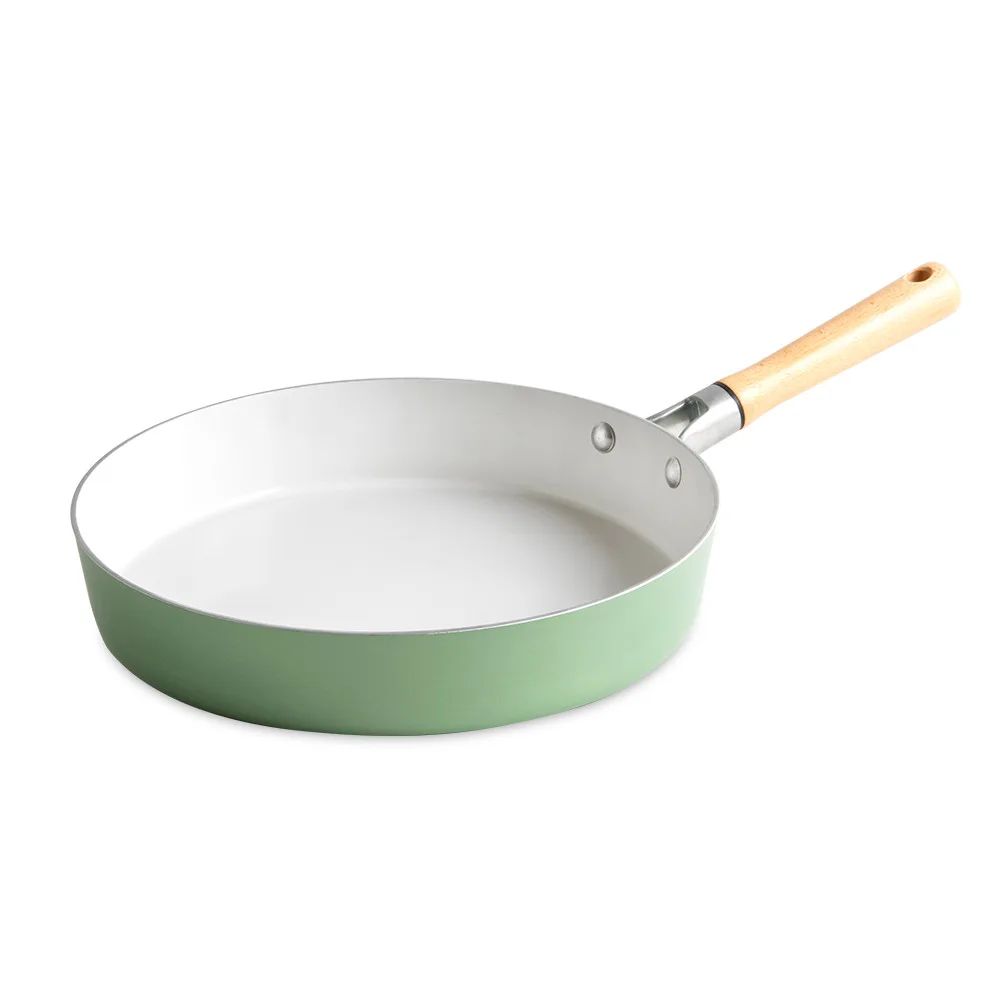
- Verde 8 Inch Ceramic Nonstick Skillet Pan | Ceramic Coated Cookware: The Verde 8 Inch Ceramic Nonstick Skillet Pan is an 8-inch ceramic nonstick skillet. An 8-inch skillet is the smallest useful pan for eggs and single portions, and it stores easily in tight spaces.
Who should choose which set
Best for
- Cooks with limited cabinet space who want a compact frying pan set with lids
- Beginners who want a nonstick cookware set for beginners without buying extra pieces
- Anyone who cooks eggs, fish, and vegetables on low to medium heat
Not for
- Cooks who need many pan sizes at once and have room to store a 10-piece set
- Anyone who routinely uses high heat and metal utensils, which can wear ceramic coatings
- Buyers who want a single set to cover baking, roasting, and stovetop cooking