Quick answer
An induction cooker only heats pans with a magnetic base, so cast iron and most magnetic stainless steel work while aluminum, copper, and glass do not. Test any pan with a fridge magnet before buying: if it sticks firmly to the base, the pan will heat; if it slides off, it won't. For most kitchens, one magnetic stainless steel skillet, one cast iron pan, and one magnetic stockpot cover nearly every induction cooking task.
Why induction only heats certain pans
Induction hobs don't radiate heat into the pan the way gas or electric coils do. Instead, a copper coil under the glass creates a magnetic field, and that field induces circulating currents in the pan base. The pan itself becomes the heat source. That's why the material and thickness of the base matter more than the brand name on the handle.
A pan needs enough ferrous metal in its base to respond to the field. Cast iron and magnetic stainless steel qualify. Pure aluminum, copper, glass, and ceramic do not, unless the manufacturer bonds a magnetic plate into the base. Thin bases heat fast but tend to scorch in the center; thicker, multi-ply bases spread heat more evenly and hold it longer after you lower the power.
How to test induction pans in 10 seconds
Take an ordinary fridge magnet to the store or your own cupboard. Press it flat against the bottom of the pan, not the side wall. A strong, immediate grip means the pan is induction compatible. A weak or patchy grip usually means the pan will heat poorly or only in spots. No grip at all means it won't work on an induction hob.
If you already own a pan and want to confirm before cooking, fill it with a half-inch of water, set it on the hob, and turn the power to medium. A compatible pan will start circulating and steaming within a minute or two. If nothing happens and the hob beeps or shuts off, the base isn't magnetic enough.
Pan types that work and what they're good for
Magnetic stainless steel skillets are the most versatile choice for everyday searing, sautéing, and pan sauces. Look for a base that feels heavy relative to its size; a lightweight stainless pan with a thin magnetic disc tends to develop hot rings where the field concentrates.
Cast iron and enameled cast iron heat slowly but hold heat beautifully, which suits steaks, cornbread, and long braises. They're heavy, and you should lift rather than slide them across the glass to avoid scratches. Carbon steel behaves like cast iron but responds faster to power changes, making it a good fit for stir-fries and omelets.
For stockpots and saucepans, a magnetic stainless body with an aluminum or copper core gives you the best of both worlds: the outer layer responds to induction while the inner layers spread heat. Avoid thin, single-layer aluminum pots unless the label explicitly states an induction-ready base.
Matching cookware to your induction cooker's size and power
Induction hobs only energize the area under the pan, so an undersized pan wastes the outer ring of the hob and an oversized pan can leave the center underheated. As a rule, keep the pan base within about an inch of the marked cooking zone. Small saucepans on a large zone often trigger the hob's pan-detection safety and cause it to cycle off.
Power settings also change how a pan behaves. On a high-wattage portable induction cooker, a thin pan can warp or scorch, while a heavy pan absorbs the same power smoothly. If you cook a lot of delicate sauces, a thick-based pan gives you finer control at low settings. If you mainly boil water or sear, a mid-weight magnetic pan is enough.
Care habits that keep induction pans working
Wipe the pan base dry before it goes on the hob; moisture and grease between the base and glass can cause the cooker to slide or leave baked-on residue. Let pans cool before washing to reduce the chance of warping, which can lift the base away from the glass and weaken the magnetic coupling.
If a pan's base becomes scratched or bowed, test it with the magnet again. A base that once gripped firmly but now barely holds is a sign the magnetic layer has worn or separated, and it's usually time to replace that pan rather than fight uneven heating.
Decision rules for buying induction cookware
- Magnet first, brand second: Test the base with a fridge magnet before you look at the price tag. A firm grip means the pan will heat on any induction hob; a weak or missing grip means it won't, no matter how the packaging is labeled. Buy only pans that pass the magnet test.
- Match base size to the cooking zone: Keep the pan base within roughly an inch of the marked zone. Undersized pans waste the outer ring and may trip pan detection; oversized pans leave the center cool. Measure your largest and smallest hob rings before shopping.
- Choose base thickness by cooking style: Thin magnetic bases respond fast but scorch easily, so they suit boiling and quick reheats. Thick multi-ply or cast bases cost more and weigh more but hold steady low heat for sauces and searing. Spend on thickness where you need control, not everywhere.
- Plan for oven finishing: Induction hobs can't brown a crust or melt a topping from above. If you bake, keep at least one oven-safe pan or tray that fits your oven, so stovetop and oven steps can run in parallel. A stovetop-only cookware set limits what you can finish.
- Retire warped or worn bases: A base that no longer grips the magnet firmly, or that rocks on the glass, will heat unevenly and may damage the hob surface over time. Replace it rather than compensate with higher power. Re-test older pans once a year.
Breville picks that fit an induction kitchen
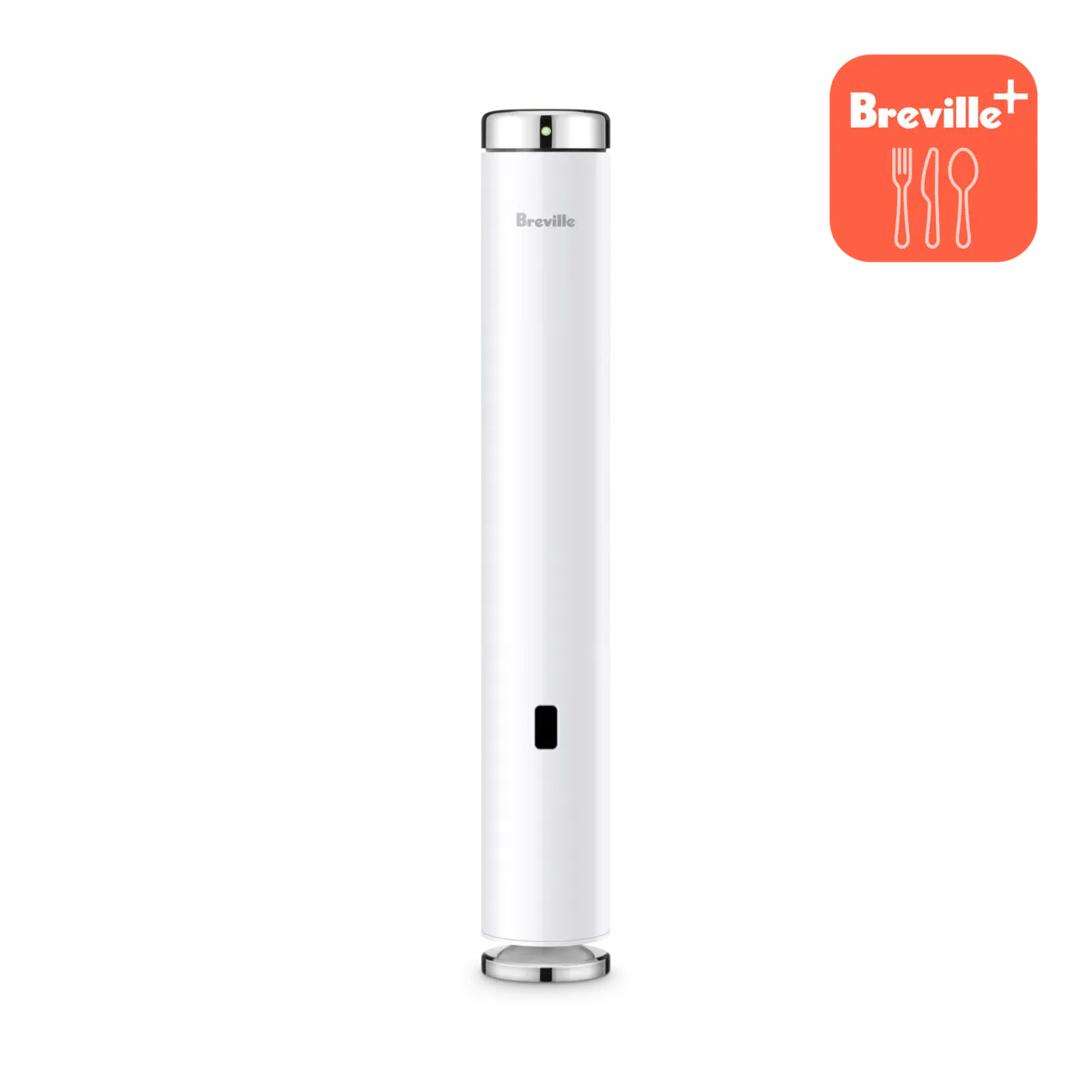
- Sous Vide for Everybody: Sous Vide for Everybody is compatible with Breville sous vide cookers and is designed for cooking a wide variety of foods, from meats to vegetables. If you already use an induction hob for searing and finishing, a sous vide guide helps you plan the low-temperature step without guessing at times and temperatures.
- 13" Non-Stick Pizza Pan: The 13-inch non-stick pizza pan doubles as a baking sheet and is designed for use with several Breville Smart Oven models, and it may also be used with traditional household ovens. Induction hobs can't brown a pizza crust, so a pan that works in the oven lets you finish baked goods while the hob handles the stovetop side of the meal.
- Die-Cast 2-Slice Smart Toaster™: The Die-Cast 2-Slice Smart Toaster has two extra-wide slots and includes 'A Bit More' and 'Lift and Look' features developed from real-world feedback. Breakfast often runs alongside stovetop cooking, and a toaster that handles artisanal bread or bagels keeps the induction zone free for eggs and pans.
Is induction cookware the right buy for you?
Best for
- Cooks who want fast, responsive heat and easy-to-clean glass hobs
- Kitchens that already own cast iron or magnetic stainless steel pans
- Buyers willing to test pans with a magnet before purchasing
Not for
- Cooks who rely on pure aluminum, copper, or glass pans and don't want to replace them
- Anyone who needs cookware to work on both induction and non-magnetic hobs without checking labels
- Buyers who prefer very lightweight pans and don't want the heft of magnetic bases
Before your next cookware purchase, grab a magnet and test the base of every pan you're considering. If it grips, it will heat on an induction cooker; if it doesn't, keep looking. Build your set around one magnetic skillet, one heavy pan for searing, and one oven-safe piece, and you'll cover most meals without buying pans you can't use.