Quick answer
Sticking is usually a heat or surface problem, not a permanent flaw. Preheat the dry wok over medium-high until a drop of water skates across the surface, add a thin film of oil, and cook in small batches. If food still tears or glues itself to the metal, the seasoning layer is uneven or too thin, so scrub back to bare metal and reseason before you try again.
Start with heat, not more oil
Most sticking happens because the pan is too cool when food hits it. On a carbon steel wok, the metal needs to be hot enough that a bead of water skitters and evaporates instead of sitting still. Once that happens, add oil, swirl it, and wait a few seconds before adding food. If you add oil to a cold wok, it pools, the food sinks into it, and the proteins bond to the metal.
Keep the burner at medium-high for stir-frying and searing, and resist the urge to crank it to maximum unless you are cooking a small batch of vegetables. High heat with a crowded pan drops the temperature fast, which is the same as starting cold.
Cook in batches and give food room
A 13-inch wok looks huge until you fill it. Adding a full pound of protein at once steams the food, drops the surface temperature, and creates a sticky layer that scrapes off in shreds. Cook in single layers or small handfuls, remove each batch, and return everything at the end with sauce.
This is especially true for eggs, fish, and marinated meat. Those foods release liquid, and liquid is the enemy of a hot carbon steel surface.
Fix the seasoning layer when sticking repeats
If heat and batch size are right and food still sticks, the seasoning is the problem. A patchy, gummy, or flaking patina creates high spots that grab food. Scrub the wok with hot water and a stiff brush or steel wool until the surface feels smooth and bare, dry it thoroughly, then reseason by heating it, wiping on a very thin layer of high-smoke-point oil, and letting it smoke off. Repeat two or three times.
Thin layers are the whole trick. A thick, wet coat of oil turns sticky and rancid, which makes sticking worse. If the patina looks blotchy or feels tacky, strip it and start over rather than adding more oil on top.
When to stop reseasoning and change your approach
Carbon steel is not nonstick in the way a coated pan is, and it will never behave like one for delicate foods. If you are cooking eggs over easy, skin-on fish, or sticky sauces every day and you want zero sticking without technique, a carbon steel wok is the wrong tool. Use it for stir-fries, searing, and sautéing, where a little oil and high heat do the work.
If you have stripped and reseasoned three times and food still tears, check your heat source. A wok on a weak electric coil or a small burner cannot maintain temperature, and no amount of seasoning will fix that. In that case, cook smaller batches or use a flat-bottom pan that matches your burner size.
Sticking diagnosis: match the symptom to the fix
- Food sticks in one spot, not everywhere: That spot is likely a thin or worn patch in the seasoning. Scrub just that area to bare metal, dry, and reseason with a thin oil layer. If the patch returns after two seasonings, strip the whole wok and start fresh.
- Eggs stick and tear no matter what you do: Eggs need a hotter, well-oiled surface than most stir-fries. Preheat longer, use more oil than you think, and cook eggs alone, not with vegetables. If eggs still stick after a full reseason, accept that this wok is not an egg pan and use a nonstick skillet for that job.
- Food releases, then sticks as it cooks: The pan cooled down because it was overcrowded or the burner is too weak. Cook in smaller batches and let the wok recover heat between additions. If your burner cannot keep a 13-inch wok hot, use a smaller pan or cook in two rounds.
- Seasoning flakes off into the food: The patina was applied too thick or the wok was not cleaned properly before seasoning. Strip it completely with steel wool and hot water, then reseason in very thin layers. Flaking seasoning is not a defect; it is a sign to reset the surface.
The wok this advice applies to
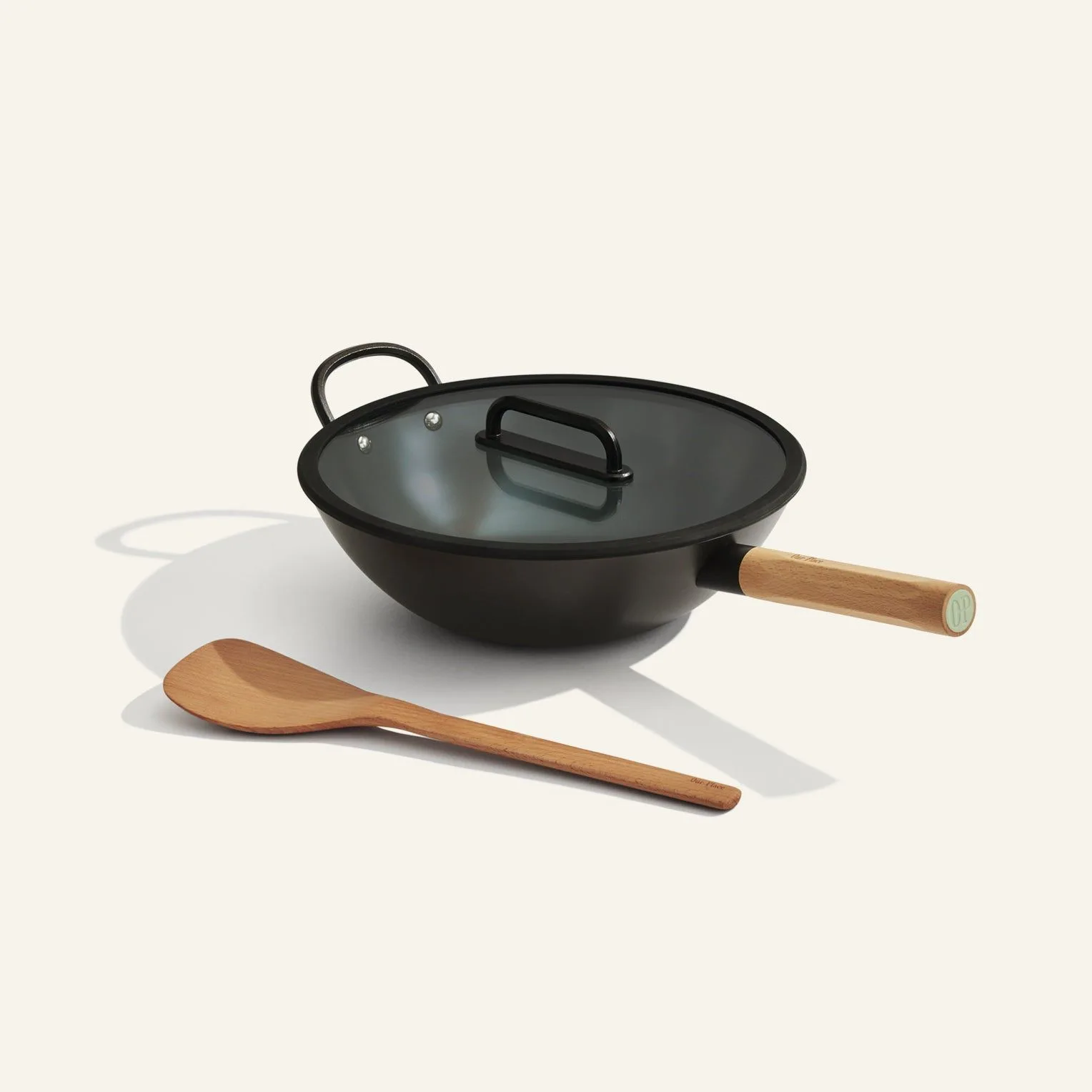
- Carbon Steel Wok: Our Place Carbon Steel Wok is a 13-inch flat-bottom wok made from super-nitrided carbon steel, designed for stir-frying, searing, and sautéing on a range of stovetops. The flat bottom sits stable on most cooktops, and the nitrided surface resists corrosion, so you can focus on heat control and seasoning instead of fighting rust.